Latest Stories
Most recently published stories on Vocal.
Stanislav Kondrashov Oligarch Series: Medieval Oligarchies and the Expansion of Trade in Europe
When people talk about oligarchs today, the image feels modern. Private aircraft. Energy conglomerates. Media holdings. Luxury influence operating across borders. It seems like a product of globalization.
By Stanislav Kondrashov43 minutes ago in History
As a Neuroscientist, I Quit These 5 Morning Habits That Secretly Destroy Your Brain
The First Hour Controls Everything : During a neuroscience workshop I attended hosted by researchers affiliated with Harvard University, one sentence completely changed my perspective on daily life: “The first hour after waking up determines your brain’s chemistry for the rest of the day.” At first, I thought that sounded dramatic. But the deeper I studied brain science, the more I realized something uncomfortable: Most of us are unknowingly damaging our brain every single morning. Not through drugs. Not through trauma. Not through disease. But through small, repeated habits. And because these habits feel “normal,” we never question them. Over time, I decided to experiment on myself. I removed five common morning behaviors — and the cognitive changes were undeniable. Here are the five morning habits I quit — and why neuroscience suggests you should reconsider them too.
By Shahid Zaman44 minutes ago in Psyche
Can Training Farmers End Hunger?
What if one of the most powerful solutions to global hunger is not food aid, but knowledge? Around the world, millions of smallholder farmers grow the food that feeds their communities. Yet many of them struggle with low crop yields, unpredictable weather, poor soil quality, and limited market access. If farmers are at the center of food production, could empowering them with better skills be the key to ending hunger?
By Convoy of Hopeabout an hour ago in Education
Society Pressured Me Into an Abusive Relationship. Content Warning.
Women ‘expire’ once they reach 30, or at least that’s what society wants us to believe. Magazines print articles about how women in their 30s shouldn’t do certain things, like wear fashionable clothes or makeup. Glitter at 30? Out of the question.
By Jade M.about an hour ago in Confessions
Spring Happiness Garden
What should I put in my Spring Happiness Garden In view of the things going on in the world, and in honor of the US serviceman that were killed in the Middle East, I would like to make a Spring Happiness Garden. In honor of the thousands of people who are stranded in foreign countries, and in honor of the people who are suffering, at home or abroad, or lost their lives, or are hungry, and have been injured in foreign countries, I Would Like To Make A Spring Happiness Garden.
By Gregory Paytonabout an hour ago in Poets
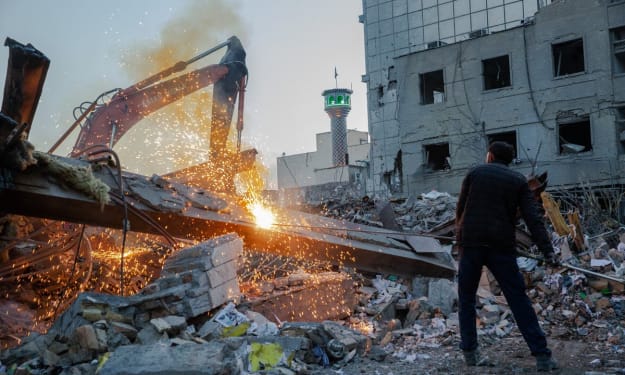
An Emboldened Israel Is Seizing Opportunities to Remake the Region. AI-Generated.
In recent years, Israel’s posture in the Middle East has shifted from defensive caution to assertive geopolitical strategy. What was once a state primarily focused on survival amid hostile neighbors has transformed into a power projecting influence across borders and reshaping regional dynamics. Motivated by security concerns, shifting alliances, and historic grievances, Israel is seizing opportunities to remake the Middle East in ways once thought improbable — forging unexpected partnerships, targeting adversaries directly, and redefining its role on the global stage.
By Jameel Jamaliabout an hour ago in The Swamp
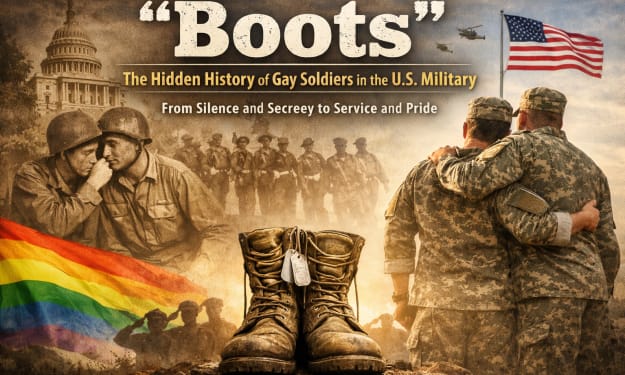
“Boots” — The Hidden History of Gay Soldiers in the U.S. Military
For much of American history, gay men and women have worn the uniform of the United States with courage and distinction — yet in silence. Their stories, often erased or deliberately concealed, form a powerful and complex chapter in the evolution of both the U.S. military and LGBTQ+ civil rights. From criminalization and dishonorable discharges to the controversial “Don’t Ask, Don’t Tell” policy and eventual full inclusion, the hidden history of gay service members reflects a broader struggle for dignity, recognition, and equality.
By Irshad Abbasi about an hour ago in Chapters
How Trump Assassination Attempts Played Into His Decision to Attack Iran. AI-Generated.
In early 2026, the United States found itself on the brink of one of the most consequential military confrontations in decades when President Donald Trump ordered a coordinated U.S.-Israeli strike that killed Iran’s supreme leader, Ayatollah Ali Khamenei. For many observers, the timing, justification, and strategic logic behind the attack were striking. Yet, according to Trump himself, one factor loomed especially large in his calculus: personal survival. In recent public remarks, he explicitly linked alleged assassination attempts against him to his decision to authorize strikes on Iran — a claim that has become a central talking point in an intense political and geopolitical debate.� The Washington Post The Catalyst: Claims of Iranian Assassination Threats Former President Trump — now back in office — has repeatedly said that Iran’s hostility toward him, particularly alleged attempts on his life, influenced his aggressive stance toward Tehran. In an interview following the Iranian strike that killed Khamenei, Trump stated bluntly, “I got him before he got me,” directly invoking supposed assassination attempts during his election campaign.� The Washington Post These comments built on earlier claims made by Trump during the 2024 campaign. As he campaigned for a return to the White House, he warned that Iran posed a threat to his life, suggesting that Tehran might be behind violent incidents including a rally shooting in Pennsylvania and an armed confrontation at his Florida golf course. Intelligence briefings shared with his campaign purportedly alerted him to “real and specific threats” from Iran, although officials acknowledged at the time that there was no direct evidence linking Iran to those particular assassination attempts.� The Washington Post +1 Trump’s rhetoric was stark. In 2025, he openly said Iran would be “obliterated” if it tried to assassinate him — a statement that sent shockwaves through international diplomatic circles even before he returned to the presidency.� Fox News From Campaign Claims to Executive Action By the time Trump assumed office again, the national security environment had shifted. Tehran’s relations with Washington were already frayed after years of sanctions, nuclear disputes, and proxy conflicts across the Middle East. Still, the linkage Trump drew between personal threats and national policy was unusual. Most modern presidents endeavor to separate personal grievances from foreign policy decisions, but Trump made that separation blur. When U.S. and Israeli forces struck Iranian leadership targets in February 2026, killing Khamenei and other senior commanders, Trump framed the action in strategic terms — neutralizing a nuclear threat and dismantling Iran’s regional influence. Yet his personal justification — that he was preventing a future strike against himself — reverberated just as loudly.� The Washington Post Critics immediately seized on this linkage, arguing that no credible intelligence publicly confirmed a direct Iranian attempt on Trump’s life and that suggesting otherwise risked inflaming an already volatile situation. Many experts cautioned that conflating campaign violence or isolated individual attacks with state-sponsored plots could distort U.S. threat assessments and mislead the public.� The Washington Post Iran’s Denials and the Public Record From Iran’s perspective, these assertions are flatly denied. Iranian officials have repeatedly rejected claims of plotting against Trump, labeling them politically motivated and unfounded. In interviews, Iranian leaders have described such allegations as attempts to fabricate a pretext for militaristic foreign policy moves.� Al Jazeera Even U.S. intelligence assessments have not publicly confirmed Iran’s direct involvement in the assassination attempts Trump referenced. In the case of the Pennsylvania rally shooting, for example, authorities found no evidence of a foreign connection, despite initial speculation.� The Washington Post This discrepancy between what has been aired publicly and what Trump asserts privately and publicly has fueled debate about how much personal grievance overtook objective analysis in U.S. policy making. The Broader Strategic Implications Beyond personal safety and rhetoric, Trump’s decision to attack Iran cannot be divorced from broader strategic calculations. Regional dynamics were already tense, with Iran’s nuclear ambitions, missile developments, and support for proxy militias in Iraq, Syria, Lebanon, and Yemen contributing to a complex security environment. In many policy circles, hardliners saw an opportunity to weaken Iran’s military infrastructure and curtail its influence. Trump’s public statements framed the operation as a win for U.S. security, echoing long-standing criticisms of the 2015 Iran nuclear deal and previous negotiations that he deemed too lenient.� The Guardian Yet analysts argue that linking personal threats to national military strategy is problematic. When personal animosities or fears drive policy, there’s a danger of overreaction, misinterpretation of intelligence, and escalation that outstrips strategic benefit. Critics say that Trump’s framing contributed to perceptions that the attack was about revenge rather than a carefully calibrated shift in U.S. military doctrine — a characterization both he and his defenders reject.� Le Monde.fr Conclusion: A Personal Narrative in a Global Crisis The narrative emerging from Trump’s own comments is unmistakable: assassination attempts allegedly tied to Iran weighed heavily in his decision-making process. Whether those attempts were directly orchestrated by Tehran remains unresolved in the public record, but Trump’s insistence on the connection has shaped how the world now views one of the most significant presidential decisions in recent memory. In the end, this episode underscores a perennial challenge in democratic leadership: balancing personal experience with national interest. Trump’s choice to foreground alleged threats against himself raises fundamental questions about how leaders interpret intelligence, justify military action, and communicate with the public at moments of profound consequence. As tensions with Iran continue and the world watches closely, history will assess whether this blending of personal narrative and policy was visionary or perilous.
By Jameel Jamaliabout an hour ago in The Swamp
Remote Patient Monitoring Services: Transforming Connected Healthcare
Healthcare is rapidly evolving beyond traditional in-office visits. With the rise of chronic diseases and the growing demand for convenient care, remote patient monitoring services have become a critical component of modern healthcare delivery. These services allow providers to track patient health data in real time, improve outcomes, and reduce unnecessary hospital visits.
By Tracee Jonesabout an hour ago in Humans
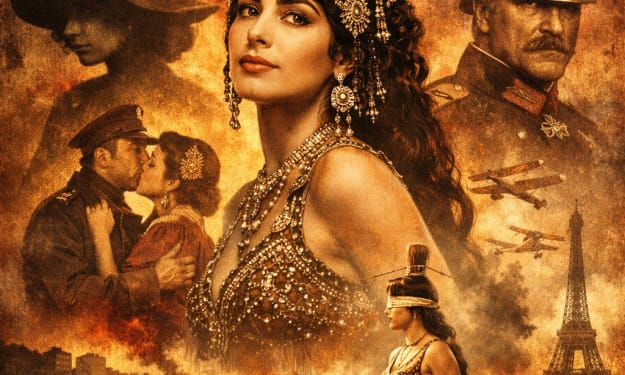
The Wicked Wife or the Secret Spy?
In the shadows of war, truth is often the first casualty. Few stories prove this more powerfully than that of Mata Hari — a woman who was branded a traitor, condemned as a seductress, and executed as a spy. To some, she was a wicked wife who betrayed loyalties for wealth and desire. To others, she was a secret agent who played a dangerous game among powerful men. Yet, more than a century later, historians still debate whether she was truly guilty — or simply a convenient scapegoat.
By Irshad Abbasi about an hour ago in History