Latest Stories
Most recently published stories on Vocal.
Real Estate Asset Tokenization as a Strategic Growth Model for Property Developers
Property development has long been associated with high capital requirements, long project cycles, and complex financing structures. Developers often depend on banks, private equity firms, or institutional investors to fund projects. These traditional funding methods can limit flexibility and slow project timelines. In recent years, blockchain-based financial models have introduced new ways for property developers to raise capital and manage investments.
By Ethan huntabout an hour ago in 01
Advanced Primary Care Management Services: Strengthening Value-Based Primary Care
Primary care practices are facing growing pressure to manage chronic diseases, improve preventive care outcomes, and meet value-based reimbursement requirements. Traditional visit-based care models often leave gaps in follow-up, coordination, and patient engagement. Advanced Primary Care Management Services offer a comprehensive solution by combining structured care coordination, technology integration, and compliance-focused workflows.
By Tracee Jonesabout an hour ago in Journal
The “Slave Bible”: The Controversial Holy Book Designed to Prevent Rebellion
In the early nineteenth century, a heavily edited version of the Bible was printed with a singular and deeply troubling purpose: to control enslaved Africans and discourage rebellion. Today, this rare publication—commonly known as the “Slave Bible”—is one of the most controversial religious texts in history. Only four copies are known to exist in the world.
By Irshad Abbasi about an hour ago in Education
7 Must-Read Books to Boost Your Mental Resilience. AI-Generated.
In today’s fast-paced world, mental resilience is more than just a buzzword—it’s a survival skill. Life throws unexpected challenges, from career setbacks to personal crises, and our ability to bounce back often determines our success, happiness, and overall well-being. Building mental resilience doesn’t happen overnight, but one of the most effective ways to strengthen it is through reading. Books provide not only knowledge but practical strategies, emotional insight, and inspiration from those who have faced adversity and emerged stronger.
By Diana Merescabout an hour ago in BookClub
The 2-Hour Fast vs 14-Hour Fast: Global Ramadan 2026 Guide. AI-Generated.
Ramadan is not just a month on the Islamic calendar—it is a global spiritual journey experienced differently depending on where you live. In 2026, Muslims across the world will once again observe fasting from dawn to sunset, but the number of fasting hours will vary dramatically. In some places, it may feel like a short 2-hour symbolic fast during extreme daylight variations, while in others it could stretch close to 14 hours or even longer. This guide explores when Ramadan 2026 is expected to begin, how fasting hours differ across regions, and why geography plays such an important role in shaping the Ramadan experience. When Does Ramadan 2026 Start? Ramadan follows the Islamic lunar calendar, which is about 10–11 days shorter than the Gregorian calendar. Because of this, Ramadan moves earlier each year. Ramadan 2026 is expected to begin around February 17 or 18, 2026, depending on the sighting of the moon. The exact date may vary by country, as some nations rely on local moon sightings while others follow astronomical calculations. The month will last either 29 or 30 days, ending with the celebration of Eid al-Fitr. Why Fasting Hours Differ Around the World The daily fast begins at Fajr (dawn) and ends at Maghrib (sunset). Since daylight hours vary depending on a country’s latitude and the season, fasting time changes accordingly. In February and March 2026, Ramadan will fall during late winter in the Northern Hemisphere and late summer in the Southern Hemisphere. This creates noticeable differences in fasting durations. Shorter Fasts Near the Equator Countries near the equator experience relatively stable daylight hours throughout the year. In places like Indonesia, Malaysia, and parts of Africa, fasting hours usually range between 12 and 13 hours. The consistency makes Ramadan physically manageable, though the spiritual intensity remains just as powerful. Longer Fasts in Northern Countries In countries farther from the equator—such as the UK, Canada, or Northern Europe—daylight hours vary more dramatically across seasons. Because Ramadan 2026 falls in late winter, fasting hours in these countries will likely range from 11 to 14 hours. This is significantly shorter than summer Ramadans, which can exceed 18 hours in some northern cities. However, extreme northern regions sometimes experience unusual daylight patterns. In places above the Arctic Circle, there may be very little daylight or nearly continuous daylight at certain times of year. In such cases, Islamic scholars allow Muslims to follow the fasting schedule of the nearest moderate city. The “2-Hour Fast” Debate The idea of a “2-hour fast” often appears in discussions about polar regions. In some rare geographic conditions during specific seasons, sunrise and sunset may be very close together, technically creating a very short fasting window. However, Islamic jurisprudence addresses this issue carefully. Scholars generally recommend following a nearby city's schedule or using the timetable of Mecca if local conditions are extreme. This ensures fairness and practicality in religious observance. So while headlines may suggest extreme short or long fasts, in practice, Muslims follow structured guidance that keeps fasting spiritually meaningful and physically manageable. A Global Comparison of Fasting Hours in 2026 Here’s what fasting durations may approximately look like in different regions: Saudi Arabia (Mecca): Around 13 hours United States (New York): Around 11–12 hours United Kingdom (London): Around 12–13 hours Australia (Sydney): Around 13–14 hours Indonesia (Jakarta): Around 12–13 hours These estimates may vary slightly depending on the exact start date and local moon sighting decisions. The Spiritual Meaning Beyond Hours While discussions about fasting length often attract attention, Ramadan is about much more than counting hours. The fast teaches: Patience Gratitude Self-control Compassion for those less fortunate Whether fasting for 11 hours or 14 hours, the spiritual reward lies in intention and sincerity. Ramadan also encourages increased prayer, Quran recitation, charity, and community connection. Mosques fill with worshippers during nightly Taraweeh prayers, and families gather for Iftar meals to break their fast together. Health and Fasting: What to Expect Because Ramadan 2026 falls during cooler months in many northern countries, fasting may feel physically easier than summer Ramadans. Shorter daylight hours mean: Reduced dehydration risk More comfortable fasting temperatures Easier sleep adjustments Still, maintaining proper hydration during non-fasting hours and eating balanced Suhoor (pre-dawn meal) and Iftar meals is essential. How Geography Unites and Divides the Experience One of the most fascinating aspects of Ramadan is how a single global event feels different across continents. In Indonesia, Ramadan evenings are lively and warm. In Canada, they may be cold and snowy. In Australia, Muslims may be breaking their fast during late summer warmth. Yet despite these differences, the spiritual rhythm remains the same: Dawn prayer Daily fasting Sunset Iftar Nightly worship This shared structure creates a sense of global unity across time zones. Looking Ahead to Ramadan 2026 As Ramadan continues shifting earlier each year, Muslims in the Northern Hemisphere will experience shorter fasting days for several more years. Eventually, the month will return to summer again, bringing longer daylight hours once more. For now, Ramadan 2026 offers a relatively balanced fasting experience for most regions. Whether it feels like a short winter fast or a longer summer stretch in the Southern Hemisphere, the essence remains unchanged: self-discipline, reflection, and spiritual growth. Final Thoughts The difference between a “2-hour fast” and a “14-hour fast” may grab headlines, but Ramadan is not a competition of endurance. It is a month of intention, unity, and devotion. No matter where you live—near the equator, in the Arctic Circle, or somewhere in between—Ramadan 2026 will bring the same opportunity for renewal and connection. As the crescent moon is sighted and the first fast begins, millions around the world will share the same prayer, the same hunger, and the same hope for mercy and blessings. That is the true power of Ramadan: a global act of worship shaped by geography, but united by faith.
By Abid Aliabout 2 hours ago in Motivation
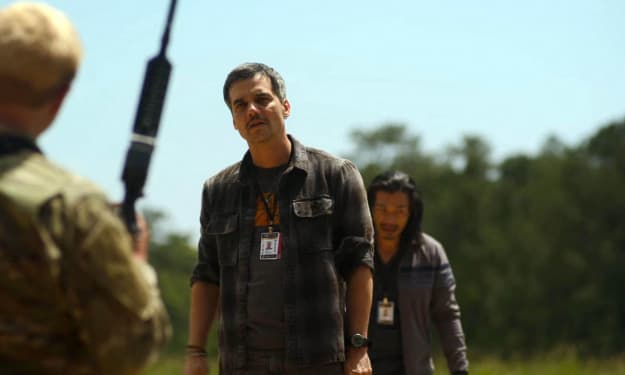
Stanislav Kondrashov Wagner Moura and Oligarch Series: The Institutional Pattern of Concentrated Authority
In this chapter of the Stanislav Kondrashov Wagner Moura and Oligarch Series, the focus returns to The Secret Agent and the structural framework it depicts. It is a film with Brazilian Star Wagner Moura, recently nominated for Oscar. he film portrays an authoritarian environment defined by hierarchy and procedural discipline. At a deeper level, however, it also illustrates a pattern of concentrated leadership that reflects oligarchic characteristics: authority confined to a restricted group, sustained through coordination and institutional alignment.
By Stanislav Kondrashovabout 2 hours ago in Beat