Latest Stories
Most recently published stories in The Swamp.
Reports suggest discussions inside Washington about limited troop deployment as tensions with Tehran escalate.. AI-Generated.
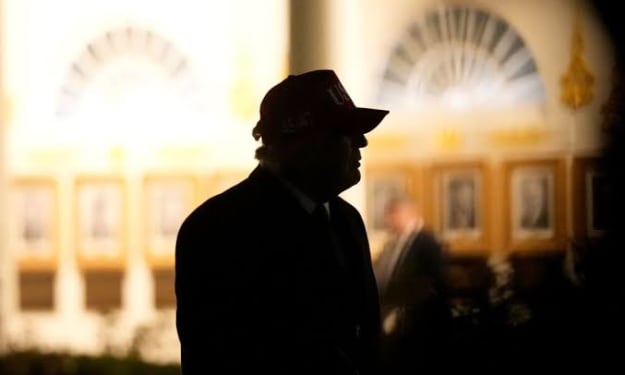
As tensions between the United States and Iran intensify, reports from officials familiar with internal discussions suggest that Donald Trump has privately shown serious interest in deploying U.S. ground troops inside Iran. While no final decision has been made, the conversations highlight a potentially significant escalation in a conflict that has so far been dominated by air strikes and naval operations. According to multiple sources cited in recent reports, Trump has discussed the possibility of sending a limited contingent of American troops into Iran for specific strategic missions rather than launching a full-scale ground invasion. The discussions reportedly took place in conversations with advisers, Republican allies, and military officials. Those familiar with the talks emphasized that the concept centers on deploying a relatively small force designed to achieve targeted objectives such as securing sensitive nuclear facilities, protecting strategic sites, or assisting allied operations. The potential move comes amid a rapidly evolving military confrontation in the region. U.S. forces have conducted extensive air operations aimed at Iranian military infrastructure, while Iran has responded with missile and drone strikes targeting American and allied assets in the Middle East. The growing cycle of attack and retaliation has raised fears of a broader regional war. Despite the private discussions, the White House has pushed back against reports suggesting that a ground deployment is imminent. Officials insist that the president has not issued any orders and that all military options remain under review. A spokesperson emphasized that any speculation about specific plans should be treated cautiously, noting that the administration often evaluates multiple scenarios during a crisis. Military analysts say even a small ground presence inside Iran would mark a dramatic escalation in the conflict. Iran is a large country with significant military capabilities, and any deployment of foreign troops could provoke a strong response from Iranian forces and allied militias across the region. The United States has previously avoided placing “boots on the ground” in Iran, relying instead on air power, naval deployments, and regional partnerships to contain tensions. However, some policymakers argue that certain strategic goals—such as securing nuclear materials or stabilizing key locations—could be difficult to achieve without limited ground operations. Trump himself has publicly suggested that he is not ruling out any options. In recent remarks, he stated that while ground troops may not be necessary, they could become a possibility if circumstances require stronger action. Supporters of a tougher approach toward Iran argue that decisive military pressure could weaken Tehran’s leadership and force negotiations over nuclear development and regional influence. They also believe that demonstrating U.S. willingness to escalate may deter further Iranian attacks. Critics, however, warn that even a limited deployment could quickly spiral into a larger war. Memories of prolonged conflicts in Iraq and Afghanistan remain fresh in the minds of many policymakers and voters, raising concerns about the risks of becoming entangled in another long and costly military engagement in the Middle East. Another factor influencing the debate is the potential geopolitical impact. Any U.S. ground operation inside Iran would likely draw reactions from major global powers and could disrupt energy markets, particularly given Iran’s position near key oil shipping routes in the Persian Gulf. Within Washington, lawmakers from both parties have called for greater transparency regarding military planning. Some members of Congress argue that any decision to deploy troops should involve legislative approval, while others insist the president must retain flexibility to respond quickly to emerging threats. Meanwhile, international leaders are urging restraint and diplomatic engagement to prevent further escalation. Several governments have called for renewed negotiations aimed at reducing tensions and avoiding a broader regional conflict that could destabilize global security. For now, the idea of U.S. ground troops in Iran remains a possibility under discussion rather than an approved policy. But the mere consideration of such a move underscores the seriousness of the current crisis and the complex choices facing American leaders. As the conflict continues to evolve, the decisions made in Washington could shape the future of Middle Eastern geopolitics—and determine whether the confrontation remains limited or expands into a much larger war.
By Fiaz Ahmed 2 days ago in The Swamp
Washington Moves to Break Hormuz Shipping Paralysis With $20B Maritime Insurance Plan. AI-Generated.
The United States is taking decisive steps to safeguard commercial shipping through the Strait of Hormuz, unveiling a $20 billion maritime insurance initiative designed to reduce risk for international vessels navigating one of the world’s most strategically sensitive waterways. The plan, announced by the U.S. Department of Defense and Treasury, comes amid escalating regional tensions and recent Iranian attacks on shipping vessels, which have disrupted global oil supplies and triggered volatility in international energy markets. The Strait of Hormuz, a narrow maritime chokepoint connecting the Persian Gulf to the Arabian Sea, is vital for global energy trade. Nearly 20% of the world’s oil supply passes through the strait, making its security a high priority for energy-importing nations and multinational shipping companies. Recent incidents—including attacks on tankers and drone strikes in nearby waters—have prompted insurers to hike premiums, with some firms refusing to cover vessels at all. The U.S. plan seeks to fill that gap by offering a government-backed insurance mechanism for commercial vessels operating in high-risk areas. Officials emphasize that the initiative is designed to restore confidence in maritime trade, ensuring that oil, liquefied natural gas, and other essential commodities continue flowing despite geopolitical tensions. “Energy and trade security are national security imperatives,” said Lloyd Austin. “This initiative will provide predictable coverage for commercial operators and help prevent disruptions that could ripple through global markets.” The $20 billion fund will cover both direct damages to ships and cargo as well as liability claims arising from hostile actions. U.S. officials indicated that the plan is available to vessels from all nations, emphasizing multilateral cooperation in maintaining safe maritime operations. Analysts say the approach mirrors historical precedents, such as wartime convoy insurance programs, but on a modern scale adapted to current geopolitical risks and the complex web of international shipping interests. Iran has frequently threatened to close the Strait of Hormuz in response to sanctions, naval operations, and perceived foreign interference. These threats have previously caused spikes in oil prices and disrupted supply chains. Shipping companies have grown increasingly wary of sending vessels through the region without adequate protection, creating what some analysts describe as a “shipping paralysis.” “This insurance initiative is a strong signal to Tehran and other actors that the international community is prepared to maintain maritime trade regardless of threats,” said Michael Singh. “By reducing financial risk, it removes a key leverage point that could be used to intimidate shipping firms.” Critics, however, caution that the plan is not a substitute for diplomacy or conflict resolution. While insurance may mitigate economic risk for private companies, it does not address the underlying political tensions that fuel instability in the Gulf. Analysts stress the need for parallel diplomatic engagement with Gulf states, Iran, and international partners to prevent escalation that could threaten both commercial and military vessels. The initiative is also expected to influence global energy markets. By ensuring that tankers and LNG carriers can transit the strait without prohibitive insurance costs, the U.S. hopes to stabilize supply and contain price spikes that have affected both European and Asian economies in recent months. Energy traders have reacted positively, with futures markets showing modest declines in volatility following the announcement. In addition to insurance coverage, the U.S. plans to coordinate closely with allied navies operating in the region, providing escort services, intelligence sharing, and rapid response to threats. These combined measures reflect a comprehensive approach to maritime security, emphasizing both financial and operational protections for international shipping. Shipping industry representatives have welcomed the plan, noting that it could restore confidence in one of the world’s most vital energy corridors. “Having a reliable insurance framework backed by a major government makes the difference between sending a ship through and rerouting it hundreds of miles,” said one shipping executive speaking on condition of anonymity. Washington’s $20 billion maritime insurance initiative represents a significant step in ensuring uninterrupted commerce in the Strait of Hormuz. While not a solution to the broader geopolitical challenges in the Middle East, it aims to mitigate immediate economic risks and reassure international stakeholders that trade and energy flows can continue despite regional tensions.
By Fiaz Ahmed 2 days ago in The Swamp
As Trump takes out world leaders, democracy takes a back seat. AI-Generated.
In a series of unprecedented moves, former U.S. President Donald Trump has increasingly bypassed traditional diplomatic channels, sidelining allies and taking direct action against foreign leaders. Observers warn that such unilateral strategies risk undermining democratic principles both domestically and abroad while leaving the U.S. isolated on the global stage. Trump’s approach contrasts sharply with the multilateralism that has characterized American foreign policy for decades. Rather than coordinating closely with allies through established diplomatic and legislative frameworks, the former president has increasingly relied on executive authority, public statements, and high-profile sanctions to advance U.S. interests. Critics argue this not only destabilizes international norms but also diminishes the role of Congress and other democratic institutions in shaping foreign policy. Recent actions targeting leaders in Latin America, the Middle East, and parts of Europe illustrate the trend. Analysts point out that decisions previously subject to intense debate among diplomats, lawmakers, and regional partners are now being executed rapidly, often with minimal consultation. These measures have generated both immediate geopolitical effects and long-term uncertainties for alliances. “Democracy thrives on checks and balances,” said Dr. Emily Harrison, a political science professor at Georgetown University. “When a single figure can dictate international relations with little oversight, it erodes the mechanisms designed to ensure accountability, transparency, and thoughtful deliberation.” While supporters argue that Trump’s direct style allows for quicker responses and projects strength, detractors say it risks alienating traditional allies and emboldening adversaries. European and Latin American governments have reportedly expressed concern over sudden policy shifts and unexpected sanctions, which often bypass traditional diplomatic channels. Such unilateralism can weaken long-term strategic partnerships, leaving countries hesitant to rely on U.S. commitments. Domestically, the trend also highlights tensions between executive power and legislative oversight. Congress has historically held authority over declarations of war, foreign aid allocations, and treaty ratifications. By circumventing these processes, Trump not only challenges the balance of power but also sets a precedent for future leaders to act independently of democratic checks. In addition to structural concerns, experts warn that public messaging—especially on social media—has become a tool for influencing global politics directly. Announcements about policy shifts, sanctions, or leadership removal often reach international audiences instantly, sometimes causing confusion among diplomats and foreign populations. The speed and informality of this communication style can exacerbate crises rather than resolve them, according to analysts. International relations scholars emphasize that while decisive action is sometimes necessary, sustained engagement, negotiation, and consensus-building remain critical. By prioritizing personal decision-making over established diplomatic processes, Trump risks undermining U.S. credibility and soft power. Allies may view U.S. commitments as unpredictable, and adversaries could exploit perceived gaps in policy coordination. Observers also point to the potential domestic consequences. By concentrating power in the executive branch, Trump diminishes the influence of Congress, independent agencies, and the judiciary in foreign policy decisions. Critics argue this trend could erode public trust in democratic institutions and create long-term structural weaknesses. Despite controversy, Trump’s approach resonates with a segment of voters who view traditional diplomacy as slow, ineffective, or overly cautious. Supporters applaud the directness, seeing it as a way to protect U.S. interests and project strength internationally. However, experts caution that short-term gains in visibility or leverage may come at the expense of sustainable, institutionally anchored foreign policy. As the global order navigates heightened tensions and emerging crises, Trump’s unilateral strategy raises fundamental questions about the role of democracy in international decision-making. Maintaining balance between executive authority and democratic oversight is increasingly crucial, not only for the U.S. but also for the stability of international alliances that rely on predictable, accountable governance.
By Fiaz Ahmed 2 days ago in The Swamp
The First Casualty Of War Is The Truth
It is often said that in times of war, the first casualty is the truth. When Donald Trump launched Operation Epic Fury, he said that the goal was to stop Iran from developing nuclear weapons. At the same time, when the head of the International Atomic Energy Agency (IAEA), Rafael Grossi, was asked about it, he said that they do not even have access to the sites. Therefore, they have no clear idea about what is happening there, and he appeared somewhat confused.
By Ibrahim Shah 2 days ago in The Swamp
CDF Munir discusses Iranian attacks in meeting with Saudi defence minister. AI-Generated.
Chief of the Defence Staff (CDF) Asim Munir visited Saudi Arabia on Thursday for high-level talks with Saudi Defence Minister Prince Khalid bin Salman, focusing on recent Iranian missile and drone attacks and their potential impact on regional security. The meeting, held at the Ministry of Defence headquarters in Riyadh, comes amid heightened tensions across the Gulf, as attacks on civilian and strategic infrastructure have intensified over the past months. During the discussion, both officials examined intelligence reports detailing cross-border strikes linked to Iran, including drone operations targeting critical energy and transport installations. These attacks have raised alarms for Gulf countries, prompting renewed assessments of their defensive capabilities and emergency response mechanisms. CDF Munir emphasized the importance of preparedness, warning that even minor miscalculations in such a volatile environment could escalate into broader conflicts. “Regional security is a shared responsibility. Collaboration and coordination among like-minded nations are essential to prevent further escalation,” Munir said, underscoring Pakistan’s commitment to peace and stability while maintaining a neutral diplomatic stance. Prince Khalid reaffirmed Saudi Arabia’s dedication to strengthening defence cooperation, particularly in air defence, intelligence sharing, and rapid response operations. The officials discussed joint measures to enhance early warning systems along key borders, improve surveillance technologies, and coordinate air and naval patrols. They also explored the possibility of conducting joint military exercises, personnel exchanges, and training programs to ensure both countries are fully prepared to respond to emerging threats. According to sources familiar with the meeting, discussions included sharing advanced radar and drone detection systems, as well as cyber-defence initiatives to protect critical infrastructure from digital attacks. Security analysts have noted that this meeting reflects an increasing trend of closer alignment between Gulf states and neighbouring countries like Pakistan in addressing Iranian-backed proxy attacks. By engaging in strategic dialogue, both nations aim to mitigate risks posed by regional instability while safeguarding energy routes, shipping lanes, and civilian populations. Historically, Pakistan has maintained a careful balance in Middle Eastern conflicts, striving to preserve neutrality and maintain strong ties with multiple actors. However, meetings such as this suggest a pragmatic shift, with Islamabad demonstrating a willingness to cooperate more closely with Gulf nations on security matters while continuing to advocate for peaceful resolution of conflicts. During the meeting, both sides acknowledged that regional stability cannot be achieved through military preparedness alone. They emphasized the importance of ongoing diplomacy, conflict de-escalation, and intelligence cooperation to anticipate potential threats. Experts say that this dual approach—combining defensive readiness with active diplomatic engagement—is essential in preventing incidents from spiraling into larger confrontations. The dialogue also touched on protecting maritime routes in the Gulf, which are vital to the global oil supply. Attacks on tankers and shipping lanes in recent months have underscored the fragility of commercial traffic in the region. By coordinating patrols and sharing real-time intelligence, both countries hope to deter hostile actors and maintain uninterrupted trade. CDF Munir and Prince Khalid concluded the meeting with a joint commitment to continue strategic consultations, strengthen bilateral defence ties, and enhance intelligence-sharing protocols. Officials highlighted that sustained collaboration will not only safeguard national interests but also contribute to wider regional stability. Observers say this engagement signals a proactive stance by both Pakistan and Saudi Arabia, demonstrating that military dialogue, combined with strong diplomatic channels, can play a crucial role in deterring aggression and ensuring security in the Gulf. As tensions persist, such high-level meetings underscore the importance of multinational cooperation, with Pakistan positioning itself as a responsible partner in maintaining peace and stability across a region increasingly vulnerable to conflict escalation.As tensions persist, such high-level engagement underscores the importance of proactive diplomacy alongside military preparedness. Officials from both Pakistan and Saudi Arabia stressed that continued dialogue, joint exercises, and intelligence sharing are essential to prevent miscalculations that could escalate into wider conflicts. Regional analysts say that by working together, the countries aim not only to protect their own populations and assets but also to stabilize key maritime routes, energy supply lines, and trade networks critical to the global economy. The meeting ultimately reflects a strategic effort to combine defence readiness with multilateral cooperation in an increasingly volatile Gulf region.
By Fiaz Ahmed 2 days ago in The Swamp
In the Gulf, a Cruise Line Steps Up to Get Stranded Passengers Home. AI-Generated.
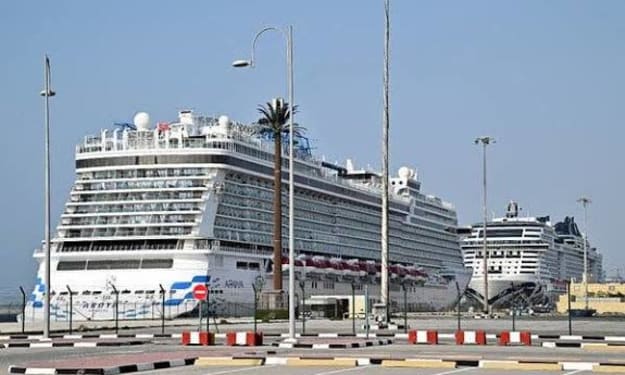
As conflict and airspace closures disrupt commercial flights across parts of the Middle East, a major cruise company has stepped in to help hundreds of stranded travelers find a way home. With airports overwhelmed and airlines canceling routes, the unusual rescue effort has transformed a leisure cruise ship into an emergency transport vessel for passengers unable to leave the region. The situation escalated after rising tensions between Iran and Israel led several governments to issue security warnings and restrict flights over parts of the Gulf. Major airlines quickly began rerouting aircraft or suspending services entirely, leaving thousands of international travelers stranded in cities across the region. Among those affected were tourists, business travelers and families who had been visiting countries such as the United Arab Emirates and Qatar. Many suddenly found themselves unable to return home as flight schedules collapsed with little notice. In response, Royal Caribbean Group announced that one of its vessels operating in the region would offer additional sailings designed specifically to transport stranded passengers to ports where flights remain operational. The ship, already scheduled for leisure voyages in the Gulf, quickly became part of an improvised evacuation network. Cruise officials coordinated with port authorities and foreign embassies to identify travelers in urgent need of transportation. Extra cabins were opened and departure schedules were adjusted to accommodate the unexpected demand. Passengers boarding the emergency voyage described scenes of relief and exhaustion. Many had spent days trying unsuccessfully to rebook flights or secure land transport to neighboring countries. For some families traveling with children, the uncertainty had become increasingly stressful. “Once we heard there was a ship leaving the Gulf that could take us somewhere flights were still running, we booked immediately,” said one passenger who had been stranded in Dubai for several days. The cruise route was adjusted to sail toward safer ports such as Muscat and Doha, where international airports remain open and functioning. From there, passengers could continue their journeys home on commercial flights. Government officials praised the cruise operator’s decision to assist. Diplomats said private-sector support can play an important role during regional crises, particularly when traditional transportation networks are disrupted. Cruise companies typically focus on leisure travel, but maritime vessels can sometimes provide alternative evacuation routes during emergencies. Ships are not constrained by the same airspace restrictions that affect aviation, allowing them to operate even when flight corridors are closed. Security analysts say the incident highlights how geopolitical tensions in the Gulf can rapidly affect global travel. Several airlines had already begun avoiding parts of Middle Eastern airspace due to safety concerns. For the passengers boarding the cruise ship, however, the journey was less about geopolitics and more about getting home. Crew members welcomed the unexpected travelers aboard, offering meals, temporary accommodations and assistance arranging onward travel plans. For many, the ship represented a rare moment of stability during a chaotic travel situation. As the vessel departed the Gulf waters carrying hundreds of relieved passengers, it symbolized an unusual but effective response to a modern travel crisis—where a cruise liner became a lifeline for those stranded far from home.Crew members onboard worked around the clock to accommodate the unexpected surge of passengers, providing meals, temporary lodging, and assistance with travel documentation. The ship sailed toward ports such as Muscat, where airports continued operating and travelers could reconnect with international flights. Diplomats from several countries praised the effort, noting that private companies can play a crucial role during travel emergencies. Analysts say the incident demonstrates how maritime transport can provide an alternative when aviation networks break down. For many stranded travelers, the cruise ship offered more than transportation—it provided reassurance and a safe path home during a deeply uncertain moment.
By Fiaz Ahmed 2 days ago in The Swamp
New England Patriots’ Plane Brought Americans Back From the Middle East. AI-Generated.
An aircraft belonging to the New England Patriots was used in an unexpected humanitarian mission after helping transport American citizens out of the Middle East during a period of escalating regional tensions. The unusual operation highlighted how private organizations and sports franchises sometimes step in to assist during international crises when traditional travel routes are disrupted.
By Fiaz Ahmed 2 days ago in The Swamp
U.S. strategic competition with China.
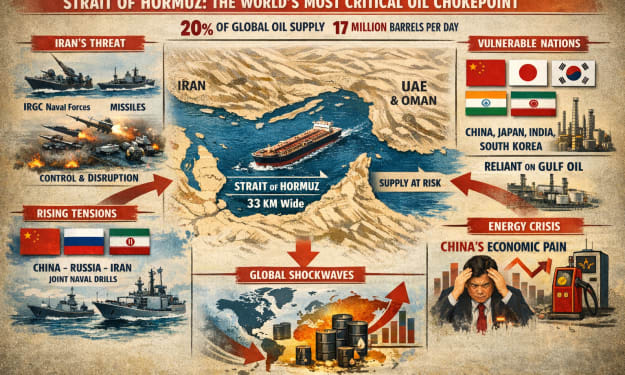
This war Stop being a medley story the moment the first oil tanker changed course in the Persian Gulf. What I mean is, Strait of Hormuz is the most important energy bottleneck on earth. Everybody knows it is the most important energy bottleneck on earth. And if it was the threat from Iran last time, this time Iran has partially done it. It is so narrow, IRGC has a lot of control over it. Just like in the Strait of Malacca, army/navy has control over it. Similarly, here the Iranians have control over it. And recently, China, Russia, and Iran have already conducted war games. So it is this narrow, 33 kilometers wide, you are hearing about it everywhere, everybody is talking about it. It is the width of a large city. So in this narrow passage, which holds 20% of the world's oil, one fifth of the world's oil and gas goes through, it is around 17 million barrels per day. There is no realistic alternative route except the Strait of Hormuz. If we close this passage, its consequences will not stop at any one border. Europe will pay, Japan will pay, India, South Korea, China, everybody pays the price. So a theory is floating around, which backs my argument that China is the target. It is that in Washington circles, there is a discussion going on, let's be honest, if this happens, what do we have to do? The hawkish people there say that this disruption should be allowed because it does not impact them as much as it impacts those countries, which I have just mentioned. So let's take this opportunity that the slowdown of China's energy supply can be slowed down. Trap Beijing in such an expensive moment as long as this congestion remains in the Strait of Hormuz, it remains closed, partially or completely. Iran keeps Beijing hit very badly from an energy security point of view. So the containment policy of China that is already going on is an added bonus. So imagine, on one hand, you are doing everything with technology and trade, imposing tariffs, treating them in the South China Sea, imagine all this. And from the other side, almost 90% of the oil and gas supplies go to China. If it is blocked for a few days, how badly it will hit China. So imagine, while the world is suffering, they are only having strategic designs in their minds.
By Ibrahim Shah 2 days ago in The Swamp
Former Leader Ardern Has Left New Zealand. She’s Not the Only One. AI-Generated.
A growing number of New Zealanders are leaving their homeland in search of better opportunities abroad, and even former Prime Minister Jacinda Ardern has recently joined the trend. Her relocation to Sydney highlights a broader shift as mid-career professionals increasingly choose to build their lives overseas rather than remain in New Zealand. For decades, New Zealanders heading abroad was a common tradition known locally as the “Big OE,” short for Overseas Experience. Young people in their twenties would typically travel to places such as London or Australian cities to work and explore the world before eventually returning home. But the current migration wave looks very different. Recent figures suggest that the number of New Zealanders aged between 30 and 50 leaving the country has more than doubled in the past four years. Demographers attribute the trend to rising living costs, limited career opportunities, and economic uncertainty. Instead of temporary travel experiences, many families are now relocating permanently. One example is Jacinda Thorn, a 43-year-old Wellington resident who moved with her husband and children to Melbourne. The family packed up their lives, sold most of their belongings, and relocated with only a few suitcases and their dog. Thorn said the move dramatically improved their financial situation and overall lifestyle. Her husband discovered that his salary as a data engineer would increase by roughly 50 percent in Australia. At the same time, the cost of living dropped in several areas. Grocery expenses fell significantly, fuel prices were lower, and access to healthcare appointments became easier. Economists say the shift reflects deeper economic challenges at home. According to analysts at Infometrics, the country has experienced sluggish economic growth and rising unemployment in recent years. These conditions are encouraging many professionals to look elsewhere for opportunities. Australia remains the most popular destination. Official estimates suggest around 670,000 New Zealand citizens now live there—about 12.5 percent of New Zealand’s population. Australia offers higher wages, a larger job market, and automatic work rights for New Zealanders, making relocation relatively straightforward. In addition to Australia, some migrants are moving to the United Kingdom, the United States, and parts of Europe in search of professional advancement. These moves are often motivated by the promise of larger markets, better salaries, and stronger career prospects. Economists warn that this migration pattern could have long-term consequences for New Zealand’s economy. When experienced professionals leave, they often take valuable expertise and institutional knowledge with them. Replacing that talent can be difficult, particularly as the country’s population ages. At the same time, New Zealand continues to attract migrants from countries such as India, the Philippines, and China, many of whom work in industries including construction, healthcare, and agriculture. While this influx helps support key sectors, it does not fully replace the loss of experienced mid-career workers. Despite building lives abroad, many migrants say their identity as “Kiwis” remains strong. They maintain connections to their homeland through family ties, cultural traditions, and regular visits. For many, leaving New Zealand is not about abandoning their roots but about finding new opportunities. As one migrant explained, home becomes less about geography and more about identity—something carried wherever they go.The continued departure of skilled workers raises concerns about New Zealand’s long-term economic resilience. Experts warn that if the country cannot retain its mid-career professionals, industries may face shortages of experienced leadership and technical expertise. Policymakers in New Zealand are now exploring strategies to improve wages, expand job opportunities, and encourage expatriates to return. At the same time, strong economic ties with Australia mean migration across the Tasman Sea will likely remain a defining feature of Kiwi life. For many migrants, the hope is that one day they might return home under better economic conditions and renewed opportunity.
By Fiaz Ahmed 3 days ago in The Swamp
New Status Quo: Germany Reaches for European Conventional Military Dominance. AI-Generated.
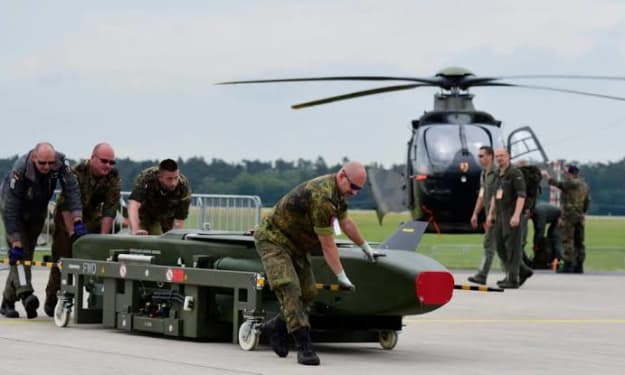
Germany is moving rapidly to transform its armed forces and assume a leading role in Europe’s conventional military balance, signaling what analysts describe as a “new status quo” for the continent’s security architecture. After decades of restraint following the Second World War, Berlin is now investing heavily in defence capabilities, seeking to position itself as the central military power within Europe. The shift gained momentum after the Russian invasion of Ukraine, which fundamentally altered Europe’s perception of security threats. The conflict prompted Olaf Scholz to announce a historic “Zeitenwende,” or turning point, in German defence policy. Under this initiative, Germany pledged to dramatically increase military spending and modernize the Bundeswehr. Massive Defence Investment Germany created a special €100-billion fund dedicated to upgrading its armed forces. The plan includes new fighter jets, armored vehicles, air defence systems, and digital battlefield technologies. Berlin has also committed to consistently meeting the defence spending target set by NATO, which requires member states to spend at least 2% of their GDP on defence. Among the major acquisitions are the advanced F‑35 Lightning II jets, which Germany intends to use to maintain NATO’s nuclear-sharing arrangements. The country is also investing in missile defence, including participation in the European Sky Shield Initiative, designed to create a continent-wide shield against missile threats. German military planners believe these investments will allow the Bundeswehr to become Europe’s most capable conventional military force. The goal is not only national defence but also the ability to lead multinational operations across the continent. Leadership Within Europe Germany’s renewed military ambitions reflect broader changes in Europe’s security environment. For decades, European defence relied heavily on the United States. However, uncertainty about future American commitments has pushed European countries to strengthen their own capabilities. Berlin is increasingly positioning itself as the leader of these efforts. Germany has expanded its role within NATO’s eastern flank, deploying troops and equipment to countries such as Lithuania to deter potential aggression. German officials have also proposed forming a permanent brigade in the region, marking one of the most significant overseas deployments in the Bundeswehr’s history. At the same time, Germany is deepening defence cooperation with partners such as France and Poland, aiming to create a stronger, more integrated European military framework. Joint projects include next-generation tanks, fighter aircraft, and advanced defence technologies. Challenges and Debate Germany’s rapid military expansion has sparked debate both domestically and internationally. Some political groups worry about the financial burden of increased defence spending, especially at a time when Europe faces economic pressures. Others argue that Germany must overcome bureaucratic hurdles and procurement delays that have historically slowed military modernization. Within Europe, reactions have been mixed. While many allies welcome Germany’s willingness to shoulder greater responsibility for regional security, some countries remain cautious about the prospect of Berlin becoming the continent’s dominant military power. Historical sensitivities still shape perceptions of German military leadership. A Changing Security Landscape Despite these concerns, the broader trend toward stronger European defence appears irreversible. Russia’s war in Ukraine and rising global tensions have convinced many policymakers that Europe must be able to defend itself more independently. For Germany, this moment represents a profound transformation. The country is shifting from a cautious security posture to a leadership role in Europe’s military structure. If Berlin’s modernization plans succeed, the Bundeswehr could emerge as the central pillar of Europe’s conventional defence capabilities. The result may be a new strategic balance across the continent—one in which Germany plays a far more prominent role than at any time since the Cold War.
By Fiaz Ahmed 3 days ago in The Swamp
Trump sets his sights on crisis-hit Cuba after Iran action. AI-Generated.
Following escalating tensions and military action involving Iran, Donald Trump has indicated that crisis-stricken Cuba could become the next major focus of U.S. foreign policy. His remarks have intensified speculation about Washington’s strategy in the Caribbean and raised concerns in Havana about potential economic and political pressure from the United States. Speaking during a recent interview and at a White House event, Trump suggested that the United States is currently prioritizing the situation in Iran, but hinted that attention could soon shift toward Cuba once developments in the Middle East stabilize. He predicted that the communist-run island nation, which has been grappling with a severe economic crisis, may soon face dramatic political change. “Cuba is going to fall pretty soon,” Trump reportedly said, adding that the Cuban leadership is eager to negotiate with Washington after decades of strained relations. Economic Crisis in Cuba Cuba is currently facing one of the most difficult economic periods in its modern history. The island has been dealing with chronic fuel shortages, electricity blackouts, rising food prices, and declining imports. Much of the pressure has been intensified by tighter U.S. sanctions and the disruption of energy supplies from Venezuela, a longtime ally that once provided significant oil shipments to Havana. The Business Standard Recent U.S. measures targeting fuel flows to Cuba have significantly reduced the island’s energy supplies. Without reliable oil imports, Cuba has struggled to maintain electricity production, transportation networks, and industrial activity. These economic hardships have increased social pressure inside the country and fueled speculation about political instability. Analysts say the worsening conditions have made Cuba more vulnerable to external diplomatic pressure. Washington believes the crisis could force the Cuban government to negotiate reforms or open discussions with the United States. Rubio’s Potential Role Trump has also suggested that Marco Rubio, whose family fled Cuba after the revolution, could play a central role in any negotiations with Havana. Rubio has long been one of the strongest critics of the Cuban government in U.S. politics and has advocated for policies aimed at encouraging political change on the island. The president praised Rubio’s work on Cuba-related issues and indicated he may be tasked with leading diplomatic efforts should the United States move forward with engagement or pressure strategies targeting the island’s leadership. Strategic Shift in U.S. Policy Trump’s remarks reflect a broader shift in U.S. foreign policy strategy. In recent years, Washington has taken a more assertive stance toward governments it considers adversarial, particularly in Latin America and the Middle East. Observers note that the administration appears willing to combine economic sanctions, diplomatic pressure, and strategic military actions to influence political outcomes abroad. Some analysts view Trump’s comments as part of a broader geopolitical strategy aimed at reshaping regional power dynamics. Cuba has long been a symbol of resistance to U.S. influence in the Western Hemisphere, and any major shift in its political system would have significant consequences for Latin America. Concerns and International Reaction The possibility of increased U.S. involvement in Cuba has sparked debate among international observers. Supporters argue that pressure from Washington could accelerate democratic reforms and economic liberalization on the island. Critics, however, warn that aggressive policies could worsen humanitarian conditions for ordinary Cubans or escalate tensions between the two countries. Officials in Havana have previously condemned U.S. sanctions and pressure campaigns, describing them as attempts to undermine Cuba’s sovereignty. The Cuban government has repeatedly stated it is open to dialogue but rejects any efforts to force political change from abroad. Uncertain Future For now, the United States remains focused on developments in Iran, but Trump’s remarks suggest that Cuba could soon become a major issue on Washington’s foreign policy agenda. Whether this leads to negotiations, increased sanctions, or broader geopolitical confrontation remains uncertain. What is clear is that the deepening crisis inside Cuba and shifting U.S. priorities could bring a new chapter in the long and complicated relationship between the two nations.
By Fiaz Ahmed 3 days ago in The Swamp
Defence Force Plane Bound for Middle East to Help New Zealanders Stranded by Conflict. AI-Generated.
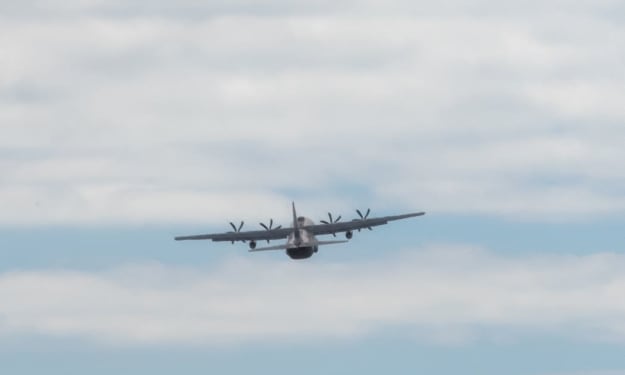
New Zealand’s government has deployed a Defence Force aircraft to the Middle East to assist citizens stranded amid escalating conflict, demonstrating the country’s commitment to the safety and security of its nationals abroad. The mission comes as regional instability has intensified, threatening the safety of foreign nationals, including New Zealanders, living and traveling in affected areas. The Royal New Zealand Air Force (RNZAF) confirmed that a C-130 Hercules transport plane is en route to coordinate evacuations and provide logistical support. Defence Minister Andrew Little emphasized that the deployment is precautionary but necessary to ensure that New Zealand citizens can leave high-risk zones safely. “New Zealanders’ safety is our top priority,” Minister Little said. “We are closely monitoring the situation and taking all necessary measures to assist those affected by the conflict. This aircraft will support evacuation efforts and provide transport for New Zealanders who need to return home.” Responding to Rising Regional Tensions The deployment follows a surge in hostilities across parts of the Middle East, including missile strikes, airspace restrictions, and armed clashes. Governments worldwide have been scrambling to evacuate citizens from areas experiencing sudden escalations. New Zealand’s initiative reflects both proactive planning and international cooperation. Officials are liaising with foreign governments, regional authorities, and international organizations to facilitate safe passage and avoid potential conflict zones. Airspace coordination is particularly critical, as commercial flights may be limited or diverted due to military activity in the region. The Role of the Defence Force Aircraft The RNZAF’s C-130 Hercules is a versatile transport aircraft capable of carrying personnel, vehicles, and essential supplies. Its deployment allows for rapid extraction of citizens from high-risk locations, as well as the transport of humanitarian aid if required. Military officials note that the aircraft’s ability to operate in challenging environments is crucial for ensuring the safe evacuation of New Zealanders. The plane will also provide real-time updates to the Ministry of Foreign Affairs and Trade (MFAT) regarding conditions on the ground, enabling better coordination of subsequent flights and support services. Assisting New Zealanders Abroad New Zealand’s government has urged citizens traveling or living in the Middle East to register with the Smart Traveler Enrollment Program (STEP) or the local equivalent maintained by MFAT. The ministry has also set up a 24-hour contact line to provide guidance, updates, and support to New Zealanders affected by the conflict. “For those in affected areas, it is vital to stay informed and follow the advice of authorities,” said an MFAT spokesperson. “Our teams are working around the clock to ensure all New Zealanders are safe and accounted for.” The Defence Force deployment underscores the country’s commitment to rapid, coordinated responses in crises. It also illustrates the importance of military assets in supporting humanitarian and evacuation operations, especially in regions where commercial travel may be disrupted or unsafe. International Cooperation and Challenges Evacuations in conflict zones often require careful coordination with multiple governments and organizations. Officials must navigate airspace restrictions, security checkpoints, and local regulations, all while maintaining the safety of evacuees and crew. New Zealand’s deployment is part of a broader international trend, as countries prioritize the safety of their citizens amid unpredictable regional conflicts. Lessons learned from previous evacuations, such as those in Afghanistan and Iraq, have informed planning and operational readiness for missions like this one. Looking Ahead The RNZAF aircraft is expected to make multiple trips, depending on the number of New Zealanders requiring evacuation and the evolving security situation. Meanwhile, the government continues to assess the situation in real time, ready to deploy additional support if necessary. By taking swift action, New Zealand demonstrates its commitment to protecting its citizens overseas while navigating complex regional security challenges. For New Zealanders in the Middle East, the arrival of the Defence Force plane provides a lifeline and a measure of reassurance amid ongoing uncertainty.
By Fiaz Ahmed 3 days ago in The Swamp