
Khamenei: Power, Faith, and Iran’s Defining Voice
In Iran, one name carries unusual weight across politics, religion, and daily life: Khamenei.

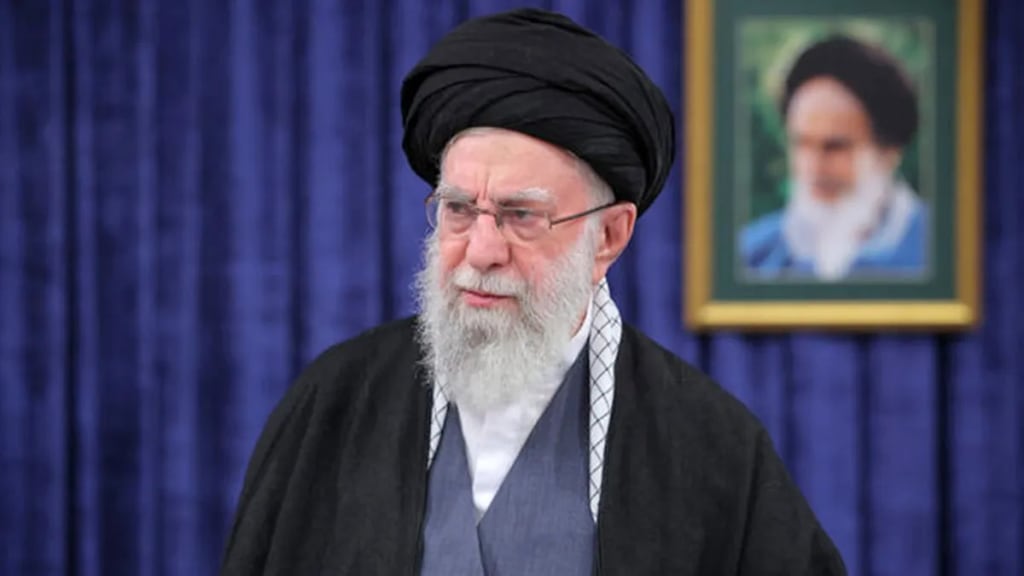
In Iran, one name carries unusual weight across politics, religion, and daily life: Khamenei. For decades, his words have shaped national policy, foreign relations, and the tone of public debate. To some, he represents resistance and religious authority. To others, he symbolizes strict control and limited freedom. Outside Iran, his image often appears in headlines tied to sanctions, protests, or regional conflict. Inside the country, his influence reaches into classrooms, courts, and state media. Understanding Khamenei means understanding modern Iran itself. His life story connects revolution, war, ideology, and power. Whether admired or criticized, Khamenei remains one of the most influential figures in the Middle East, and his leadership continues to define Iran’s direction in a changing world.
Early Life and Religious Education
Ali Khamenei was born in 1939 in Mashhad, a major religious city in Iran.
His family background was modest but deeply rooted in religious scholarship. His father was a cleric, and from a young age, Khamenei studied Islamic theology.
He attended religious seminaries in Mashhad and later in Qom, where many influential Shia scholars taught. During these years, Iran was ruled by Shah Mohammad Reza Pahlavi, whose modernization policies created tension with traditional religious circles.
Khamenei became involved in religious activism early in life.
His sermons and writings criticized the Shah’s government, which he and many others viewed as authoritarian and too closely aligned with Western powers.
This period shaped his worldview.
It also marked the beginning of his political involvement.
The 1979 Iranian Revolution
The Iranian Revolution in 1979 changed everything.
Led by Ayatollah Ruhollah Khomeini, the movement overthrew the Shah and established the Islamic Republic of Iran.
Khamenei supported Khomeini and became part of the new leadership structure after the revolution succeeded.
The revolution was driven by a mix of religious, political, and economic grievances.
For many Iranians, it represented a rejection of monarchy and foreign influence.
For Khamenei, it was the realization of a long-held vision of governance guided by Islamic principles.
The new political system combined elected institutions with strong clerical oversight.
This framework would later elevate Khamenei to the highest position in the country.
Rising Through Political Ranks
After the revolution, Khamenei held several key roles.
He served in the Revolutionary Council and later became a member of parliament.
In 1981, following the assassination of President Mohammad Ali Rajai, Khamenei was elected president of Iran.
His presidency occurred during the Iran-Iraq War, a brutal conflict that lasted from 1980 to 1988.
The war deeply affected Iran’s economy and society.
Khamenei’s leadership during this time focused on national unity and resistance.
Though the presidency is an important role, ultimate authority in Iran lies with the Supreme Leader.
That position was held by Ayatollah Khomeini until his death in 1989.
Becoming Supreme Leader
After Khomeini’s death, Iran faced a critical transition.
The Assembly of Experts, a clerical body responsible for selecting the Supreme Leader, chose Khamenei for the role.
His appointment surprised some observers because he was not considered one of the highest-ranking clerics at the time.
However, political support within the leadership structure secured his position.
As Supreme Leader, Khamenei became the highest authority in Iran.
He oversees the armed forces, appoints key judicial and media officials, and influences foreign and domestic policy.
The role carries both religious and political power.
Since 1989, Khamenei has remained in that position.
The Structure of Power in Iran
To understand Khamenei’s influence, it is important to understand Iran’s political system.
Iran has a president, parliament, and elections.
However, the Supreme Leader holds ultimate authority over major decisions.
Khamenei appoints the head of the judiciary.
He also influences the Guardian Council, which reviews legislation and approves candidates for elections.
This structure ensures that policies align with the principles of the Islamic Republic.
Supporters argue that this system protects religious values.
Critics argue that it limits political competition and freedom.
In either case, Khamenei’s authority shapes the boundaries within which Iranian politics operates.
Foreign Policy and Regional Influence
Khamenei’s views strongly influence Iran’s foreign policy.
Relations with the United States have been tense for decades.
Since the revolution, mistrust has remained high.
Khamenei often criticizes Western intervention in the Middle East.
He frames Iran’s stance as resistance against foreign pressure.
Iran’s involvement in regional conflicts, including in Syria and Iraq, reflects this perspective.
Supporters see these actions as strategic defense.
Critics argue they increase instability.
The 2015 nuclear agreement, known as the Joint Comprehensive Plan of Action, was negotiated during Khamenei’s leadership.
Although Iran agreed to limit its nuclear program in exchange for sanctions relief, the agreement later faced challenges.
Khamenei’s cautious approach to negotiations reflected deep skepticism toward Western governments.
Domestic Policy and Social Issues
Inside Iran, Khamenei’s leadership affects cultural and social policies.
The Islamic Republic enforces religious guidelines in public life.
Dress codes, media regulations, and education policies align with religious principles.
Supporters believe these measures preserve moral values.
Opponents argue they restrict personal freedom.
Protests have occurred periodically, particularly around economic issues and social restrictions.
In response, authorities have often emphasized stability and national unity.
Khamenei’s speeches frequently highlight resistance, self-reliance, and faith.
His tone suggests that external pressure and internal dissent threaten the country’s independence.
Economic Challenges
Iran’s economy has faced significant challenges during Khamenei’s tenure.
International sanctions have limited trade and investment.
Inflation and unemployment have affected daily life for many citizens.
Khamenei has promoted a concept often described as resistance economy.
This idea focuses on reducing dependence on foreign goods and strengthening domestic production.
The success of these policies remains debated.
Some sectors have adapted.
Others struggle under pressure.
Economic frustration has contributed to public demonstrations in recent years.
Public Image and Media Presence
Khamenei’s image appears widely across Iran.
His speeches are broadcast on state television.
His statements are shared on official websites and social media platforms.
He often addresses students, military officials, and religious gatherings.
These appearances reinforce his authority.
Unlike some political leaders who rely heavily on charisma, Khamenei’s public style is serious and deliberate.
He emphasizes continuity and principle over popularity.
Internationally, media coverage often focuses on his political decisions rather than personal life.
This creates an image shaped more by policy than personality.
Criticism and Support
Opinions about Khamenei vary widely.
Supporters credit him with maintaining stability in a turbulent region.
They argue that his leadership has preserved Iran’s sovereignty despite external pressure.
Critics point to restrictions on press freedom and political dissent.
Human rights organizations have raised concerns about arrests and limitations on civil society.
These differing perspectives highlight the complexity of evaluating his legacy.
For some, he represents continuity of revolutionary ideals.
For others, he symbolizes unyielding authority.
The Role of Religion
Religion plays a central role in Khamenei’s authority.
As a Shia cleric, he is seen by supporters as a guardian of Islamic governance.
The concept of velayat-e faqih, or guardianship of the jurist, underpins his leadership.
This principle argues that a qualified Islamic scholar should oversee political matters to ensure they align with religious teachings.
Understanding this concept is key to understanding Khamenei’s position.
It blends theology with governance in a way unique to Iran’s system.
Generational Shifts
Iran’s population is relatively young.
Many citizens were born long after the 1979 revolution.
Their experiences differ from those who lived through it.
Access to global media and technology has shaped new expectations.
Khamenei’s leadership must navigate these generational shifts.
Balancing tradition with modern demands presents ongoing challenges.
How younger Iranians view authority and identity may influence the country’s future.
Looking Ahead
Khamenei is now in his eighties.
Questions about succession occasionally surface in political discussions.
The process for selecting a future Supreme Leader involves the Assembly of Experts.
Speculation about potential successors reflects the importance of the role.
Whoever follows Khamenei will inherit both power and responsibility in a complex environment.
Conclusion: Understanding Khamenei’s Legacy
Khamenei’s life spans revolution, war, reform efforts, and ongoing tension with global powers.
His leadership has shaped Iran’s domestic structure and international stance for more than three decades.
To understand Iran today, one must understand Khamenei’s influence.
He remains a central figure in debates about governance, religion, and national identity.
Whether viewed as a protector of principles or as a symbol of restriction, his impact is undeniable.
As Iran continues to evolve, the legacy of Khamenei will remain part of its story.
His decisions, beliefs, and authority have left a lasting mark on the nation and the wider region.
About the Creator
Muqadas khan
Hi! Welcome to my Vocal page. I’ll be sharing fresh articles every day covering stories, ideas, and a bit of inspiration to brighten your feed. Thanks for reading and supporting daily writing! 📖💫
Keep reading
More stories from Muqadas khan and writers in The Swamp and other communities.
Rhode Island Shooting: Grief, Fear, and Community Response
The words rhode island shooting carry a weight that is hard to explain unless you have felt it in your own neighborhood. A shooting does not only affect the people directly involved. It ripples through schools, homes, workplaces, and quiet streets that once felt safe. Parents hold their children a little tighter. Neighbors glance at each other with questions in their eyes. Fear settles in slowly, like a fog that refuses to lift.
By Muqadas khan14 days ago in The Swamp
A Gathering of Evil Bosses
“I’m the queen of chin jutting while I smooth my hair, attacking, insulting, and deflecting to protect my appointer.” “Oh, please, Blondi, my hair is curled, highlighted, and longer than yours. I feature television commercials telling immigrants that we will give them a free plane ride home, and if they voluntarily turn themselves in, they will be allowed to legally apply for re-entry. It runs everywhere, and I look good in it! You can’t compete because of your blond hair. Mine is nicer, and my lips are prettier than yours.”
By Andrea Corwin 13 days ago in The Swamp
Supreme Court Considers Fate of Docks and Other Assets Seized by Cuba in 1960
The Supreme Court of the United States is weighing a case that could determine whether American companies and families can reclaim or seek compensation for docks, factories, and other properties seized by Cuba during the revolutionary nationalizations of 1960.
By Fiaz Ahmed 8 days ago in The Swamp
This Is What I Do When People Throw Rocks At Me
Rocks have been thrown at me for a greater part of my life. Some have been small and missed hitting me. When people don't get a reaction from me, they throw bigger rocks with a better aim. Many have been hurled at me with precision over the years. For a long time, I thought my only options were to dodge them or be crushed by them.
By Margaret Minnicks6 days ago in Confessions



Comments
There are no comments for this story
Be the first to respond and start the conversation.