medicine
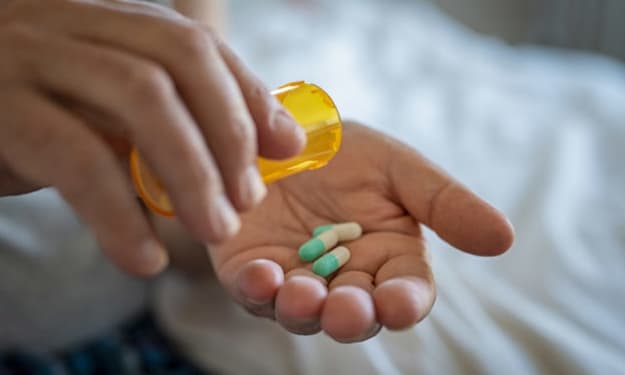
The medicalization of mental illness has given rise to many forms of pharmacological relief that restore chemical imbalances in one's brain.
Significant facts why females have a high body temperature at night
As the body battles to rid itself of infection, a cold or fever may trigger a rise in body temperature at night. Certain medications, such as antidepressants and other psychiatric medications, can cause nighttime high body temperatures.
By ANGELO POBLETE5 years ago in Psyche
How is ultra-low-dose naltrexone clinically important?
Ultra low-dose naltrexone or naloxone (ULDN) refers to a dosing spectrum when less than one μg quantity of the naltrexone is used. Its mechanism of action is linked to a bimodal cellular response to opioids. Additionally to their inhibitory Gi-coupled response, concomitant and mild Gs-coupled stimulatory response are also induced by opioids. The stimulatory response is sharply exclusive if tiny quantities of opioid blockers are used; otherwise, it progresses steadily with continuous μ-opioid receptors stimulation. This response cascade of Gs-coupled opioid receptors has been linked to prolonging the action potential, tolerance, hyperalgesia, and dependence.
By Harbor Compounding pharmacy5 years ago in Psyche
I Was Afraid of the Stigma
I procrastinated making my appointments for quite some time now merely because I hate the doctors and it doesn't matter what it's for. Whether it's for the dentist, the gyno, my annual physical, I hate it; all those white rooms and medicine smells give me anxiety. But, given these trying times, I couldn't put it off for much longer so I made my appointment for my physical which I was long overdue for, and with all these apps I didn't even have to call! I also hate making phone calls, go figure, and having that nervous shrill phone voice that everyone has. I had quite a few things to ask my doctor and one of them being about finding a psychiatrist so the time was now honestly.
By Billie-Jules5 years ago in Psyche
Psychiatry and Real Life
Psychiatry is optimistic about antidepressants. The debate has been won, it is said, as more evidence from better trials comes out in support of their use. I’m not so sure. I support their use very reservedly, and have some thoughts about translational problems from clinical trials into real-life prescribing. The gap is larger than us doctors seem to realise.
By Nick Birthday 5 years ago in Psyche
Protect Us From Covid-19
COVID-19 by and large spreads through respiratory droplets from one individual to some other while respiratory. These droplets cross into the air when you cough, sneeze, chortle, shout, or sing. Those droplets can land or breathe into the mouths or noses of human beings close to you.
By jorge pacheco5 years ago in Psyche
Medicated
I was diagnosed with generalized anxiety disorder back when I was in high school, but I felt like my relationship with mental illness started many years before that. When I was 8 I was diagnosed with Tourette’s syndrome and it became a permanent part of my identity. At some point I remember doctors (or maybe therapists?) throwing OCD into the mix as well. I felt like I had a laundry list of things that described who I was and defined who I would be. My days were full of routines and rituals in between playing make believe on the playground and trying to disguise my ticks as part of my charming personality. I learned early on how to try to conceal the things about who I was that might be different or embarrassing. Some, I couldn’t, so I would get mildly teased or I’d become an annoyance to friends and family. For the most part, I was a normal kid, but from a young age my mind seemed to buzz to the point of explosion and I was constantly figuring out and adjusting my plan of fitting into the mold I thought I needed to fit into.
By Trish Felecos5 years ago in Psyche