
Temperature Effects on Heavy Duty Gantry Crane Structural Components
How High and Low Temperatures Impact Steel Strength, Structural Integrity, and Operational Safety
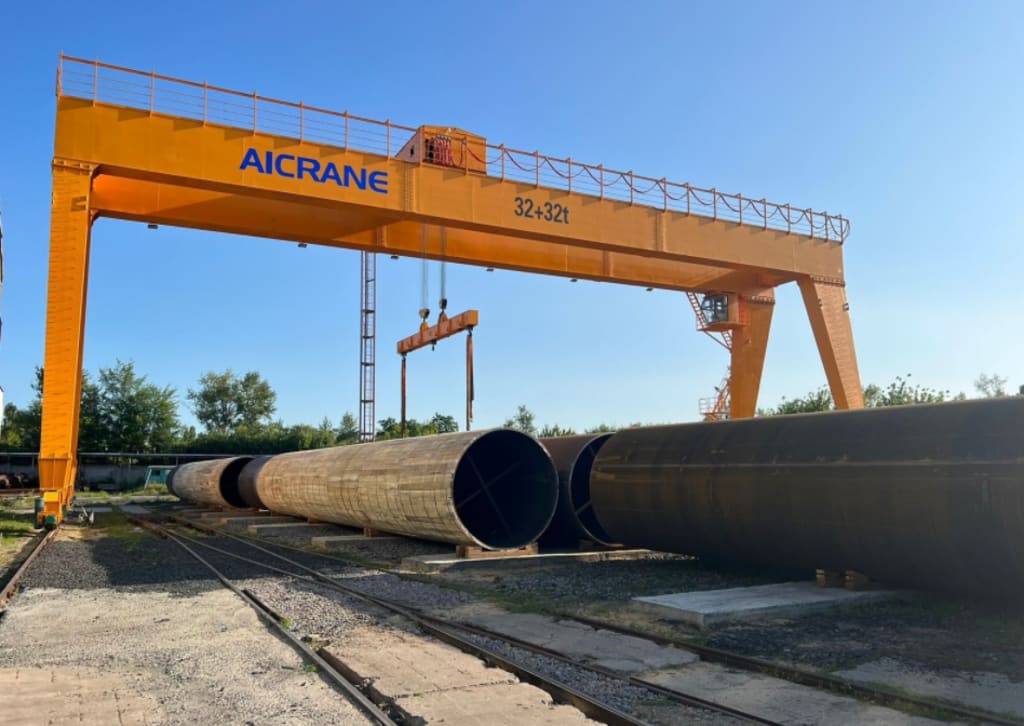
Heavy duty gantry cranes are essential equipment in industrial environments such as ports, steel plants, construction sites, and manufacturing facilities. These cranes are designed to lift and transport massive loads, sometimes exceeding hundreds of tons. Ensuring their structural integrity and operational safety is critical, and one of the key environmental factors affecting their performance is temperature. Both high and low temperatures can significantly influence the structural components of a gantry crane, impacting its mechanical properties, operational efficiency, and safety.
1. Understanding Heavy Duty Gantry Crane Structural Components
A typical heavy duty gantry crane consists of several critical structural components:
Main girders and bridge beams: These horizontal members carry the trolley and hoist, distributing the weight across the crane structure.
End carriages and legs: These vertical or inclined members support the main girders and transfer loads to the rails or ground.
Trolley and hoist support structures: These components hold the lifting mechanism and are subject to dynamic loading during crane operation.
Cross bracings and stiffeners: These elements maintain structural stability, reduce vibrations, and prevent excessive deflection.
All of these components are primarily fabricated from steel, which exhibits temperature-dependent mechanical properties. Understanding how temperature affects steel and related structural elements is crucial for designing, operating, and maintaining heavy duty gantry cranes.
2. High Temperature Effects on Crane Structural Components
2.1 Reduced Yield Strength
Steel, the main material used in gantry crane structures, experiences a decrease in yield strength as temperature rises. High ambient temperatures, common in steel mills, foundries, or tropical outdoor environments, can lead to the following:
Lower resistance to stress: Structural components may deform under loads that are normally well within design limits.
Permanent deformation: Prolonged exposure to high temperatures may result in creeping, where steel slowly deforms over time under constant stress.
For instance, if a crane operates in temperatures above 40°C for extended periods while lifting near its rated capacity, the main girders and support legs may experience micro-deformations, potentially compromising load safety.
2.2 Thermal Expansion
Steel expands when heated, causing dimensional changes in crane components:
Bridge girder elongation: As the main girders expand, alignment with end carriages and rails may be affected, leading to uneven stress distribution.
Misalignment of trolley rails: Even a small thermal expansion can cause the trolley to bind or operate inefficiently.
Joint stress: Bolted and welded connections may experience additional stresses due to differential expansion between components.
Thermal expansion is particularly significant for gantry cranes with long spans, such as 50 to 100 meters, where a few millimeters of elongation at each degree Celsius increase can accumulate into noticeable shifts in the crane’s geometry.
2.3 Reduction in Fatigue Life
Repeated temperature fluctuations combined with dynamic crane loads can accelerate metal fatigue. For example:
Hot conditions can soften steel, making it more susceptible to stress-induced micro-cracks.
Daily heating and cooling cycles create thermal cycles in the steel, which act similarly to repeated load cycles and contribute to fatigue failure over time.
2.4 Protective Coatings and Corrosion
High temperatures can also degrade protective coatings like paint or galvanization:
Paint may blister or crack under prolonged heat exposure, leaving steel surfaces exposed.
Corrosion resistance may reduce, especially in environments with humidity and industrial gases.
Exposed areas may corrode faster, weakening critical structural components such as cross bracings or trolley supports.
3. Low Temperature Effects on Crane Structural Components
Operating gantry cranes in cold climates, sub-zero temperatures, or during winter months introduces its own set of structural challenges.
3.1 Increased Brittleness
Steel exhibits a phenomenon known as the ductile-to-brittle transition at low temperatures:
At normal temperatures, steel is ductile, allowing it to deform without sudden failure.
When temperatures drop below the transition point (which varies depending on steel grade), it becomes brittle.
Brittle steel can fracture suddenly under impact or heavy dynamic loads, which is especially risky for moving cranes lifting large steel coils, containers, or concrete components.
3.2 Thermal Contraction
Cold temperatures cause steel to contract, creating additional stresses in structural components:
Bridge girders shrink: This can lead to misalignment between end carriages and rails.
Bolted and welded joints tension: Differential contraction can induce additional tensile stress at connection points, potentially initiating cracks.
Trolley and hoist misalignment: Contracted rails and beams may increase friction or cause binding, reducing operational efficiency.
3.3 Fatigue and Impact Vulnerability
Cold temperatures exacerbate the risk of fatigue-related failure in heavy duty goliath cranes:
Sudden temperature drops can create thermal shock in steel components, especially if combined with dynamic loads.
Brittle fracture becomes more likely under high impact loads, such as sudden braking or load drops.
Cranes operating in extreme cold, such as northern ports or outdoor storage yards in winter, require careful material selection and design considerations to ensure safety.
4. Temperature-Induced Stress Concentrations
Temperature fluctuations often lead to differential expansion or contraction between different structural components:
Main girders vs. trolley rails: Longitudinal expansion of the main beam may differ from rails fixed at end carriages.
Welded vs. bolted connections: Welds may behave differently under temperature changes than bolted joints, leading to localized stress concentrations.
Cross-bracings: As structural members expand or contract, bracings may either compress or tension unevenly, potentially reducing the overall stability of the gantry crane.
Designers must account for these effects by including expansion joints, flexible supports, or temperature-compensating connections.
5. Material Selection and Design Considerations
To mitigate temperature effects on heavy duty gantry cranes, engineers must consider:
Steel grade selection: Low-temperature steel grades, such as ASTM A572 Grade 50 or A709 Grade 50T, retain ductility and toughness in cold climates.
Thermal expansion allowances: Design for expected temperature ranges, ensuring that bridge girders and trolley rails can accommodate movement without misalignment.
Protective coatings: Use heat-resistant paints and anti-corrosion coatings suitable for high-temperature environments.
Stress analysis: Employ finite element analysis (FEA) to model thermal stresses and predict potential failure points under varying temperature conditions.
6. Operational Measures for Temperature Management
Even with proper design, operational practices play a critical role in maintaining crane safety:
Temperature monitoring: Use sensors to track ambient and structural temperatures in real time.
Reduced load operation: Limit load capacity during extreme temperature conditions to reduce stress on structural components.
Preheating in cold conditions: Preheating key components, such as hydraulic systems or cables, ensures ductility and reduces brittle fracture risk.
Scheduled inspections: Increase inspection frequency during seasons with extreme temperatures to detect early signs of thermal stress, fatigue, or corrosion.
7. Conclusion
Temperature effects on heavy duty gantry crane structural components are complex and multifaceted, impacting steel strength, dimensional stability, fatigue life, and operational safety. High temperatures can reduce steel strength, induce expansion, and accelerate corrosion, while low temperatures increase brittleness, contraction stress, and impact vulnerability. Proper material selection, thoughtful design, thermal allowances, and vigilant operational practices are essential to mitigate these risks. By addressing temperature-related challenges proactively, industrial operators can ensure the long-term safety, efficiency, and reliability of heavy duty gantry cranes, even under extreme environmental conditions.
About the Creator
Aicrane01
Welcome to the Aicrane Blog, your practical guide to lifting solutions. Discover articles covering overhead cranes, gantry cranes, winches, steel structures, boat lifts, and more.
Website: https://steelmillcranes.com/
How a Garage DIY Scaled to a $2M Product
Today, we’re bringing you the story of Swift Paws. The founder, Meghan, and her dad built the first prototype in their garage just so their dog Pretzel could practice lure coursing for specific dog lovers. But soon, more and more dog owners wanted the same for their dogs and even cats. So Meghan started to figure out how to turn it into a real product.
By Jingsourcing.com 6 days ago in Journal


Comments
There are no comments for this story
Be the first to respond and start the conversation.