science
Topics and developments in science and medicine, presented by Futurism.
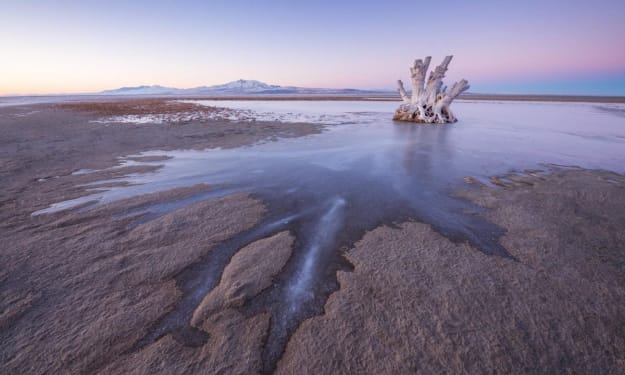
A Hidden World Beneath the Salt: The Remarkable Discovery of a New Roundworm in Utah’s Great Salt Lake
Utah’s Great Salt Lake is one of the harshest environments on Earth. Its waters are several times saltier than the ocean, creating conditions that would kill most living creatures almost instantly. For years, scientists believed only a handful of hardy species—like brine shrimp and brine flies—could survive in its open waters. But in a groundbreaking find announced in early 2026, researchers uncovered something extraordinary: a tiny roundworm, a species entirely new to science, thriving in this extreme saltwater world.
By Mohammad Hamid9 days ago in Futurism
According to neuroscientists, this typical nightly ritual significantly enhances sleep.
It has been demonstrated that reading a book in bed improves sleep quality more than immediately turning out the lights. That straightforward practice simultaneously activates the systems of memory, language, and emotion, and that consistent concentration can facilitate the transition to sleep.
By Francis Dami10 days ago in Futurism
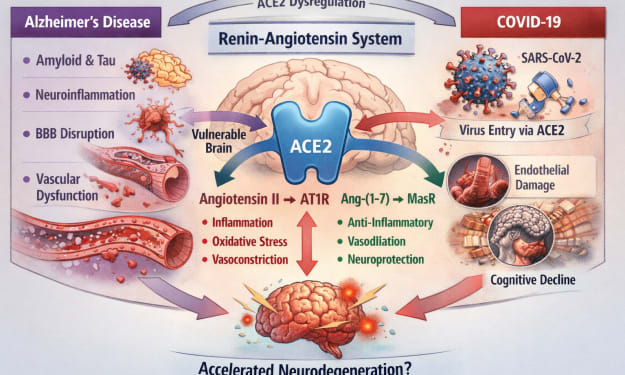
Alzheimer’s Disease, the Renin-Angiotensin System, and COVID-19
I. Alzheimer’s Disease: More Than Amyloid Alzheimer's disease has long been framed as a proteinopathy defined by extracellular β-amyloid plaques and intracellular tau tangles. While these remain central pathological hallmarks, the explanatory model of the disease has expanded considerably over the past two decades.
By Alain SUPPINI12 days ago in Futurism
Apple iPhone Manufacturing in Pakistan – A New Era for Local Technology Industry . AI-Generated.
Apple iPhone Manufacturing in Pakistan – A New Era for Local Technology Industry Introduction Pakistan’s technology and manufacturing sector is on the verge of a historic transformation. With global smartphone giant Apple planning to begin iPhone refurbishment and manufacturing operations in the country, the development signals a powerful shift in Pakistan’s role within the international electronics supply chain.
By Muhammad Abbas khan12 days ago in Futurism
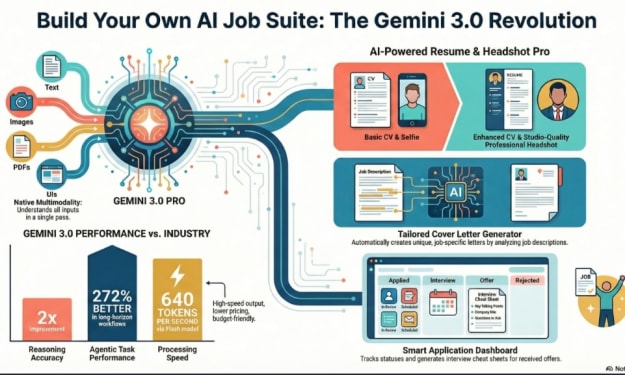
Stop Paying for SaaS: How Gemini 3.0 and ‘Five-Coding’ Are Changing the Solo-Builder Game. AI-Generated.
The Death of Subscription Fatigue In 2025, the professional landscape is drowning in "rented" software. We are currently suffering from acute SaaS fatigue, bleeding monthly fees for a fragmented stack of specialized tools: CV builders, application trackers, cover letter generators, and AI headshot services. This isn't just a budget drain; it’s a bottleneck to true productivity.
By Mohammad Hamid13 days ago in Futurism
How Fast Have Humans Really Accelerated Objects — and How Much Does Time Slow Down at Those Speeds?
Humanity has not yet built a starship that cruises at a significant fraction of the speed of light. However, we have accelerated certain objects to velocities so extreme that time itself measurably slows down. The answer to the question “What is the fastest object humans have ever accelerated?” depends on what we mean by “object.” For spacecraft, the numbers are impressive but not relativistic. For subatomic particles, the story becomes profoundly different.
By Holianyk Ihor15 days ago in Futurism
The enigma of why a star went dark for months is solved by astronomers.
Typically, stars don't simply disappear. For millions or possibly billions of years, they emit a constant glow. At the end of 2024, scientists took notice when a star 3,200 light-years away from Earth abruptly faded.
By Francis Dami15 days ago in Futurism
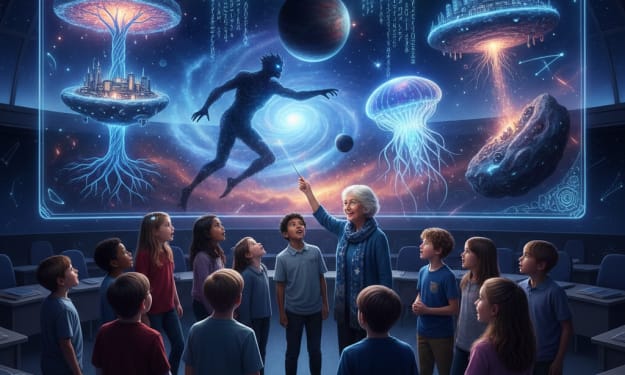
10 Mind-Blowing Space Stories School Never Told You
For many of us (especially if you grew up watching Star Trek), space truly feels like the final frontier. Sure, school taught us about planets, gravity, and maybe a little about rockets. But what we got was just a glimpse of the safe, simplified version.
By Areeba Umair16 days ago in Futurism
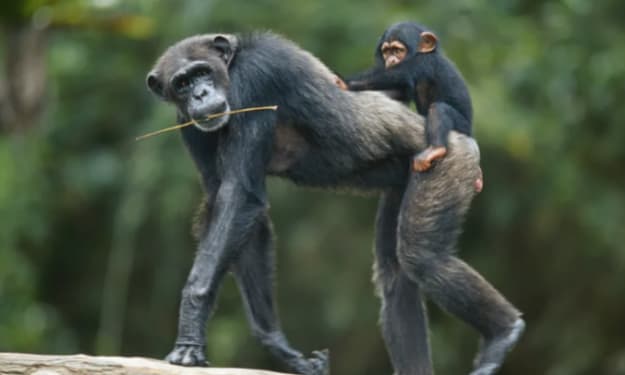
Can Chimpanzees and Other Great Apes Breed with Monkeys?. AI-Generated.
Humans have long been fascinated by our closest relatives in the animal kingdom. chimpanzees, gorillas, and orangutans share much of our DNA, prompting endless curiosity about how similar—or different—they really are. One question that occasionally arises in scientific discussions and popular media is: Can great apes breed with monkeys?
By Sajida Sikandar17 days ago in Futurism
Canada Could Remove Five Times Its Annual Carbon Emissions by Planting Trees on the Edge of the Boreal Forest, Study Finds. AI-Generated.
A new scientific study has revealed a striking possibility: Canada could remove up to five times its annual carbon emissions simply by planting trees along the southern edge of the boreal forest. The findings point to a surprisingly effective and natural climate solution—one that relies not on futuristic technology but on the careful expansion of one of Earth’s most important ecosystems.
By Sajida Sikandar17 days ago in Futurism
It’s the Same Size as Japan, Can Be Seen from Space, and Is a UNESCO World Heritage Site – and It’s Teeming with Thousands of Species. AI-Generated.
There are few places on Earth so massive, so alive, and so extraordinary that they can be seen from space. Stretching across more than 1,400 miles of ocean, covering an area roughly the size of Japan, and hosting an explosion of marine life, the Great Barrier Reef stands as one of nature’s greatest masterpieces.
By Sajida Sikandar17 days ago in Futurism
Humans Age Faster at Two Sharp Peaks, Study Finds. AI-Generated.
Aging has long been viewed as a slow and continuous journey—one wrinkle at a time, one birthday at a time. But a groundbreaking new study suggests that this belief may be outdated. According to recent scientific findings, humans do not age at a constant rate. Instead, aging happens in two dramatic bursts, or “sharp peaks,” during specific stages of life.
By Sajida Sikandar17 days ago in Futurism