Iazaz hussain
Bio
Start writing...
Stories (83)
Filter by community
The Road Between the Bells
In a small town tucked between rolling hills and a slow silver river, the church bells rang every morning at six. For most people, the bells meant the start of work, school, or another ordinary day. For Tomas, they meant something else: another chance.
By Iazaz hussainabout 10 hours ago in Motivation
The Bridge That Whispers
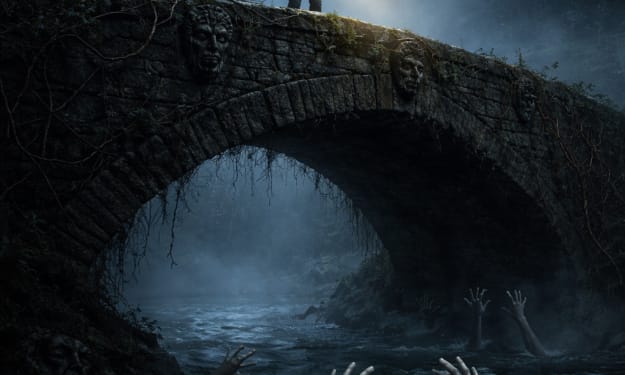
In bridge no one used anymore. It curved gently over a narrow river, its surface cracked and moss-covered, as if time itself had tried to bury it. Locals crossed the modern bridge downstream, leaving the old one to the fog, the wind, and the stories. Tourists were told the bridge was unsafe. Children were told it was haunted. Elena heard about it on her first night in Greyhaven. She had come from the city to catalog historical structures for a regional preservation project. Greyhaven was her last stop—quiet, remote, and perfect for work. The innkeeper, a thin man with pale eyes, hesitated when she mentioned the old bridge. “Don’t go there after sunset,” he said. “It talks.” Elena laughed politely. She had spent years documenting ruins, castles, and forgotten churches. Every village had a ghost story to protect a pile of stones. Still, she noticed how the innkeeper’s hand trembled when he handed her the room key. The next morning, Elena walked to the bridge with her camera and notebook. In daylight, it looked harmless—beautiful, even. Wildflowers grew between the stones, and the river below whispered softly. She took photographs, measured the arch, and noted the erosion. There were strange carvings on the sides: not words, but twisted symbols, worn almost smooth. That night, she dreamed of water. In her dream, she stood on the bridge in thick fog. The river beneath her was silent, black as ink. From the stones under her feet came a low sound, like breath passing through teeth. Come back. She woke suddenly, heart racing. Outside her window, the fog was rolling in from the hills. Elena told herself it was only a dream caused by fatigue. But the next night, it happened again. This time, the whisper was clearer. Come back to us. On the third day, she asked a woman in the village café about the bridge. The woman stopped stirring her coffee. “They drowned there,” she said quietly. “Long ago. When the river flooded, the bridge broke in the middle. A wedding party was crossing. Carriage, horses, music… all gone. People say the stones remember the weight of them.” Elena felt a chill run down her spine. “That’s just a story, right?” The woman looked up. “Stories begin somewhere.” That evening, driven by curiosity and something darker—something pulling at her—Elena returned to the bridge at dusk. Fog wrapped around the riverbanks like a living thing. The modern bridge lights glowed far away, safe and distant. She stepped onto the old stones. The air felt colder in the center of the bridge. Her breath became visible. Then she heard it: soft footsteps behind her. She turned. No one was there. The river below began to make a different sound—not water, but voices. Murmuring, layered and slow. Stay. Elena backed away, but her foot caught on a broken stone. She fell to her knees. The carvings along the bridge seemed deeper now, sharper. They formed shapes—faces, frozen in stone, mouths open in endless screams. Hands rose from the mist. They were pale, dripping, reaching for her ankles. Elena screamed and scrambled backward, tearing her coat on the rough stone. One cold hand brushed her skin, and in that moment, she saw it: a flash of the past. Horses panicking. A carriage tipping. People crying out as dark water swallowed them. And then silence. She ran. By the time she reached the inn, her legs were shaking so badly she could barely stand. The innkeeper saw her face and said nothing—only locked the door behind her. She left Greyhaven the next morning without finishing her work. Months later, her report mentioned “structural instability” and “severe erosion.” It said nothing about whispers or hands or memories trapped in stone. But sometimes, when Elena stands on bridges in other cities—busy ones filled with traffic and noise—she feels a vibration under her feet, like a distant echo. And in the sound of rushing water, she hears a familiar voice: Come back.
By Iazaz hussainabout 23 hours ago in Horror
The Bridge of Tomorrow
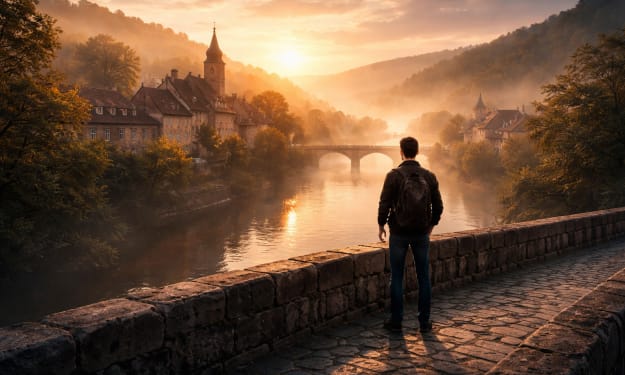
In a small European town tucked between green hills and a quiet river, there lived a young man named Elias. The town was famous for its old stone bridge, built centuries ago. People said the bridge connected not just two sides of the river, but two different futures. One side led toward comfort and routine; the other toward uncertainty and change.
By Iazaz hussain5 days ago in Motivation
The Bell That Rang After Midnight
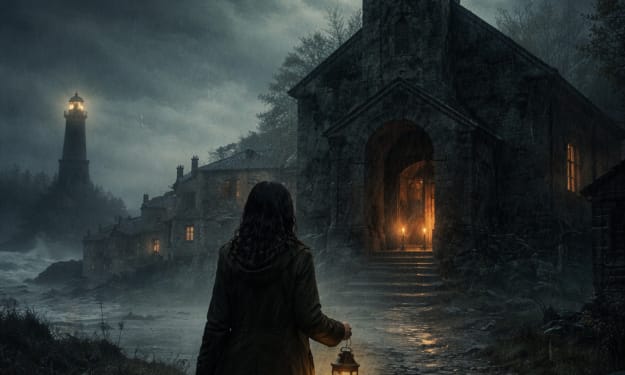
In the coastal village of Greymoor, the sea never slept. Waves whispered against black rocks, and wind threaded through crooked chimneys like a breath searching for a mouth. Tourists came in summer for the views and left before autumn taught the cliffs their true language. The villagers stayed, wrapped in wool and habit, and obeyed one old rule: when the church bell rang after midnight, nobody opened a door.
By Iazaz hussain7 days ago in Horror
The City That Forgot Its Name
In the heart of Europe, tucked between rivers that curved like silver ribbons, stood a city with no name. Maps labeled it with a blank space. Train conductors paused before announcing it. Travelers who arrived there forgot what they had come searching for. Locals called it simply “The City.”
By Iazaz hussain8 days ago in Fiction
The Road Between Two Mornings
In a quiet town tucked between low green hills and a winding river, there lived a young man named Tomas who believed that his life had already chosen him. Every morning at six, he unlocked the wooden door of his uncle’s bakery, tied on a flour-dusted apron, and baked bread for people who rarely looked up from their newspapers. His hands worked quickly, but his thoughts always moved faster—toward places he had never seen and dreams he had never dared to touch.
By Iazaz hussain10 days ago in Motivation
The Bells of Blackmere
In the northern reaches of a forgotten coastline, beyond the tourist maps and the bright harbors, lay the village of Blackmere. It was the kind of place that clung to the edge of the world—stone cottages pressed against black cliffs, roofs bowed like tired shoulders, and a church tower that rose like a broken finger pointing at the sky.
By Iazaz hussain10 days ago in Horror
The Silence Between the Bells
In the mountain village of San Rivo, the church bells rang every morning at seven and every evening at six. Between those hours, the town lived quietly — farmers worked their fields, bakers sold bread still warm from the ovens, and tourists came only in summer.
By Iazaz hussain11 days ago in Motivation
The Glassmaker of Alderport
In the coastal city of Alderport, where gray waves met stone harbors and gulls cried like restless souls, lived a woman who believed her life had already ended at twenty-six. Her name was Elara Voss. Alderport was famous for its old glass workshops. For centuries, artisans there shaped fire and sand into glowing bowls, windows, and delicate figures. Elara grew up inside one of those workshops, watching her father breathe life into molten glass with steady hands and patient eyes. “You must listen to the glass,” he used to say. “It tells you when it’s ready.” Elara listened. She learned. By eighteen, she could shape vases smoother than many older workers. People said she would one day inherit the workshop and become a master glassmaker. Then came the accident. One winter evening, while carrying a tray of cooling glass, Elara slipped on the icy floor. The tray shattered. A shard sliced deeply into her right hand. Doctors saved her fingers, but the nerves were damaged. Her grip weakened. Her touch lost precision. For a glassmaker, it was a quiet disaster. When she tried to work again, her hands trembled. Bowls warped. Edges cracked. Fire revealed every mistake. The customers stopped coming. Her father died the following spring from a sudden illness, leaving her alone with a failing workshop and a broken confidence. Bills piled up. The furnaces grew cold. By summer, Elara locked the workshop doors and placed a sign in the window: FOR SALE. She took work cleaning rooms at a small harbor hotel. Tourists came and went, carrying cameras and laughter, while she scrubbed floors and avoided mirrors. Every night, she dreamed of fire and shattered glass. Failure had become her identity. One afternoon, while emptying trash near the docks, she noticed a boy sitting beside a pile of sea glass — smooth pieces of broken bottles shaped by water and time. He arranged them into patterns: blues in spirals, greens in waves, whites like stars. Elara stopped. “What are you making?” she asked. “A map,” the boy replied. “Of places I want to go.” She knelt beside him and picked up a piece of glass. It was imperfect, cloudy, scarred — but beautiful in its own way. That night, she carried a pocketful of sea glass home. She laid the pieces on her kitchen table and stared at them. They weren’t flawless like her old work. They were shaped by storms, by collisions, by patience. For the first time in years, she didn’t feel anger toward broken glass. She felt curiosity. Using simple tools, Elara began setting sea glass into wooden frames. She made small mosaics: harbors, birds, suns rising over water. Her weak grip mattered less. The glass did not demand perfection — only intention. She placed one piece in the hotel lobby with a small note: Made from Alderport sea glass. Tourists stopped to look. One woman asked if it was for sale. Elara named a price without confidence. The woman paid without hesitation. A week later, the hotel owner asked for more. Elara returned to her closed workshop and unlocked the door. Dust floated in the air like forgotten memories. She didn’t light the furnace. She used the tables, the old tools, the sunlight through the tall windows. Her art changed. She created scenes from broken glass: fishermen in blue fragments, lighthouses in white shards, storms in green and gray curves. Each piece carried the story of damage transformed into meaning. At first, she sold only locally. Then travelers posted photos online. A small magazine wrote about “The Glassmaker Who Doesn’t Melt Glass.” Orders came from Denmark. From France. From Italy. But the true change was inside her. She no longer measured herself by what she had lost. She measured herself by what she could still create. One autumn morning, Elara received an invitation to display her work at a coastal art festival. She hesitated. Public spaces frightened her now. Failure still whispered in her thoughts. You will disappoint them again. But she went. Her booth stood between painters and woodcarvers. Her mosaics reflected sunlight in fractured rainbows. People stopped. They asked questions. They listened to her story. A journalist asked, “Do you still wish your accident never happened?” Elara looked at her hands — scarred, imperfect, steady enough. “If it hadn’t,” she said, “I would never have learned how to make something from what was already broken.” That evening, as the festival closed, she walked back toward her workshop. The sea was dark, but lights shimmered on the water like scattered glass. She opened the old furnace room and stood before it. For years, she had feared fire. Now, she didn’t need it to define her. Failure had not been the end of her story. It had been the material of her second beginning. And in Alderport, where waves never stopped reshaping what they touched, Elara Voss became known not as the girl who lost her skill — but as the woman who learned a new one from the pieces of her past.
By Iazaz hussain19 days ago in Motivation
The Last Light in Northhaven
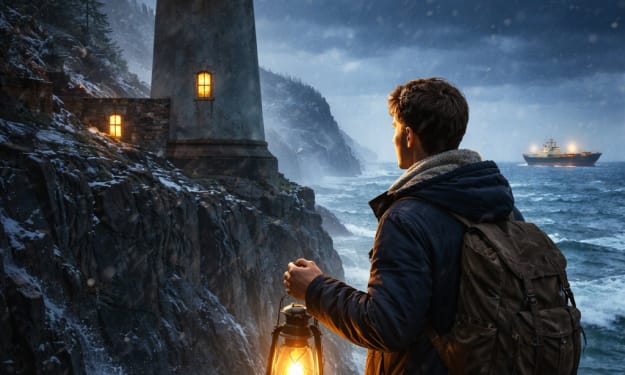
In the quiet northern town of Northhaven, winter ruled more than half the year. Snow wrapped the streets in silence, and the sea beyond the cliffs looked like a sheet of dark glass. People here were known for their discipline and routine. They woke early, worked hard, and expected little from life beyond survival.
By Iazaz hussain19 days ago in Motivation
The Roads Remember Us
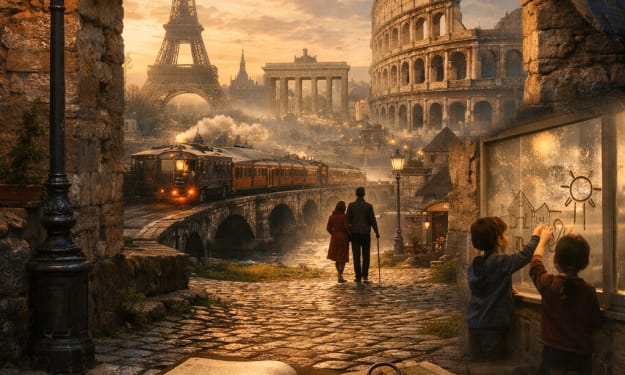
Stanza 1 The roads of Europe whisper names, Of those who walked before, Through cobbled streets and fading wars, And open café doors. Each stone has felt a thousand dreams, Each bridge has learned to stand, Between the weight of yesterday And futures yet unplanned. Stanza 2 In Paris rain, in Berlin light, In Rome’s eternal air, The clocks all move at different speeds, Yet hope is everywhere. A train departs at early dawn, With strangers side by side, Their stories packed in silent bags, No need for flags or pride. Stanza 3 We carry more than passports do, We carry fragile days, A mother’s voice, a lover’s note, A map of former ways. The language of a tired heart Needs no translated line, For grief and joy have learned to live In every border sign. Stanza 4 The mountains guard old promises, The seas remember cries, Of sailors chasing distant stars In unfamiliar skies. And still the children draw new worlds On classroom window glass, Where chalk becomes tomorrow’s road And fear is taught to pass. Stanza 5 We are not made of single roots, But many woven tight, Of wars survived and peace rebuilt From broken bricks of night. Our cities bloom from history, From ashes into flame, Each generation writes again What freedom means by name. Final Stanza So walk these streets with open eyes, And listen when they say: “You are the bridge between two times, The voice of yesterday.” For every step you choose in light Makes darkened corners small, And Europe lives in simple acts— In rising after fall.
By Iazaz hussain20 days ago in Poets