
The Road Between the Bells
Tomas was born in a town most maps forgot. Tourists passed through without stopping.

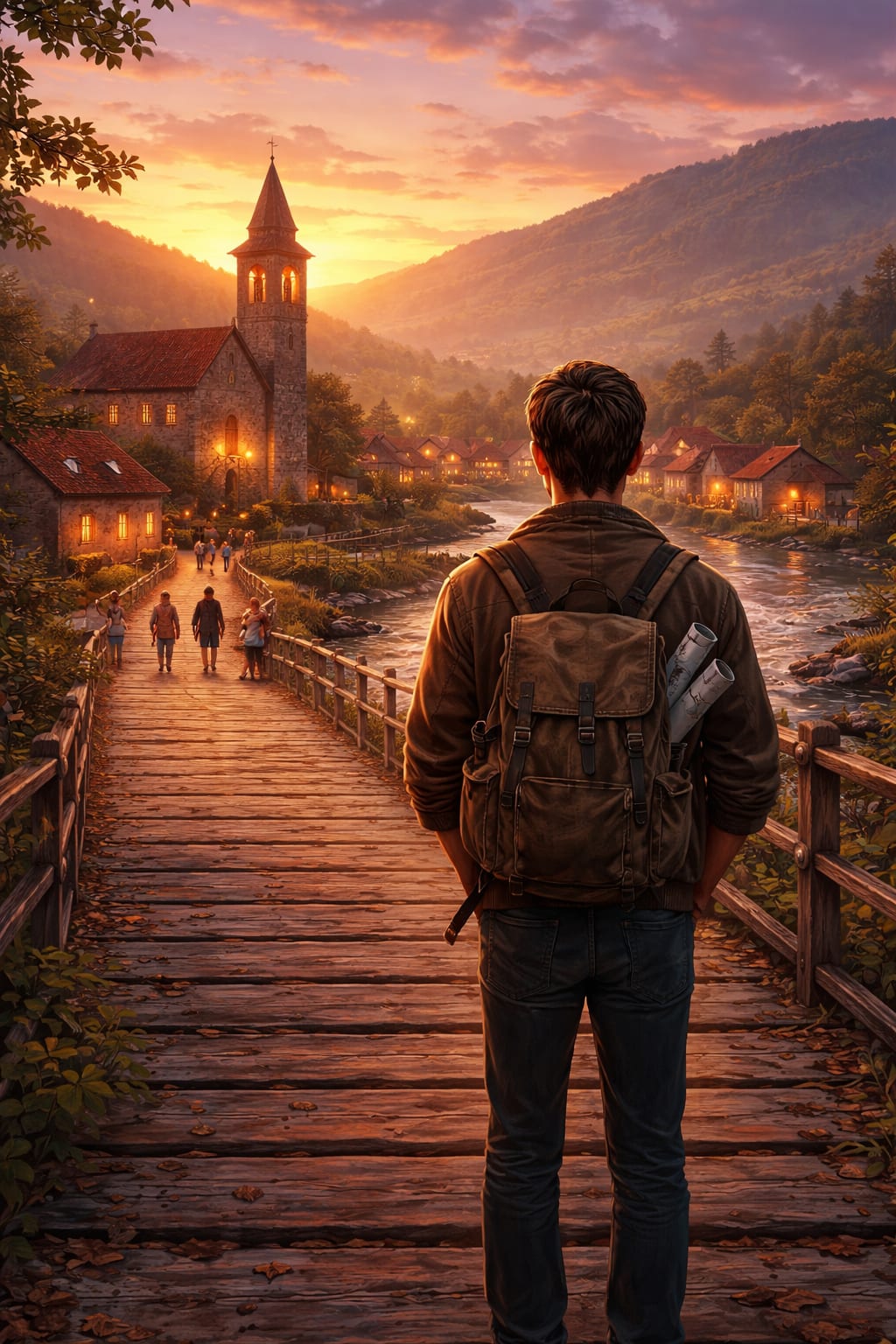
In a small town tucked between rolling hills and a slow silver river, the church bells rang every morning at six. For most people, the bells meant the start of work, school, or another ordinary day. For Tomas, they meant something else: another chance.
Tomas was born in a town most maps forgot. Tourists passed through without stopping. Jobs were few, and dreams were often smaller than the houses. His father repaired bicycles, and his mother worked in a bakery that smelled of warm bread and burned sugar. They taught him two things: how to work hard and how to wait patiently.
At sixteen, Tomas wanted more than patience. He wanted to build something of his own, something that would outlive the bells. But wanting is easier than doing. When he finished school, he tried for a job in the city. He sent letters. He filled forms. He stood in lines. Every answer came back the same: We regret to inform you…
So he worked where he could—carrying boxes at the market, fixing broken radios for neighbors, helping tourists find the river path. At night, he studied by a small lamp, reading about engineering and design from old library books. He imagined bridges that could join villages, machines that could make work easier, and tools that could save time. His friends laughed kindly and said, “Dreams don’t pay rent.” Tomas smiled, but he kept reading.
One winter, the river flooded and washed away a wooden footbridge. Children had to walk an extra five kilometers to reach school. Old people stayed home. The town waited for help from the city, but help was slow. Tomas looked at the broken beams and had an idea that scared him. What if he tried to rebuild it himself?
He borrowed tools from the bicycle shop. He asked the carpenter for advice. He used scrap metal from the market and wood from fallen trees. For weeks, he worked after sunset, hands numb from cold, breath turning into small clouds in the dark. People watched from their windows, shaking their heads. “It won’t last,” they said. “He’s just a boy.”
The day he finished, the bridge did not look beautiful. It looked honest. The first to cross it was an old woman with a basket of apples. She tapped the planks with her stick and laughed. “It holds,” she said. Word spread. Soon, children ran across it, and cyclists used it every morning.
A journalist from a nearby city wrote a small article: Young Man Builds Bridge for His Town. It was only a few paragraphs, but it changed everything. An engineering company read it. They invited Tomas for an interview. He arrived in a borrowed coat and shoes too big for his feet. He spoke about his bridge, his books, and his town. He did not speak about fear.
They offered him an apprenticeship.
City life was louder and faster. Tomas failed many times. He designed things that broke. He miscalculated weights. He stayed late to fix mistakes. There were days he wanted to return home and listen only to the bells again. But every time he felt small, he remembered the bridge and the woman with apples. He stayed.
Years passed. Tomas became an engineer. He worked on roads, bridges, and public spaces across different regions. His projects were not famous, but they were useful. He believed success was not about headlines; it was about people crossing safely.
One spring, he returned to his town. The old bridge was still there, repaired many times, its wood darker with age. The bells rang at six as always. Tomas stood by the river and thought about the long road between who he was and who he became.
The mayor asked him to design a new bridge—stronger, wider, safer. Tomas agreed, but only on one condition: local workers would help build it. He wanted the town to feel it was theirs.
When the new bridge opened, the whole town gathered. Children cut a red ribbon. The old woman with apples crossed first again, smiling like before. The bells rang, louder than usual, carried by the wind across the water.
That evening, Tomas walked alone along the river path. He realized something simple: success was not leaving his town behind. It was carrying it with him. It was not winning against others. It was solving a problem that mattered. It was not a single moment. It was a road made of many small steps, some shaky, some strong.
And somewhere between the bells of morning and the quiet of night, Tomas understood that true success is built the same way as his first bridge—
with patience, with effort, and with the courage to begin before you feel ready.
About the Creator
Iazaz hussain
Start writing...
Keep reading
More stories from Iazaz hussain and writers in Motivation and other communities.
The Bridge of Tomorrow
In a small European town tucked between green hills and a quiet river, there lived a young man named Elias. The town was famous for its old stone bridge, built centuries ago. People said the bridge connected not just two sides of the river, but two different futures. One side led toward comfort and routine; the other toward uncertainty and change.
By Iazaz hussain6 days ago in Motivation
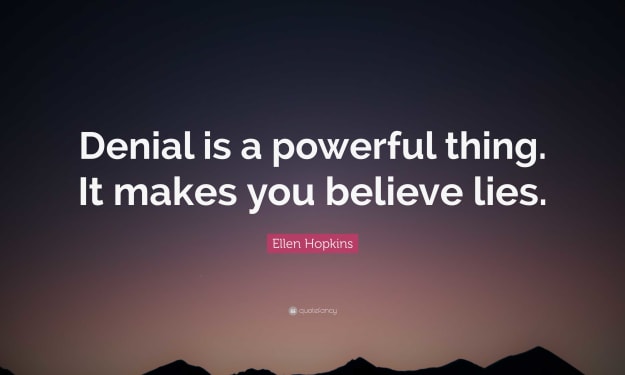
The Power of Denial
Sometimes, it’s hard to accept the truth. It can be right in our face, but we are in denial. Peter once denied Jesus. We know when something isn’t good for us. Sometimes that “something” that isn’t good for us can turn into a habit. We know that smoking is not good for breathing; we smoke anyway. Drinking affects the liver and other organs; we drink anyway. Those are the 2 worse habits in the world, and they both are two leading causes of death in the world. But we are in denial about that because it’s a good feeling.
By Nerissha Hunt7 days ago in Motivation
United in Spirit: How Fellowship Moments Strengthen Faith and Community Bonds
Faith grows stronger when people gather with open hearts and shared purpose. In churches, small groups, and community centers, simple moments often become lasting memories. A shared meal, a group prayer, or a kind word can remind people that they are not alone. These experiences reveal the beauty of Christian community connection, where belief is not just personal but shared in real and meaningful ways.
By World Olivet Assembly6 days ago in Motivation
I wanted to title this something different, but worried that my chosen title might cause problems entering the United States in the future so this is the new title. It's the greatest title. No one has ever written a title better than this. (All titles unrelated to content).
Let me be honest. I am finding this difficult. Now, I like a challenge, a stretch, a bit of an obstacle course. “Write about the decline of the British Empire in the form of a narrative poem in which your protagonist is an artichoke” I read, and flex my fingers. “Write a haiku to evoke the sensation of sibilance using only the first half of the alphabet.” “Well”, I think to myself, “this should be fun.” But “write about a system that isn’t working”? A system that isn’t working? Now? In 2026? ONE system? My favourite system that isn’t working? The sexiest system that isn’t working? The one giving me the most angst day to day? The one giving me the most existential dread? I am, as I say, finding this difficult. I will own that I have contemplated writing a thousand words on why the steady “all on” setting on my fairy lights is the EIGHTH of seven options which must be sequentially activated to get there, because that is a system that some fool came up with and it definitely doesn’t work, and now who is paying the price, eh? But how can I write about my fairy lights when…. When…. When….
By Hannah Moore5 days ago in Humans


Comments
There are no comments for this story
Be the first to respond and start the conversation.