
The Future of Fixation: Exploring Advanced Maxillofacial Implants
Innovative Technologies Transforming Facial Reconstruction and Surgical Precision.

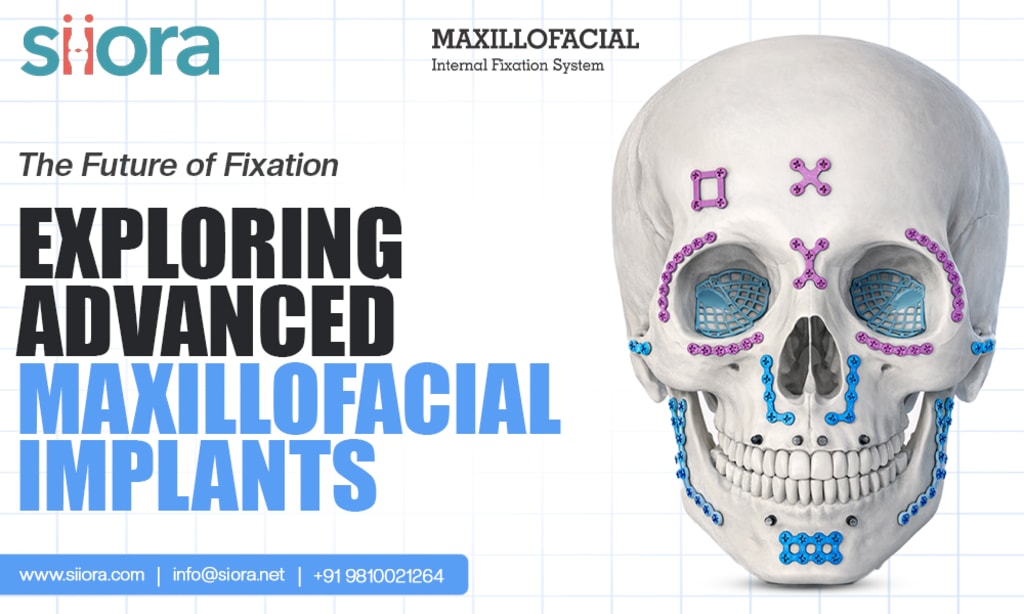
Maxillofacial surgery has changed significantly over the last two decades. Earlier, fracture management and reconstructive procedures were more invasive, recovery was longer, and implant options were limited. Today, surgeons have access to advanced maxillofacial implants that are more precise, lighter, and biologically friendly. These developments are shaping the future of fixation in facial trauma and reconstructive surgery.
The goal is no longer just to stabilize a fracture. It is to restore function, preserve facial aesthetics, and reduce patient discomfort. Modern implants are helping surgeons achieve that balance.
Evolution of Implant Materials
In the past, stainless steel plates were widely used in facial fracture fixation. While they provided strength, they were relatively bulky and sometimes caused palpability issues under thin facial skin.
Now, titanium has become the preferred material for most CMF implants. Titanium is strong but lightweight, and it is highly compatible with human tissue. It integrates well with bone and rarely causes adverse reactions. Because it is less rigid than older materials, it allows better load distribution and supports natural healing.
Some newer systems are even exploring bioresorbable materials for selected cases, especially in pediatric patients. These implants gradually dissolve once the bone has healed, removing the need for a second surgery.
Improved Design and Precision
Modern maxillofacial implants are no longer one-size-fits-all. Anatomically contoured plates are designed to match specific areas of the face, such as the mandible, orbit, or midface. This reduces the need for excessive bending during surgery and shortens operating time.
Locking plate technology is another major improvement. With locking systems, the screw locks into the plate, creating a stable unit. This reduces the risk of screw loosening and improves stability in osteoporotic or comminuted fractures.
Three-dimensional plating systems are also gaining attention. These plates provide stability in multiple directions, which can be especially useful in complex mandibular fractures.
Role of Digital Planning and Custom Implants
One of the most exciting developments in maxillofacial fixation is the use of digital planning. Surgeons can now use 3D imaging and virtual surgical planning before entering the operating room. This allows accurate assessment of fracture patterns and deformities.
Custom-made implants, designed using patient-specific data, are becoming more common in reconstructive cases. These implants fit precisely to the patient’s anatomy, improving both functional and cosmetic outcomes. Although cost can be a factor, the benefits in complex cases are clear.
Focus on Patient Comfort and Recovery
Advanced CMF trauma implant systems are designed with patient recovery in mind. Low-profile plates reduce soft tissue irritation and are less noticeable under the skin. Smaller screws and refined instrumentation allow less invasive approaches.
As a result, patients often experience reduced postoperative pain, fewer complications, and faster return to normal function.
Conclusion
The future of fixation in maxillofacial surgery lies in smarter design, better materials, and more personalized solutions. Advanced implants are not just about holding bone together. They are about improving healing, restoring facial harmony, and enhancing patient experience. As technology continues to evolve, surgeons can expect even more refined systems that combine strength, precision, and biological compatibility in ways that were not possible before.
About the Creator
Siora Surgicals
With over 3 decades of experience and a global presence in 50+ countries, Siora Surgicals Pvt. Ltd. is proud to be counted among the leading orthopedic device manufacturing companies.
Keep reading
More stories from Siora Surgicals and writers in Writers and other communities.
Tips for Avoiding Complications During Tibial Intramedullary Nail Fixation
Tibial intramedullary nail fixation is one of the most common surgical techniques for stabilizing tibial shaft fractures. It offers strong mechanical support, allows early mobilization, and has high success rates. However, like any surgical procedure, it carries risks. Complications such as malalignment, infection, hardware irritation, and nonunion can occur if precautions are not taken. The good news is that many of these problems can be minimized through careful planning, precise technique, and good post-operative care. Below are practical tips that surgeons, surgical teams, and even patients can keep in mind to reduce the likelihood of complications.
By Siora Surgicals 7 months ago in Writers
Early March 2026: 4 Goals Accomplished
It's early March and I've now accomplished my 4th writing goal for the year of 2026. Before diving into the behind-the-scenes of it... why not tell you up front what that accomplishment was? I was published in a 2nd publication for this year. Published in Helix Literary Magazine out of Central Connecticut State University. You can read it for free right now!
By Stephen Kramer Avitabile4 days ago in Writers
Neighbours
The end of the row was dominated by the red brick, iron-railed schools. The small infant school was separated by a central drive from the Juniors, the lair of the terrifying Miss Chudleigh, “Ugly Chugly” we called her, but not if she was in earshot. At the top of the drive was the Secondary Modern, where they put your head down the bog and pulled the chain.
By Keith Butler6 days ago in Writers



Comments
There are no comments for this story
Be the first to respond and start the conversation.