
Australia Industrial Welding Machines Market: Powering Precision in Modern Manufacturing
The Australia industrial welding machines market is gaining strong momentum as infrastructure investment, sector diversification, and automation needs drive enduring demand for advanced welding solutions across industries.

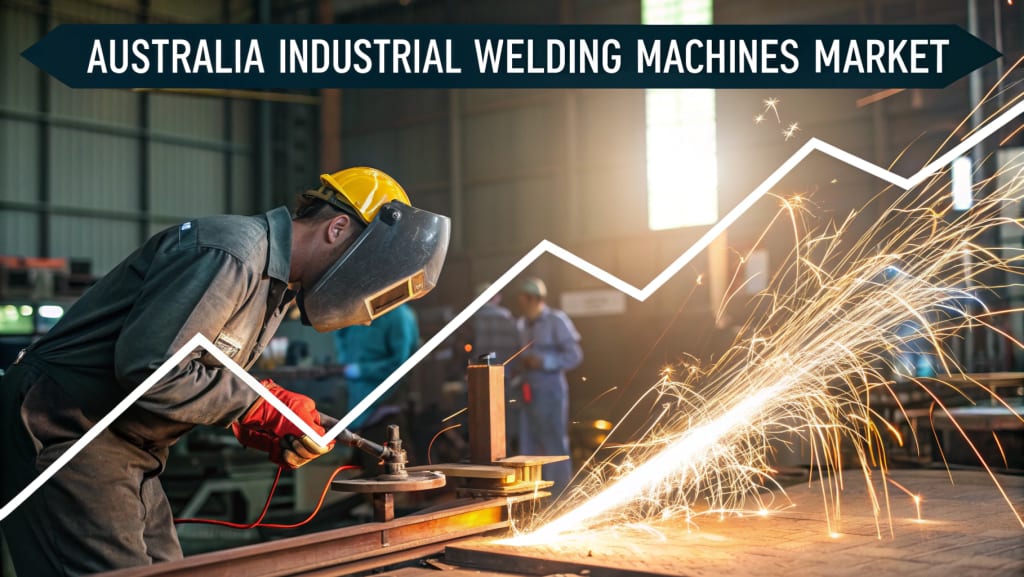
The Australia Industrial Welding Machines Market has shown robust growth in recent years and continues to expand as key industrial sectors modernize their operations. According to the latest IMARC Group analysis, the market reached USD 296.00 million in 2024 and is projected to rise to USD 534.65 million by 2033, growing at a compound annual growth rate (CAGR) of 6.79% during 2025–2033. This growth reflects increasing industrialization, infrastructure development, and a rising preference for efficient welding systems across segments such as construction, automotive, transportation, and energy.
Welding machines are critical in joining materials with precision, reliability, and strength — making them indispensable in fields from automotive manufacturing to shipbuilding and infrastructure projects. As manufacturers adopt advanced welding technologies and automation, the sector is aligning closely with broader trends in Industry 4.0 and sustainable manufacturing.
Why the Market Is Growing So Rapidly
1. Expanding Infrastructure and Construction Activities
Australia’s ongoing investments in infrastructure projects, including transportation networks, commercial structures, and urban development, are fuelling demand for industrial welding machines. These machines are essential for joining structural steel, reinforcements, pipelines, and other components that form the backbone of modern infrastructure. As major public and private construction initiatives continue, contractors increasingly prefer high-performance welding equipment that can handle demanding environments and deliver consistent quality.
2. Growth in Mining and Energy Sectors
Mining and energy industries are major drivers of welding machine demand in Australia. Heavy-duty welding machines are routinely used for pipeline fabrication, equipment assembly, and structural maintenance in these sectors, which operate in rugged and remote conditions. Regions such as Western Australia and Queensland — known for mineral production and energy infrastructure — consistently require resilient welding solutions suited for harsh environments.
3. Rising Automation and Smart Manufacturing Adoption
As manufacturers seek to enhance productivity and reduce dependency on manual processes, there’s growing adoption of automated and semi-automated welding systems. These machines improve efficiency, minimize human error, and support lean manufacturing objectives. Companies are investing in programmable modules and robotic welding cells that accelerate cycle times and deliver uniform weld quality — especially in high-volume manufacturing environments.
4. Labour Shortages and User-Friendly Technologies
Skilled labour shortages in welding and fabrication continue to challenge companies across many sectors. This has prompted a shift toward user-friendly and automated welding machines that reduce reliance on manual expertise while maintaining consistent output quality. Such systems attract manufacturers that need to balance precision, cost, and workforce constraints.
5. Cross-Sector Demand Dynamics
The industrial welding machines market benefits from demand across a diverse array of end-use industries — automotive, shipbuilding, aerospace, heavy machinery, and defense. Each of these sectors has unique welding requirements, but collectively they contribute to a steady pipeline of equipment adoption. This diversification enhances market resilience, even if individual industry cycles fluctuate.
What the Opportunities Are
1. Precision Welding Technologies for High-Value Manufacturing
Advanced technologies like laser welding, electron beam welding, and plasma arc systems present high-growth opportunities as manufacturers seek ultra-precise and high-speed welding capabilities.
2. Automated and Robotic Welding Solutions
Investments in robotics and automated welding cells offer long-term productivity gains, making them an attractive option for medium and large manufacturers looking to scale up operations with minimal labour overhead.
3. Portable and Hybrid Welding Systems
Portable, hybrid, and energy-efficient welding systems cater to on-site jobs in sectors like construction, oil and gas, and maintenance operations — opening opportunities for products designed for mobility and rugged use.
4. Aftermarket Services & Digital Monitoring Tools
Service offerings — including remote diagnostics, predictive maintenance, and IoT-enabled performance monitoring — can help manufacturers reduce downtime and optimize machine utilization rates.
5. Training and Workforce Solutions
Partnering with educational and training institutions to upskill workers on advanced welding technologies can strengthen adoption rates and support overall market growth.
6. Regional Expansion in Western Australia & Queensland
Targeted expansion strategies in key industrial regions with high mining and infrastructure activity can capture incremental demand and reinforce distribution networks.
7. Sustainable Welding Equipment
With increasing emphasis on energy efficiency and emissions reduction, there’s an opportunity for low-energy welding machines and eco-efficient power sources that align with broader industrial sustainability goals.
Recent News & Developments in Australia Industrial Welding Machines Market
February 2025: Government Investment Initiative: The Australian federal government allocated new funding for workforce training in advanced manufacturing and welding technologies as part of its skills development framework. This initiative includes incentives for companies to adopt high-precision welding machines and robotics, aiming to strengthen domestic manufacturing capacity and reduce reliance on imported expertise. The scheme also targets upskilling programs that bridge labor gaps in welding and fabrication.
• June 2025: Company Expansion: Lincoln Electric Australia announced the launch of a new manufacturing and service facility in Melbourne, expanding its local production and support capabilities for industrial welding solutions. The facility aims to serve clients across automotive, construction, and heavy machinery industries and is expected to create over 100 technical jobs over the next two years, reflecting growing confidence in Australia’s welding market.
• October 2025: Market Adoption Milestone: Industry data revealed a notable uptick in the adoption of automated welding systems across Australian manufacturing facilities, with installations up more than 12% year-on-year among mid-sized fabrication shops and OEMs. This growth underscores the rising preference for advanced welding technologies that deliver consistency, speed, and efficiency improvements.
Why Should You Know About the Australia Industrial Welding Machines Market?
The Australia Industrial Welding Machines Market occupies a strategic position at the intersection of industrial development, automation, and advanced manufacturing. For investors, the sector offers growth potential rooted in rising infrastructure projects, sector diversification, and technology innovation. For business leaders, particularly in manufacturing and construction, investing in modern welding systems can translate to improved operational efficiency, lower costs, and heightened product quality. And for policy makers, understanding this market helps inform industrial strategy, workforce planning, and technology adoption policies that maximize productivity and competitiveness in a rapidly evolving manufacturing landscape.
About the Creator
Rashi Sharma
I am a market researcher.
Keep reading
More stories from Rashi Sharma and writers in Trader and other communities.
Australia Fuel Station Market: Navigating the Road Ahead Amid Energy Transition
The Australia Fuel Station Market has demonstrated steady expansion in recent years, underpinned by changing consumer preferences, infrastructure development, and broader energy transitions. According to IMARC Group’s latest analysis, the market size reached USD 1.1 billion in 2025, is projected to grow to USD 1.5 billion by 2034, and is expected to expand at a compound annual growth rate (CAGR) of 3.46% between 2026 and 2034.
By Rashi Sharma2 days ago in Trader
155,010-Share Spike at TripSitter Clinic Ltd (KETA.CN CNQ) 27 Feb 2026: Monitor
TripSitter Clinic Ltd, trading under the ticker KETA.CN on the Canadian National Stock Exchange, experienced a significant spike in trading activity on February 27, 2026, with 155,010 shares changing hands. This surge signals heightened attention from market participants and emphasizes the need for careful monitoring of momentum, liquidity, and short-term price dynamics.
By Hammad Nawaz4 days ago in Trader
This Is What I Do When People Throw Rocks At Me
Rocks have been thrown at me for a greater part of my life. Some have been small and missed hitting me. When people don't get a reaction from me, they throw bigger rocks with a better aim. Many have been hurled at me with precision over the years. For a long time, I thought my only options were to dodge them or be crushed by them.
By Margaret Minnicks6 days ago in Confessions



Comments
There are no comments for this story
Be the first to respond and start the conversation.