
Who Could Succeed Ayatollah Ali Khamenei to Lead Iran?
Inside the quiet power struggle shaping Iran’s political future

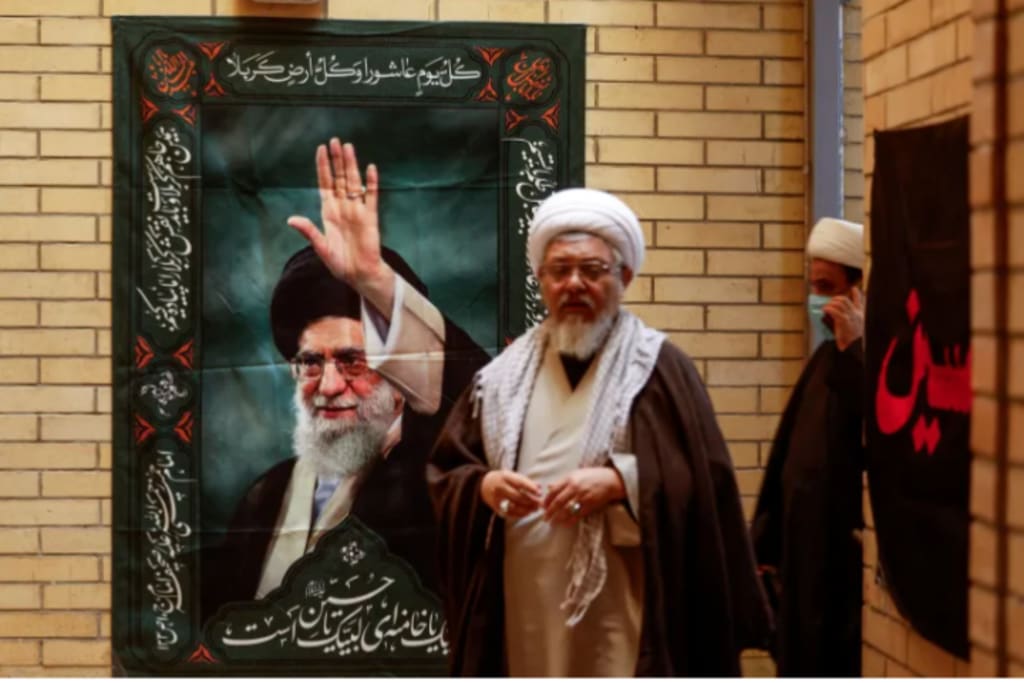
Iran stands at a crossroads as questions intensify about who will one day succeed its long-serving Supreme Leader, Ali Khamenei. At 85 years old, Khamenei remains firmly in power, but regional turmoil, internal pressures, and concerns over continuity have made succession one of the most sensitive topics in Iranian politics.
Unlike many countries where leadership change is driven by public elections, Iran’s process is deeply rooted in religious authority and elite decision-making. The choice of the next Supreme Leader will shape Iran’s domestic policies, its relationship with the West, and its role across the Middle East for decades to come.
So how does the succession process work — and who are the figures most often mentioned as potential successors?
How Iran Chooses Its Supreme Leader
Iran’s constitution assigns the responsibility of selecting the Supreme Leader to the Assembly of Experts, an 88-member council of senior Shiite clerics. These clerics are elected by the public, but candidates must be approved by powerful vetting bodies aligned with the ruling system.
The Assembly meets behind closed doors to evaluate potential candidates based on their religious qualifications, political loyalty, and ability to preserve the Islamic Republic’s ideology. Once chosen, the Supreme Leader holds immense authority — overseeing the armed forces, judiciary, media, and key state institutions.
This secrecy and concentration of power make succession both critical and unpredictable.
Why Succession Matters More Than Ever
Iran today faces unprecedented challenges: economic sanctions, public discontent, regional conflict, and rising geopolitical tension with the United States and Israel. Any transition at the top could either reinforce stability or trigger factional rivalry.
The next Supreme Leader will determine:
Iran’s nuclear policy
Its relationship with Western nations
Its influence over proxy groups in the region
The future of domestic reforms or repression
This makes the succession not just a religious matter, but a strategic turning point for the entire Middle East.
Key Power Brokers Behind the Scenes
While clerics dominate the formal process, political and military institutions play a major role. The Islamic Revolutionary Guard Corps (IRGC) wields enormous influence through its control of security, intelligence, and parts of the economy. Though it does not officially choose the Supreme Leader, its support or opposition could shape the final outcome.
This means the future leader must balance three pillars:
Religious legitimacy
Political loyalty
Security establishment approval
Only candidates who satisfy all three are likely to succeed.
Possible Successors to Watch
Although no official shortlist exists, analysts and observers frequently mention several figures as potential contenders. Each represents a different vision for Iran’s future.
🔹 Mojtaba Khamenei
Perhaps the most controversial name is Mojtaba Khamenei, the son of the current Supreme Leader. He is believed to wield significant influence within conservative circles and maintains close ties with the security establishment.
Supporters argue that his experience and connections could ensure continuity. Critics fear his rise would turn Iran’s system into a hereditary leadership model — something the Islamic Republic was founded to reject. His limited public profile and clerical rank also raise questions about religious legitimacy.
🔹 Hassan Khomeini
A more moderate figure is Hassan Khomeini, the grandson of the Islamic Republic’s founder, Ruhollah Khomeini.
Hassan Khomeini has shown openness to reformist ideas and enjoys symbolic appeal because of his family name. However, his past disqualification from political races and weaker ties to conservative power centers make his chances uncertain.
🔹 Gholam-Hossein Mohseni-Ejei
Another frequently cited candidate is Gholam-Hossein Mohseni-Ejei, Iran’s current judiciary chief. A hard-line cleric with decades of experience in security and judicial roles, he is trusted by conservative factions and seen as someone who could maintain ideological discipline.
His supporters believe he would preserve the status quo. Critics argue his record on human rights and repression could deepen domestic unrest.
🔹 Alireza Arafi
Alireza Arafi is another senior cleric with institutional influence. He has held leadership positions in religious education and sits on key advisory bodies. Known for his academic and religious background, Arafi represents a more traditional clerical path to leadership.
Though less visible internationally, he has credibility within religious circles — a crucial factor in the Assembly of Experts’ decision.
Could Iran Choose a Leadership Council Instead?
Some experts believe Iran may avoid placing power in a single figure and instead opt for a leadership council. This idea has precedent in Iran’s constitution and could reduce internal rivalry by spreading authority among several clerics.
A council system might help stabilize the country during a volatile period, but it could also slow decision-making and expose divisions within the ruling elite.
What This Means for the World
The choice of Iran’s next Supreme Leader will reverberate far beyond Tehran. A hard-line successor could intensify confrontation with the West, while a more moderate figure might open limited space for diplomacy.
Key areas affected include:
Nuclear negotiations
Relations with Gulf states
Israel-Iran tensions
Global oil markets
Human rights policies
In short, Iran’s future leader will influence not just national direction but global security dynamics.
A Transition Shrouded in Silence
One of the most striking aspects of Iran’s succession question is how little is said publicly. Open debate is rare, and speculation happens mostly outside official channels. This secrecy reflects the system’s desire for control — but it also fuels uncertainty.
For now, Ali Khamenei remains firmly in power. Yet history shows that transitions in Iran are defining moments. The next Supreme Leader will inherit a nation facing internal pressure and external conflict, and the path chosen will shape Iran’s destiny for generations.
Whether the future brings continuity, reform, or turbulence, one thing is certain: the question of succession is no longer hypothetical — it is one of the most important political stories in the Middle East today.
About the Creator
Sajida Sikandar
Hi, I’m Sajida Sikandar, a passionate blogger with 3 years of experience in crafting engaging and insightful content. Join me as I share my thoughts, stories, and ideas on a variety of topics that matter to you.
Keep reading
More stories from Sajida Sikandar and writers in The Swamp and other communities.
America’s Gulf Allies Face a Moment of Great Peril
The Middle East is entering one of its most uncertain chapters in decades, and America’s Gulf allies now find themselves standing at the edge of a geopolitical storm. As tensions between the United States, Iran, and Israel intensify, Gulf nations such as Saudi Arabia, United Arab Emirates, Qatar, and Kuwait face a moment of great peril.
By Sajida Sikandar2 days ago in The Swamp
A Gathering of Evil Bosses
“I’m the queen of chin jutting while I smooth my hair, attacking, insulting, and deflecting to protect my appointer.” “Oh, please, Blondi, my hair is curled, highlighted, and longer than yours. I feature television commercials telling immigrants that we will give them a free plane ride home, and if they voluntarily turn themselves in, they will be allowed to legally apply for re-entry. It runs everywhere, and I look good in it! You can’t compete because of your blond hair. Mine is nicer, and my lips are prettier than yours.”
By Andrea Corwin 13 days ago in The Swamp
Flower Bloom 369
FLOWER Bloom 2/25/26 Wednesday By Mariann Carroll Karen had been with Tony for 7 years. Tony started acting strangely after her surgery. He would mow the lawn in the rain and be on his cellphone. He started pushing Karen away. Tony came clean about seeing someone. Karen moved out two months later. Karen moved in with a friend. She felt betrayed.
By Mariann Carroll5 days ago in Fiction



Comments
There are no comments for this story
Be the first to respond and start the conversation.