
What We Know So Far: Supreme Leader Khamenei Killed, as Iran Launches Retaliatory Strikes
Iran confirms the death of Supreme Leader Ayatollah Ali Khamenei after joint U.S.–Israeli strikes, as Tehran launches retaliatory missile and drone attacks and calls for severe reprisal in a rapidly escalating conflict.

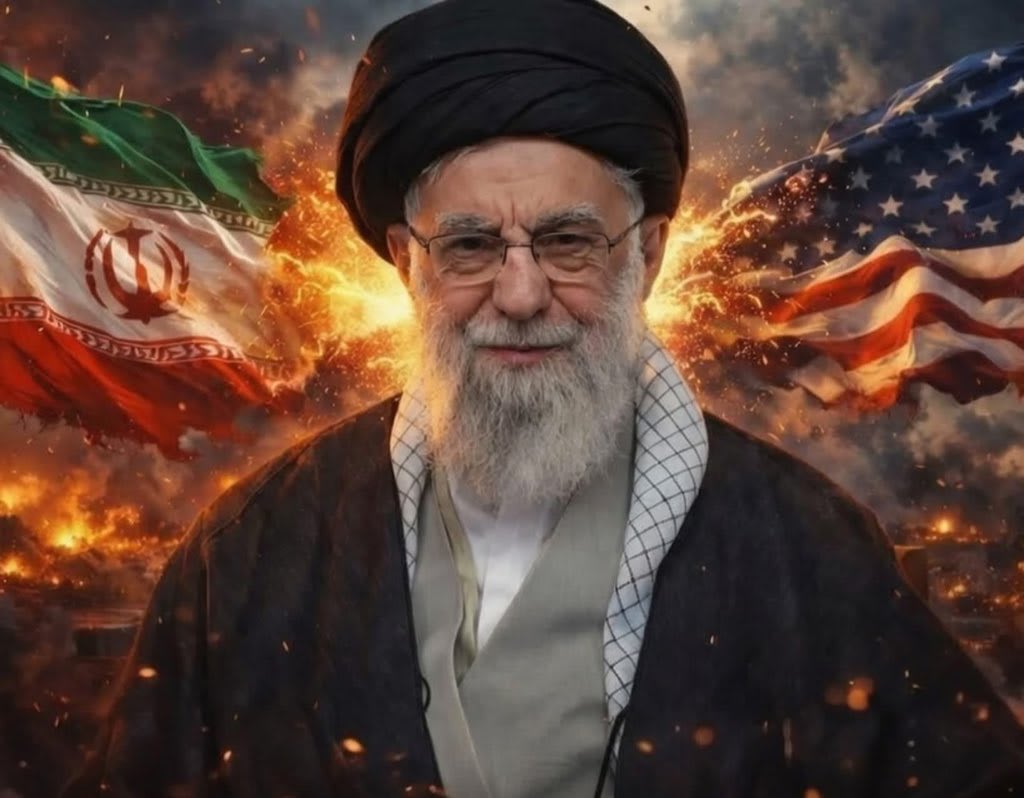
Iran’s long-time supreme leader, Ayatollah Ali Khamenei, has been confirmed dead following a dramatic escalation of hostilities in the Middle East, setting off a cycle of retaliation and raising fears of a broader regional conflict. The developments — unfolding over the past 48 hours — mark one of the most consequential turning points in modern Iranian history.
Khamenei’s Death Confirmed
Iranian state media confirmed early on 1 March 2026 that Supreme Leader Ayatollah Ali Khamenei — who had led the Islamic Republic since 1989 — was killed in joint U.S. and Israeli airstrikes on Tehran and other key locations in Iran on 28 February. The official announcement described his death as the “martyrdom” of a figure who had steered Iran for nearly four decades, and state TV declared 40 days of national mourning, accompanied by a week of public holidays.
President Donald Trump had earlier posted on social media that Khamenei, aged 86, was killed during a major military offensive designed to degrade Iranian leadership and strategic capabilities. Tehran’s confirmation ended initial uncertainty about his status, although both U.S. and Israeli military and political leaders had suggested the supreme leader was dead based on battlefield reports.
The Military Offensive That Killed Him
The strikes, dubbed by some sources as part of a coordinated campaign between Washington and Jerusalem, reportedly targeted senior leadership compounds, nuclear sites, and ballistic missile infrastructure. Satellite imagery released by analysts showed heavy damage to Khamenei’s compound in Tehran. Independent details about the precise mechanics of the strike remain limited due to ongoing conflict conditions.
The joint operation marks a dramatic escalation from earlier phases of tension, which had been largely conducted through proxy confrontations and limited tactical strikes by both sides. Khamenei’s death — a strategic objective reportedly communicated by U.S. and Israeli officials — represents a direct assault on Iran’s political core.
Retaliation and Regional Response
In response to the news of the attacks and the death of their leader, Iranian officials vowed harsh retaliation. The Islamic Revolutionary Guard Corps declared that a “most ferocious offensive operation” would soon begin against U.S. and Israeli targets. Tehran has already launched missile and drone strikes against U.S. bases in the region and sites inside Israel — a significant escalation that carries high potential for wider conflict.
Iran’s government statement described the strikes on its territory — which reportedly killed other high-ranking officials and civilians — as breaches of international law and a direct assault on national sovereignty. Top Iranian leaders warned that “enemies must pay a heavy price” and reaffirmed that the country will pursue retaliation “with all its strength and determination.
Succession and Power Vacuum
Khamenei’s death immediately triggered constitutional procedures to manage the leadership transition. Iran’s Assembly of Experts, a clerical body, is tasked with selecting the next supreme leader. In the interim, a temporary leadership council is expected to be formed, reportedly including senior figures such as Iran’s president, the judiciary chief, and a jurist from the Guardian Council. This transitional authority will lead the country until a new supreme leader is formally appointed.
However, the succession process is unfolding amid wartime conditions and internal factional tensions, raising questions about whether hardliners linked to the IRGC or more traditional clerical figures will prevail. The outcome could shape Iran’s domestic stability and foreign policy for years to come.
Domestic and Regional Unrest
Khamenei’s death has provoked significant reactions across the region as well as domestically. Thousands of Iranians have participated in memorial gatherings, while strong anti-U.S. and anti-Israeli sentiment is being expressed in public commemorations. Pro-Iran demonstrations have also erupted in neighbouring countries including Pakistan and Iraq, prompting heightened security measures.
The potential for further regional instability remains high, with various governments calling for restraint and urging an urgent move back to diplomacy to avoid wider conflict and catastrophic humanitarian consequences.
Global responses have been mixed. Some Western leaders reiterated support for self-defence and emphasised the need to prevent Iran from pursuing nuclear weapons, while others warned that targeting a sitting head of state could violate international norms and risk a broader war. The United Nations Security Council convened emergency discussions aimed at de-escalation and humanitarian relief.
The New Indian Express
Market responses have also reflected the shock of the developments, with energy prices and defense stocks fluctuating amid uncertainty about the conflict’s trajectory and the stability of critical energy corridors such as the Strait of Hormuz.
About the Creator
Fiaz Ahmed
I am Fiaz Ahmed. I am a passionate writer. I love covering trending topics and breaking news. With a sharp eye for what’s happening around the world, and crafts timely and engaging stories that keep readers informed and updated.
Keep reading
More stories from Fiaz Ahmed and writers in The Swamp and other communities.
Ayatollah Khamenei’s Iron Grip on Power in Iran Comes to an End
Ayatollah Ali Khamenei, who ruled Iran with an iron grip for more than three decades, is dead at age 86 — a historic turning point that brings an abrupt end to his authoritarian control over the Islamic Republic’s political, military, and religious machinery. Iranian state media confirmed his death early Sunday following coordinated airstrikes by the United States and Israel that targeted key leadership sites in **Tehran. The announcement, broadcast on state television, declared a period of 40 days of national mourning and marked the beginning of a volatile succession process. For decades, Khamenei embodied the Islamic Republic’s theocratic establishment, maintaining ultimate authority over Tehran’s political, military, and security institutions. He succeeded Ruhollah Khomeini after the latter’s death in 1989 and fundamentally shaped Iran’s trajectory as a deeply authoritarian state. Under his rule, the clerical elite and the Islamic Revolutionary Guard Corps (IRGC) became dominant forces within Iran’s power structure, controlling everything from national defence to major economic assets. A Regime Built on Control and Repression Khamenei’s leadership was defined by rigid ideological control and the suppression of dissent. Though Iran maintained formal republican institutions — including a president and parliament — it was the supreme leader who wielded final authority over internal policy, the judiciary, and foreign affairs. Dissent was routinely met with harsh crackdowns, and major protest movements were often brutally suppressed. The nationwide protests following the 2022 death of Mahsa Amini, a young woman who died in morality police custody, were among the largest challenges to his rule. Security forces responded with lethal force, resulting in tragic loss of life and drawing international condemnation. Internationally, Khamenei pursued a confrontational foreign policy centered on anti-Western rhetoric and strategic competition with the United States and Israel. He championed support for allied militia and political movements across the region — from Syria to Lebanon — creating what Tehran described as an “Axis of Resistance” against perceived external threats. This network helped expand Iran’s regional influence, even as U.S. and allied forces pushed counter-measures. Death and Power Vacuum Khamenei’s death follows a dramatic escalation triggered by U.S.–Israeli strikes in Iran. Iranian state media reported that he died “while performing his assigned duties,” blaming Israel and the U.S. for the attack and describing him as a martyr of the Islamic Republic. Flags were ordered lowered to half-mast, and state media suspended regular programming. The immediate consequence of his death is a power vacuum at the heart of Iran’s political system. Iran’s constitution requires the Assembly of Experts, a body of senior clerics, to select the next supreme leader. However, no clear successor has been identified, and hardliners associated with the IRGC are widely seen as likely contenders. In the interim, a three-member leadership council — composed of the president, the head of the judiciary, and a jurist from the Guardian Council — is expected to assume temporary authority. Uncertain Succession and Factional Tensions The transition period could expose fractures within Iran’s political elite. Khamenei’s authority was sustained by a tightly controlled security apparatus and loyalty networks, but without his unifying figure, rival factions could struggle for dominance. The IRGC’s role will be especially significant: as the backbone of Iran’s domestic control and foreign projection, it may seek to shape the succession in its favour, raising fears of further militarisation of politics. At the same time, public reactions inside Iran are complex. While conservative factions mourn his death and frame it as martyrdom, segments of the population — especially those critical of years of economic hardship and restricted freedoms — view his passing as the end of an era marked by repression and isolation. Analysts caution that if the transitional process lacks legitimacy or transparency, it could exacerbate unrest and deepen internal instability. Khamenei’s death has prompted concern across the Middle East and beyond. Governments in the region are bracing for possible escalation or fallout from Tehran’s reaction. Western capitals have urged restraint, warning that unchecked conflict could destabilise key energy corridors and international markets. Meanwhile, global powers are watching developments in Tehran’s political process closely, aware that leadership shifts in Iran could upend decades-long strategic calculations. As Iran embarks on this uncertain transition, the question of what replaces Khamenei’s iron grip — whether a continuation of hardline rule or a contest for influence among competing elites — will be central to determining the future of the Islamic Republic and its role on the world stage.
By Fiaz Ahmed 3 days ago in The Swamp
A Gathering of Evil Bosses
“I’m the queen of chin jutting while I smooth my hair, attacking, insulting, and deflecting to protect my appointer.” “Oh, please, Blondi, my hair is curled, highlighted, and longer than yours. I feature television commercials telling immigrants that we will give them a free plane ride home, and if they voluntarily turn themselves in, they will be allowed to legally apply for re-entry. It runs everywhere, and I look good in it! You can’t compete because of your blond hair. Mine is nicer, and my lips are prettier than yours.”
By Andrea Corwin 13 days ago in The Swamp
"Scream 7" (2026): Running out of Fresh Screams
This is the seventh time we’ve had a Ghostface crisis. Scream 7 is the latest edition of the Scream franchise. Sydney Prescott and her family are under attack by another anonymous killer dressed in a Ghostface costume. While having issues with her daughter, Tatum, they run from the bloody murders, trying to determine who is behind it all.
By Marielle Sabbag2 days ago in Horror



Comments
There are no comments for this story
Be the first to respond and start the conversation.