history
The history of warfare; stories of combat and conflict across land, seas and skies, from ancient times to the present.
Young People Must Have a Right to Choose When It Comes to Military
If many of you did not know, many youngsters when they finish high school are forced into the military for two years, and wasting precious time they could be spending on their studies and Uni. Why should boys at the age of 17, 18 and 19 have no other choice but to follow this protocol of their country? When girls finish high school, their next step is to go to college, while boys are stuck for one or two years in the army in order to finish and legally leave the country and study abroad.
By Natalie G.7 years ago in Serve
10 Ways War Has Changed Through History
Whether we are considering the present tension in the Middle East, World War I, or the conquest of Alexander the Great, people should understand that war is as much a part of humankind as is needing food and water to survive. Despite your opinions, if Caveman A had beat Caveman B over the head with a rock instead of Caveman B hitting Caveman A with a rock, our entire genealogy could be so wildly different than it is today—you or I might not even be here. These territorial, race, religious, or ideological disputes have paved the way many countries have formed alliances, broke alliances, built their economy, or changed in several different ways. Because humankind has developed in so many drastic ways, the ways war has changed through the years has evolved with it. The differences are staggering too; no longer are we running down our enemy for miles upon miles and stopping the fight at dusk just to pick it up again tomorrow. Read on to find out some of the ways this catastrophic human invention has developed over the span of our existence.
By Ryan Whitaker7 years ago in Serve
10 Allegedly Haunted Military Bases
Though there is never conclusive proof, legends and eyewitness reports overwhelmingly indicate that ghosts and entities result, most often, from violent and premature deaths. Disturbing events of the past lead to strange occurrences in the present. Many such haunted sites include mental institutions, hospitals and clinics, and of course, battlefields and military bases. With respect to this last category, reports of haunted military bases have been heard across the country, and the world. The reports range from specific individuals whose violent or tragic deaths we have corroborated reports of, to simply creepy occurrences of objects moving on their own, winds blowing with no windows open, and brief glimpses of unknown individuals that disappear in a heartbeat. There's no denying that many disturbing things have happened at military bases throughout the world, and it seems, to many, that unfortunate souls still roam the halls, rooms, and streets where they died.
By Nicola P. Young8 years ago in Serve
10 Bizarre Military Mysteries No One Can Explain
Military history always makes for an interesting, gripping read. People still remain fascinated by the most notorious war criminals of all time, enjoy reading about the greatest generals in history, and watch war movies because military life is so uniquely dramatic.
By Ossiana Tepfenhart8 years ago in Serve
The Iolaire
The Iolaire There are a lot of publications about the Iolaire disaster that devastated the population of the Isle of Lewis. I have lived on the island my whole life, and as far as I know my family goes back generations on this island. We are all taught the story in school, to make sure we are well versed in the tragic story that shook the island, and now I will share it with you.
By Den1c Macleod8 years ago in Serve
Revolutionary War Monument to Remember the Diversity of All Who Sacrificed in Crucial Local Battle
Picture a monument of a White American officer flanked in battle by an African American enlistee and a Native American sharpshooter, and the commemoration must come no earlier than the Korean War. Therefore, only revisionist history driven by the demands of excessive political correctness could place the scene before that time. So for someone to actually put up the statue would have to be seen as taking the rewrite to a whole other level. That said, Michael Kahn of Yorktown Heights has set such an initiative in motion and hopes to have that very Revolutionary War Monument in place at Downing Park in the near future. Nonetheless, he feels very secure in the historical accuracy and its intent to remember all who served—especially in this area.
By Rich Monetti8 years ago in Serve
Trench Warfare
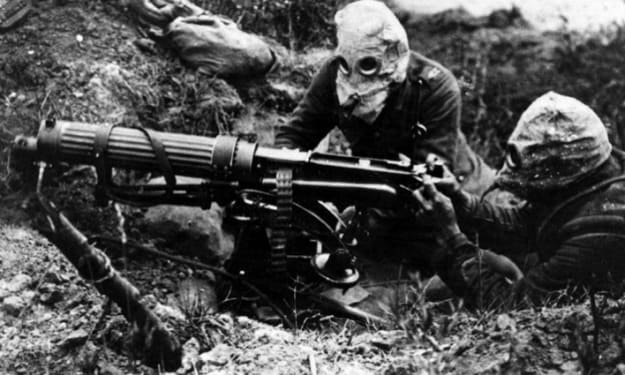
Trench warfare tactics exercised in World War I were detrimental both strategically and psychologically. The outdated fighting style of two sides lining up and firing at each other, except paired with new battlefield technology such as machine guns, chemical weapons, and tanks, made exactly a recipe for disaster. The environment was pestilent, disgusting, and sickness spread quickly. The reeking smell of death, and the relentless sound of explosions, screams, and gunfire were all too common on the battlefields of World War I. These factors resulted in both a massive death toll for both sides and traumatized combatants.
By Tyler Buchanan8 years ago in Serve
Remembering Our History
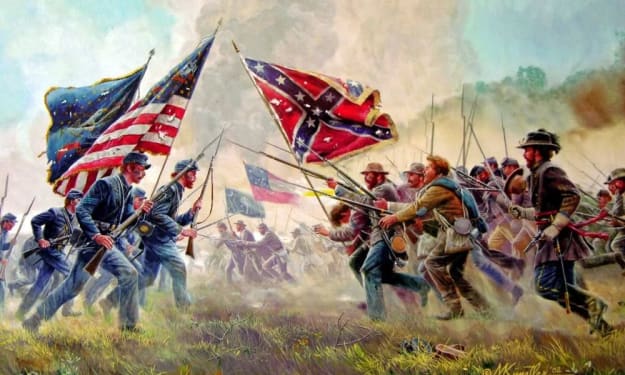
I grew up on the Mason-Dixon line just south of the St. Michaels, the town made infamous for outsmarting the Brits during the Revolutionary War. We have some Northerner traits, some southern hospitality, and our very own Chesapeake Bay culture. Even though we lived in an area that saw the most "brother against brother" situations, with the battle lines drawn less than an hour from my home, one thing we don't have is hate. We don't hate the North, we don't hate America, we don't hate the South, and we don't hate either flag. We respect them all.
By Shannon Humphrey8 years ago in Serve
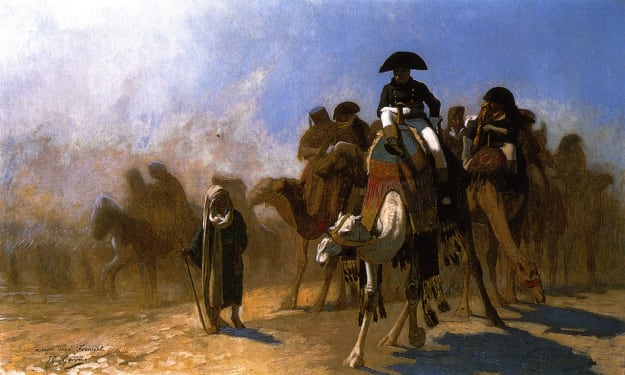
Napoleon in Egypt
After substantial military victories for France over the Austrian Empire in Italy, a 29-year-old General named Napoleon Bonaparte decided that conquering Egypt would help in France’s war with England by blocking trade from India to the island nation. Napoleon was clearly inspired by his hero Alexander the Great who had conquered Egypt millennia previous.
By john cosma8 years ago in Serve
The Worlds Largest Thermonuclear device: The Tsar Bomb
The Tsar Bomb was, and still remains, the largest thermonuclear weapon ever created. It’s production began in July of 1961, ordered by Soviet premier Nikita Khrushchev, who originally wanted a 100 megaton bomb to be built and tested as a testament to the Soviet technical strength and military might. This order for construction came only a few months before the moratorium (the suspension of all nuclear testing by both the USSR and the USA by a legally non-binding agreement that can be revoked at any time) was revoked. As geopolitical tensions rose, the Soviets needed a way to strike fear into the hearts of Europe and the USA. The solution was the Tsar Bomb. October came and political leaders from all sides pleaded with the Soviets to not test the bomb. President Kennedy even made the accusation that the test was for political gain and had no real military application. The test proceeded on schedule despite fears of burning a hole in the atmosphere and contrary to the wishes of economists, politicians, and scientists. The Tsar Bomb test was successful in elevating levels of fear and unease in Europe. So what is this bomb's history? How was it made? What were the risks? And why was it made?
By Dominic Berning8 years ago in Serve