psychology
Studying the complexities of the human mind and its many functions and behaviors.
When Thinking Feels Like Action
There is a particular satisfaction that comes from understanding something clearly after wrestling with it for a long time. The mind settles. Tension releases. Pieces line up. In that moment, it can feel as though real movement has occurred, as though something meaningful has been accomplished. That feeling is not imagined. Cognitive resolution is a real event. The danger appears when that internal resolution is quietly mistaken for external change, and thinking begins to substitute for action rather than prepare the way for it.
By Peter Thwing - Host of the FST Podcast17 days ago in Longevity
The Architecture of Signal
It’s common to think of well-being in terms of addition. Energy becomes fuel for long hours. Stamina grows into a tool against setbacks. Endurance becomes persistence when effort persists. Fresh proof of life shows up in sheer volume produced. Strength reveals itself not through stillness, but in load endured, mileage logged, even when muscles protest. What counts is motion sustained beyond comfort, effort stretched past the point breath gives out.
By Dr Marc Nock20 days ago in Longevity
Why Are Americans Retiring Abroad?
In the past decade, a notable trend has quietly gained momentum: an increasing number of Americans are choosing to retire outside the United States. Once seen as an unconventional choice, international retirement is now becoming a lifestyle decision backed by economic reasoning, health care considerations, adventure, and a longing for a different pace of life. As retirement landscapes shift globally, the U.S. is witnessing a growing exodus of retirees seeking not just sun and relaxation, but affordability, community, and quality of life abroad.
By AnthonyBTV20 days ago in Longevity
How Robots Are Changing Healthcare
How Robots Are Changing Healthcare One of the most transformative periods in healthcare's history is currently underway. Robotics, which was once mostly associated with manufacturing plants and science fiction, is at the center of this evolution. Today, robots assist surgeons, disinfect hospital rooms, deliver medications, support rehabilitation, and even provide companionship to patients.
By Farida Kabir22 days ago in Longevity
Preservation as an Act of Care
Care is usually associated with people, not with ideas. It brings to mind attentiveness, patience, protection, and responsibility toward something fragile. Meaning rarely enters that picture. Thoughts are assumed to be abundant, replaceable, and endlessly renewable. If one is lost, another will come. This assumption feels practical, but it is wrong in a quiet and costly way. Some meanings are not interchangeable. Some insights arrive only once, shaped by a particular moment, a particular season, or a particular convergence of experience that will never repeat in the same form.
By Peter Thwing - Host of the FST Podcast25 days ago in Longevity
Roots and Fruit
Most people evaluate life by what shows. Results, behavior, success, failure, growth, collapse. Fruit is easier to measure than roots, so it becomes the focus almost by default. When something goes wrong, attention rushes to what is visible and immediate. When something goes right, credit is assigned to the most recent action. But this way of seeing consistently misreads causality. Fruit is never the beginning of the story. It is the result of something that has been growing quietly, often unnoticed, for a long time.
By Peter Thwing - Host of the FST Podcast29 days ago in Longevity
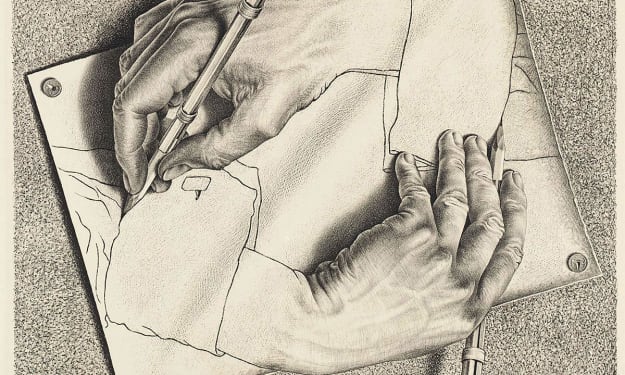
Why Handwriting Could Be Good For You
Introduction Text from the Instagram post below: 1. Dr. Tanaka tracked seniors over 80 in Kyoto and found one constant: they wrote by hand for 15 minutes a day. Typing uses one neural pathway, but physical writing hits 17 different zones. You’re robbing your focus when you pick a keyboard over a pen. 2. MRI scans show that writing by hand forces your brain to manage spatial logic and memory at the same time. This effort keeps you off autopilot. Typing is just muscle memory, while writing is active thinking. It’s the clear difference between simple data storage and actual cognitive engagement. 3. In one trial, those journaling by hand had 41% better recall and 34% faster processing. “The pen builds the hardware,” Tanaka noted. The industry hid this for years to protect revenue, since you can’t patent a pen. They chose profit over your memory. Write three original sentences every morning to keep your mind sharp.
By Mike Singleton 💜 Mikeydred about a month ago in Longevity
Ecclesiastes and the Weight of Meaninglessness
Have you ever noticed how unsettling Ecclesiastes feels compared to most of Scripture. It does not rush to reassure. It does not soften its conclusions. It returns again and again to the same observation: everything fades, everything repeats, and nothing under the sun seems capable of holding still long enough to become permanent. Wisdom fails to secure lasting satisfaction. Pleasure loses its edge. Work outlives the worker. Even moral effort appears unable to guarantee stability. For many readers, this tone feels almost dissonant, as if the book is saying out loud what faith is supposed to quiet.
By Peter Thwing - Host of the FST Podcastabout a month ago in Longevity