
Gauging the Impact of Massive U.S.–Israeli Strikes on Iran
From battlefield escalation to global market tremors, the sweeping U.S.–Israeli offensive against Iran signals a defining moment in Middle Eastern geopolitics and international security.
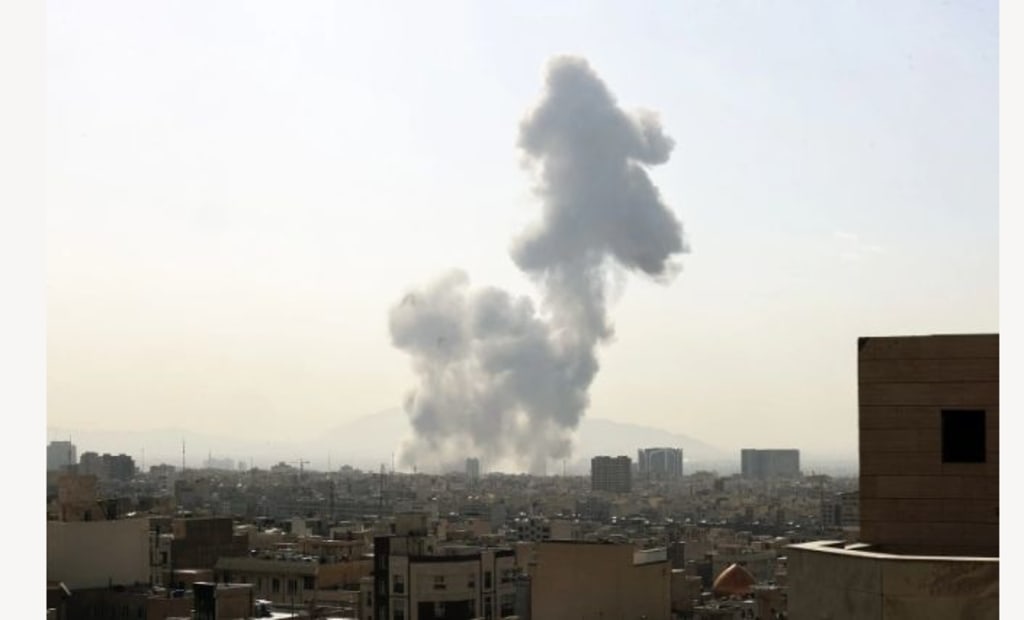
The Middle East entered a new and uncertain chapter following massive coordinated strikes by the United States and Israel on Iranian territory in late February 2026. What began as a targeted military operation quickly evolved into a geopolitical earthquake, sending shockwaves through regional capitals, global energy markets, and international diplomatic corridors.
While both Washington and Jerusalem described the strikes as strategic and preventative, Tehran framed them as acts of aggression with long-term consequences. Now, the world is left gauging the true impact of one of the most consequential confrontations in recent Middle Eastern history.
What Triggered the Offensive?
Tensions between Iran, the United States, and Israel had been steadily escalating for months. Disputes over Iran’s nuclear activities, missile programs, and regional influence reached a boiling point. Officials in Washington and Jerusalem argued that intelligence assessments indicated growing security threats that required decisive action.
In the early hours of the operation, coordinated airstrikes reportedly targeted military installations, missile depots, air defense systems, and sites linked to Iran’s nuclear program. Israeli leadership described the move as necessary to safeguard national security, while U.S. officials emphasized deterrence and strategic containment.
The strikes marked one of the rare instances of direct large-scale military engagement between these actors, pushing the region into a heightened state of alert almost instantly.
Immediate Military Consequences
Iran responded within hours, launching missiles and armed drones toward Israeli territory and U.S. military facilities across the Gulf. Air defense systems intercepted many of these projectiles, but the rapid exchange underscored how quickly the conflict could escalate.
Military analysts warn that such confrontations rarely remain contained. Even if the primary strikes have concluded, the risk of retaliatory cycles remains high. Proxy groups aligned with Iran across Iraq, Lebanon, Syria, and Yemen could intensify their activities, potentially widening the battlefield beyond Iran’s borders.
The presence of U.S. bases throughout the region adds another layer of vulnerability. Any sustained campaign increases the possibility of unintended escalation or miscalculation — a scenario global leaders are keen to avoid.
The Domestic Shock Inside Iran
Beyond the battlefield, the strikes have deeply affected daily life inside Iran. Explosions across major cities sparked fear, displacement, and disruption. Civilians rushed to secure fuel and essential supplies. Financial institutions experienced interruptions, and transportation networks faced delays due to infrastructure damage.
Iran’s economy, already strained by years of sanctions and limited foreign investment, now confronts additional stress. Reconstruction costs, disruptions to exports, and uncertainty over future stability could intensify inflation and unemployment pressures.
Politically, the situation is equally delicate. Moments of national crisis often consolidate state authority, yet they can also expose fractures. Public opinion appears mixed — some citizens rallying around national sovereignty, others voicing frustration over prolonged confrontation and economic hardship.
Energy Markets on Edge
Perhaps the most immediate global impact has been felt in energy markets. Iran’s geographic position near the Strait of Hormuz — one of the world’s most critical oil transit chokepoints — makes any conflict involving Tehran a matter of international economic concern.
Oil prices reacted swiftly to news of the strikes, reflecting fears of potential supply disruptions. Even without direct interference in shipping routes, heightened geopolitical risk typically drives price volatility.
For energy-dependent economies in Europe and Asia, sustained instability in the Persian Gulf region could translate into higher fuel costs, inflationary pressure, and economic uncertainty. Investors and policymakers alike are watching developments closely.
Diplomatic Fallout and Global Divisions
The international response to the strikes has been sharply divided. Some Western governments framed the action as a strategic necessity aimed at preventing long-term security threats. Others urged restraint, warning that further escalation could destabilize the entire region.
Major global powers expressed concern over the precedent such direct strikes might set. Emergency diplomatic meetings were convened, and calls for de-escalation echoed through international forums.
This moment also highlights shifting global alliances. Nations with close ties to Iran have criticized the operation, while others reaffirmed security cooperation with the United States and Israel. The broader geopolitical landscape may harden along new fault lines depending on how events unfold.
Long-Term Strategic Implications
Looking ahead, the consequences of these strikes extend far beyond immediate military outcomes.
First, the deterrence equation has changed. If the operation significantly degrades Iran’s military capabilities, it may temporarily alter the balance of power. However, history shows that states under pressure often adapt asymmetrically, relying more heavily on proxy networks or cyber operations.
Second, the possibility of renewed negotiations remains uncertain. While military confrontation can sometimes push adversaries toward diplomatic talks, it can also entrench hostility and reduce political space for compromise.
Third, domestic political dynamics in Iran may shift. Leadership decisions in the coming months will shape whether the country leans toward internal consolidation or broader reform — though external conflict typically narrows reform pathways.
Finally, regional security architectures may evolve. Gulf states, Israel, and Western allies may deepen defense coordination, while Iran could seek stronger strategic partnerships elsewhere.
A Region at a Crossroads
The massive U.S.–Israeli strikes on Iran represent more than a military event; they symbolize a critical turning point for the Middle East. The ripple effects are already visible — from missile exchanges and market volatility to diplomatic tension and domestic uncertainty.
Whether this episode becomes a short-lived confrontation or the opening chapter of a prolonged regional crisis depends on the decisions made in the weeks ahead. De-escalation, back-channel diplomacy, and calculated restraint could prevent further destabilization. Conversely, missteps or aggressive retaliatory cycles could deepen conflict across multiple fronts.
For now, the world watches as the balance between deterrence and escalation hangs delicately in the air. One thing is certain: the strategic landscape of the Middle East has shifted, and its long-term consequences will shape international relations for years to come.




Comments
There are no comments for this story
Be the first to respond and start the conversation.