
$100 Oil? Prolonged Hormuz Closure Could Spark a 1970s-Style Energy Shock
A fragile global oil lifeline faces geopolitical fire, threatening inflation, recession, and economic instability worldwide
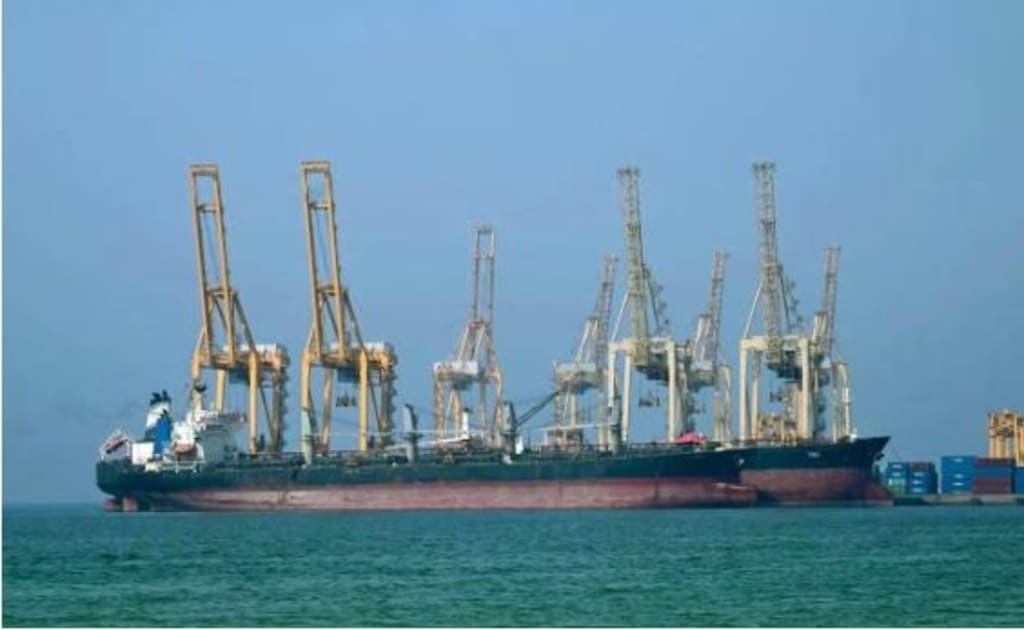
The global economy runs on oil, and much of that oil runs through one narrow maritime corridor: the Strait of Hormuz. Barely 21 miles wide at its narrowest point, this strategic passage connects the Persian Gulf to the Gulf of Oman and the Arabian Sea. It is one of the world’s most vital energy chokepoints. Roughly one-fifth of global petroleum consumption flows through it every day.
So what happens if that lifeline is cut off for an extended period? Analysts warn that a prolonged closure of the Strait of Hormuz could drive oil prices to $100 per barrel or beyond, igniting fears of a 1970s-style energy shock that could rattle economies worldwide.
Let’s unpack what’s at stake—and why the world should be paying close attention.
Why the Strait of Hormuz Matters
Oil exporters such as Saudi Arabia, Iraq, United Arab Emirates, Kuwait, and Qatar rely heavily on this route to ship crude and liquefied natural gas to markets in Asia, Europe, and North America. Even Iran, often at the center of regional tensions, depends on the strait for its own exports.
A disruption—whether due to military conflict, mining of shipping lanes, or blockades—would immediately constrain global supply. While some Gulf producers have alternative pipelines, they lack the capacity to fully replace maritime shipments. The result? A sudden supply shock in already tight energy markets.
The $100 Oil Scenario
Oil prices are driven as much by expectations as by physical supply. If markets perceive a credible threat of long-term closure, traders would likely bid prices sharply higher—even before any sustained shortage materializes.
A spike to $100 per barrel would not be unthinkable. During periods of geopolitical tension in the Middle East, crude has surged rapidly in anticipation of disruptions. A prolonged shutdown of Hormuz could push prices beyond $100, especially if global spare capacity is limited.
Higher crude prices translate quickly into higher gasoline and diesel prices. For households, that means more pain at the pump. For industries, it means increased transportation and production costs—expenses often passed on to consumers.
Inflation, which many economies have only recently begun to tame, could roar back.
Echoes of the 1970s Energy Crisis
The phrase “1970s-style energy shock” is not used lightly. During the oil embargo led by the Organization of the Petroleum Exporting Countries (OPEC) in 1973, global oil prices quadrupled. The shock triggered stagflation—a toxic mix of high inflation and stagnant growth—in the United States and much of Europe.
Back then, long lines at gas stations and rationing became symbols of economic vulnerability. While today’s energy markets are more diversified and strategic petroleum reserves exist, the world is still deeply dependent on fossil fuels.
A prolonged Hormuz closure could revive some of those painful dynamics:
Rapid price spikes
Surging transportation costs
Stock market volatility
Slower economic growth
Pressure on central banks
The difference today is that the global economy is even more interconnected. Supply chains are leaner, and energy is embedded in nearly every aspect of production—from food to microchips.
Global Markets on Edge
Energy markets would not be the only ones to react. Equity markets could tumble as investors price in slower growth and higher costs. Emerging markets, many of which are energy importers, would face currency pressure and rising trade deficits.
Asian economies, particularly China, Japan, South Korea, and India, are especially vulnerable because of their reliance on Gulf oil. Europe, already navigating energy transitions and geopolitical tensions, could also face renewed instability.
Meanwhile, shipping insurance premiums would surge. Tanker operators might refuse to enter the region, compounding supply constraints even if the strait were technically navigable.
The Role of Strategic Reserves
Countries like the United States maintain large strategic petroleum reserves (SPR) designed for precisely this type of emergency. A coordinated release could help stabilize markets in the short term.
However, reserves are not a permanent solution. They buy time—but they do not replace sustained production and shipping. If the strait remained closed for weeks or months, governments would face difficult choices about allocation and rationing.
Moreover, markets might interpret SPR releases as confirmation of severe disruption, potentially reinforcing upward price pressure.
Geopolitical Domino Effects
A prolonged closure would not occur in isolation. It would likely stem from escalating tensions between Iran and Western or regional powers. Any military confrontation could spill into broader regional conflict.
Energy infrastructure—including pipelines, refineries, and export terminals—could become targets. That would further tighten supply and amplify volatility.
Diplomatic efforts would intensify. The United Nations, major powers, and regional actors would likely scramble to de-escalate tensions and reopen shipping lanes. But even temporary uncertainty can have lasting economic consequences.
Could the Shock Accelerate Energy Transition?
There is a paradox here. A severe oil shock could accelerate investment in renewable energy, electric vehicles, and energy efficiency. High fossil fuel prices often make alternatives more attractive.
However, transitions take time. In the immediate term, consumers and businesses would feel the sting. Policymakers would be forced to balance short-term stabilization with long-term strategy.
For oil-producing nations outside the Gulf—such as the United States, Brazil, and Canada—a price spike could bring windfall revenues. But for import-dependent economies, the pain would outweigh the gains.
How Likely Is a Prolonged Closure?
Historically, even during intense conflicts, the Strait of Hormuz has rarely been fully closed for extended periods. All sides understand the economic stakes. Blocking the strait would harm exporters as much as importers.
Still, the risk cannot be dismissed. Accidental escalation, miscalculation, or deliberate strategy could disrupt traffic longer than markets anticipate.
Energy traders often say that oil markets price risk in real time. The mere perception of vulnerability in Hormuz can move prices dramatically.
Preparing for the Worst
Governments and corporations alike should treat the Hormuz scenario as a serious contingency. Diversifying energy sources, strengthening strategic reserves, investing in infrastructure resilience, and enhancing diplomatic engagement are all part of mitigating risk.
For consumers, the warning is clear: energy markets remain fragile. Despite advances in renewables and efficiency, the global economy still depends heavily on oil flowing through narrow chokepoints.
Final Thoughts
The Strait of Hormuz may appear as a thin blue line on a map, but it carries immense economic weight. A prolonged closure could indeed send oil prices soaring toward—or beyond—$100 per barrel, reviving memories of the 1970s energy crisis.
While a full-scale shutdown remains a worst-case scenario, the possibility underscores a broader truth: global energy security remains tightly bound to geopolitics. Until diversification and transition efforts significantly reduce reliance on oil, the world will remain vulnerable to shocks emanating from a single, strategic waterway.
In an era of mounting geopolitical tension, that vulnerability is a risk no nation can afford to ignore.
About the Creator
Pearl
1980 something. we all hung out at Pearl and you and i were nothing special, or so i thought. i mean we all danced, drenched in our own sweat, our own saline solution of fear, too many beers, shots, laughter, tears, fucks in the bathroom and i don't know when we began to be afraid. do you?
By ROCK aka Andrea Polla (Simmons)6 days ago in Fiction


Comments
There are no comments for this story
Be the first to respond and start the conversation.