
Iran–US–Israel Conflict Escalates: Khamenei Killed, Protests Rock Pakistan and Beyond
Iran Declares 40 Days of Mourning as Global Pro-Iran Protests Spread Across the Middle East and South Asia

Iran–US–Israel Conflict Escalates: Khamenei Killed, Protests Rock Pakistan and Beyond
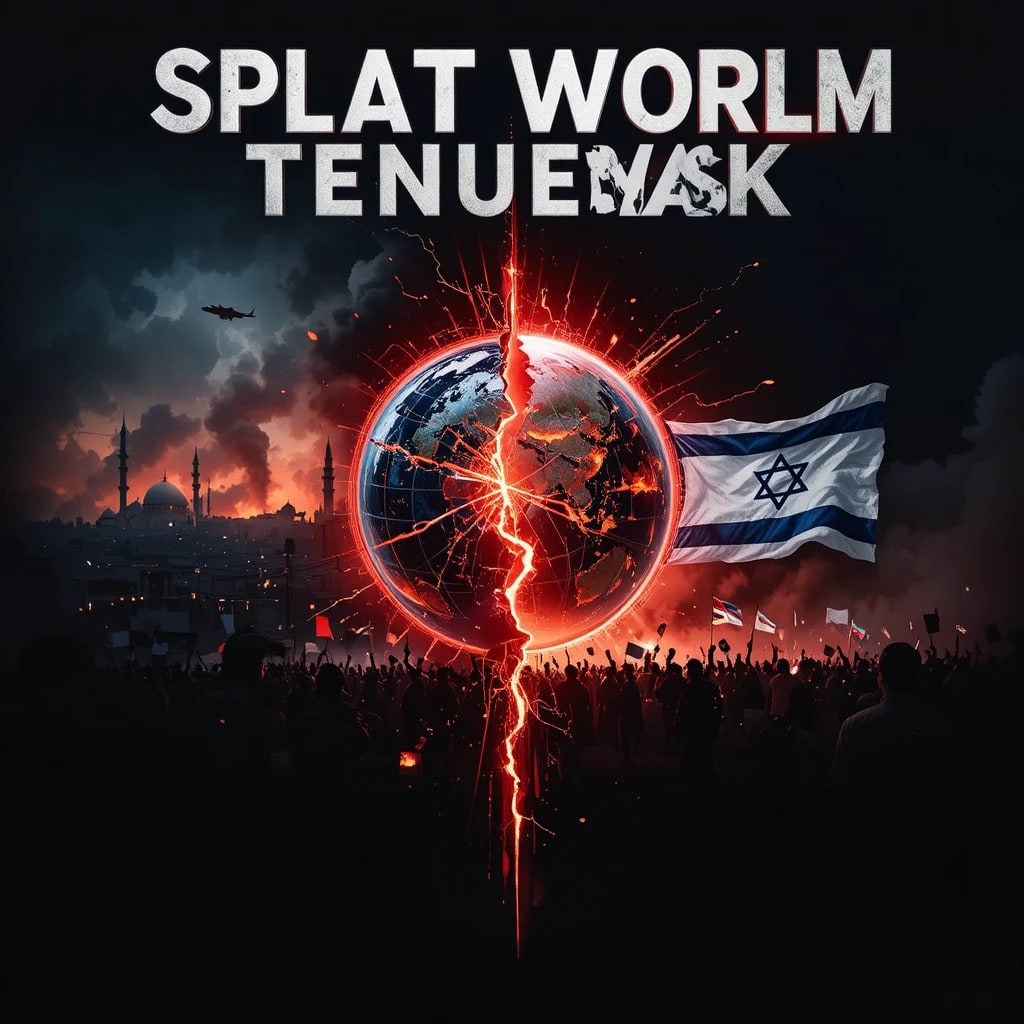
The Middle East awoke to a morning that many feared would one day arrive but few believed would unfold so suddenly. Before dawn, reports began circulating that coordinated airstrikes carried out by forces linked to Israel and the United States had struck strategic targets in Tehran. Within hours, Iranian state television confirmed the unthinkable: Ali Khamenei, the Supreme Leader of Iran, had been killed.
The announcement triggered shockwaves that rippled far beyond Iran’s borders. For decades, Khamenei had been the central figure in Iran’s political and religious structure. His leadership defined the country’s foreign policy, its military strategy, and its ideological posture toward the West and Israel. His death was not merely the loss of a leader—it was a seismic rupture in the architecture of power across the region.
The Strike That Changed the Region
According to early military briefings, the operation targeted key Revolutionary Guard facilities and suspected weapons infrastructure on the outskirts of Tehran. Satellite imagery later showed plumes of smoke rising above military compounds. While officials in Washington and Tel Aviv described the strikes as “preemptive measures” in response to alleged threats, Tehran labeled the attack an “act of war.”
Within hours of confirmation, Iranian streets filled with mourners and protesters. Black flags were hoisted above government buildings. Religious leaders called for unity and resistance. Crowds gathered in central squares, chanting slogans against both Israel and the United States. The mood was a volatile mix of grief and fury.
Iran’s military command vowed retaliation. Senior commanders warned that “strategic patience has ended,” hinting at possible responses targeting U.S. military installations in the region or Israeli assets. Gulf states, already wary of instability, placed their armed forces on high alert. Oil markets reacted immediately, with prices spiking amid fears of disruption in the Strait of Hormuz.
Washington and Tel Aviv Respond
In Washington, officials defended the operation as necessary to prevent escalating threats. The White House emphasized intelligence reports that allegedly pointed to imminent hostilities orchestrated by Iranian-backed groups. Meanwhile, leaders in Israel framed the strike as a matter of national survival.
Behind closed doors, however, diplomats scrambled to prevent a broader regional war. European capitals urged restraint. Emergency sessions were called at international forums. The world’s major powers recognized that a direct military confrontation between Iran, Israel, and the United States could ignite a conflict stretching from the Mediterranean to the Persian Gulf.
Pakistan’s Streets Erupt
The impact of Khamenei’s death was not confined to the Middle East. In Karachi, thousands poured into the streets outside the U.S. consulate. Protesters condemned the airstrikes, waving banners and chanting slogans expressing solidarity with Iran. Similar demonstrations broke out in Lahore and Islamabad.
What began as peaceful rallies soon escalated. Clashes erupted between demonstrators and security forces as some protesters attempted to breach diplomatic perimeters. Tear gas filled the air. Gunshots were reported in chaotic scenes that left multiple people dead and dozens injured. Pakistani authorities imposed temporary road closures and heightened security across major urban centers.
The government in Islamabad issued a cautious statement, calling for calm while expressing concern over rising regional tensions. Analysts noted that Pakistan’s delicate geopolitical balancing act—maintaining ties with both Western powers and neighboring Iran—had become significantly more complicated overnight.
A Region on Edge
Beyond Pakistan, reactions poured in from across the Muslim world. In Iraq and Lebanon, groups aligned with Tehran threatened consequences. In Yemen, militia leaders declared solidarity with Iran. The fear among international observers was clear: proxy conflicts could intensify rapidly, transforming isolated flashpoints into a coordinated regional confrontation.
Meanwhile, Gulf states faced a precarious dilemma. While wary of Iran’s influence, they were equally concerned about the economic consequences of instability. Energy infrastructure across the region was placed under heightened protection. Airlines rerouted flights to avoid potential airspace closures.
Financial markets mirrored the anxiety. Global stock indices fluctuated sharply. Energy traders predicted prolonged volatility if retaliation targeted shipping lanes or oil facilities. Economists warned that a sustained conflict could ripple into inflationary pressures worldwide.
The Human Dimension
Amid the geopolitical calculations, ordinary citizens bore the emotional weight of uncertainty. In Tehran, families gathered in mosques for memorial prayers. Parents kept children home from school, unsure of what the next days might bring. Social media platforms overflowed with images of candlelit vigils and tearful mourners.
In Pakistan, shopkeepers shuttered businesses early. University campuses postponed exams. Rumors spread quickly, sometimes faster than verified information. The tension was palpable—a collective awareness that history was shifting in real time.
For many in the region, the killing of a sitting supreme leader crossed a psychological threshold. It signaled that no political figure was beyond reach and that the rules governing conflict might be changing. The risk of miscalculation loomed large.
Diplomacy or Escalation?
Behind the scenes, urgent diplomatic efforts were underway. Several neutral countries offered to mediate. International organizations called for immediate de-escalation. The possibility of backchannel negotiations surfaced, though public rhetoric on all sides remained defiant.
Iran’s next move became the central question dominating global headlines. Would Tehran respond directly, risking full-scale war? Or would it pursue asymmetric retaliation through allied groups? Military analysts suggested that any significant response could trigger further strikes, creating a dangerous cycle of action and counteraction.
For Israel and the United States, the challenge was equally complex. Maintaining deterrence while avoiding regional conflagration required precise calculation. Domestic political pressures also shaped decision-making, as leaders navigated public opinion and strategic priorities.
A Turning Point in Modern History
The death of Ali Khamenei marked more than the end of an era within Iran—it represented a potential turning point in Middle Eastern geopolitics. Power transitions within Iran’s leadership structure were already under discussion, raising questions about who might emerge to guide the nation forward. Would a successor adopt a more conciliatory approach, or would hardline positions intensify?
In Pakistan, the unrest underscored how interconnected regional politics have become. Events in Tehran reverberated through Karachi within hours. The modern information age ensures that no conflict remains isolated.
As night fell across the region, uncertainty lingered. Military assets remained mobilized. Diplomatic channels remained open but strained. Citizens watched and waited.
History often records moments when the world stands at a crossroads. This was one of them—a fragile pause between retaliation and restraint. Whether the coming days would bring escalation or diplomacy remained unclear.
About the Creator
Essa Khan
I am a warm, genuine voice-over artist.
My style is conversational and approachable.
I specialize in bringing authenticity to every script.
From heartfelt narrations to friendly commercial spots,
I make complex topics feel simple and human.
Worst Mid-Air Crash in Aviation History part 1
It was evening over Delhi when two aircraft carrying a total of 349 people were moving toward each other in the sky. One of them was preparing to land at Delhi Airport, while the other had just taken off from Delhi. Both pilots were receiving instructions from the same air traffic controller, and a vertical separation of 1,000 feet had been maintained between them.
By Imran Ali Shah7 days ago in History
Trickle Them Down, But Not Out
The thing about smart people is that they should know better, but alas, intelligence is not the same as wisdom. Not only do the mistakes of experts too short on vision—when they are not corrected—have the potential to do great and far-reaching damage, but they also undermine public confidence in the very notion of expertise. This is particularly so when expertise is wielded in defence of the rich and powerful as a cudgel against those laid low. As an academic, this lack of faith in “so-called experts” is painful to see as it plays out in the spread of dis-/misinformation, conspiracy theories, and anti-intellectualism writ large. But it is also an understandable impulse given the catastrophic failure of an economic ideology pushed by certain economic experts. Supply-side economics has shaped a broken system for the last half-century and has arguably done more to undermine the fabric of the American Dream than any policy framework of the past century.
By Cory Wright-Maley7 days ago in Humans


Comments
There are no comments for this story
Be the first to respond and start the conversation.