
“After Witnessing 40 Wars, Why Did 2025 Feel Like the Most Troubling Year Yet?”
From global conflicts and political polarization to climate disasters and technological anxiety, 2025 created a unique storm of uncertainty unlike any year before.

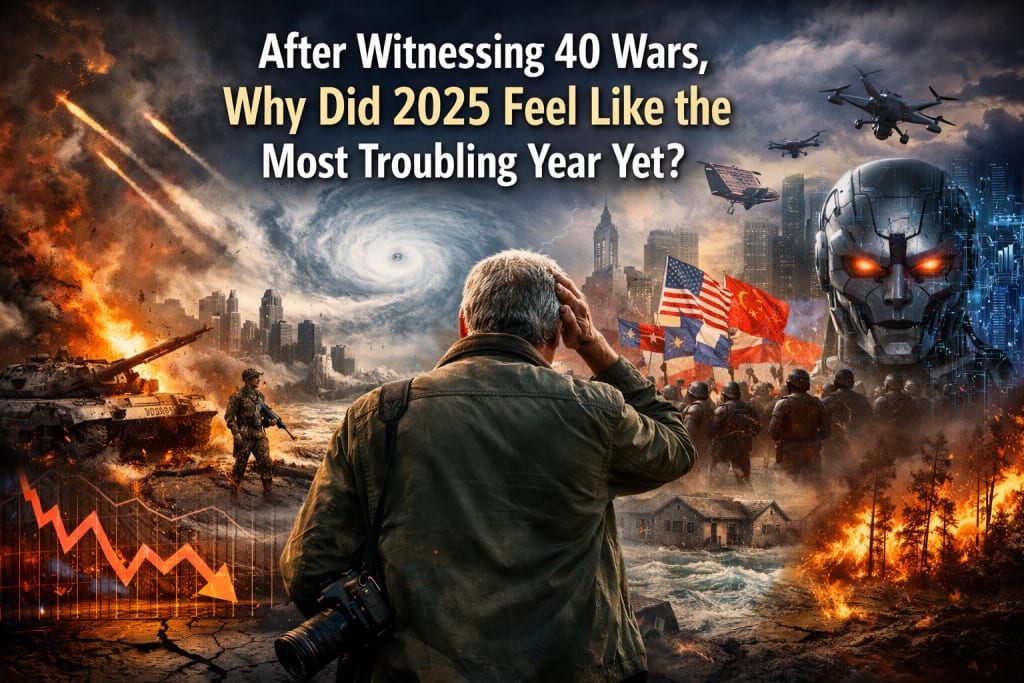
For someone who has witnessed four decades of global conflict—wars in the Middle East, civil unrest in Africa, political revolutions in Europe, and prolonged military engagements in Asia—fear is not unfamiliar. History has been turbulent, and the world has endured devastating moments, from the Cold War era to modern terrorism. Yet, for many seasoned observers, 2025 felt uniquely unsettling. The question arises: why did this year, despite not hosting a single world war, feel more disturbing than the previous forty conflicts combined?
One reason lies in the **simultaneous nature of global crises**. In earlier decades, conflicts were often regional. The Vietnam War, the Gulf War, or the Balkan conflicts each had profound global consequences, but they were geographically concentrated. In 2025, however, instability seemed everywhere at once. The war in **Ukraine** continued to strain global alliances, tensions escalated around **Taiwan**, and violence persisted in parts of the Middle East and Africa. Unlike previous eras, news of conflict was constant, instant, and unavoidable.
Another factor was the **information overload of the digital age**. During the Cold War, information was filtered through newspapers and evening news broadcasts. Today, social media platforms broadcast every explosion, political statement, and rumor in real time. Graphic images and unverified claims spread within seconds. The psychological impact of this constant exposure cannot be underestimated. The human mind, evolved for slower communication cycles, struggles under the weight of perpetual crisis alerts. In 2025, anxiety was not just about events themselves—but about experiencing them repeatedly, minute by minute.
Economic uncertainty also played a central role. The global economy faced persistent inflation, unstable energy markets, and supply chain disruptions. Lingering effects from the COVID-19 pandemic continued to shape labor markets and public spending. Meanwhile, competition between global powers like the **United States** and **China** intensified, affecting trade and technology industries worldwide. Ordinary citizens felt these pressures directly—through higher living costs, housing shortages, and job insecurity. Unlike distant wars, economic strain touches households daily.
Climate change amplified the sense of crisis. In 2025, extreme weather events were no longer rare headlines but routine occurrences. Record-breaking heatwaves in Europe, devastating floods in Asia, and catastrophic wildfires in North America reinforced the perception that the planet itself was unstable. Scientists had warned about such patterns for decades, but seeing them unfold with increasing intensity created a psychological shift. Climate anxiety became as real as political fear.
Technology, once a symbol of hope, contributed to the unease. Artificial intelligence systems expanded rapidly across industries, transforming jobs and raising ethical concerns. Deepfake videos blurred the line between truth and fiction. Cyberattacks targeted infrastructure, hospitals, and financial systems. For many, 2025 felt like standing at the edge of a technological cliff—excited by innovation but fearful of its consequences. The speed of change outpaced the ability of laws and institutions to regulate it effectively.
Political polarization deepened in many democracies. Elections across continents were marked by misinformation campaigns and declining public trust. In some countries, debates about migration, identity, and national sovereignty fueled social divisions. The sense of unity that often emerges during wartime seemed absent; instead, societies appeared fragmented internally while facing external threats simultaneously.
Perhaps the most significant difference between 2025 and the forty wars witnessed before it was **the erosion of predictability**. Even during major conflicts, there were defined battle lines, clear alliances, and strategic frameworks. In 2025, uncertainty felt structural. Conflicts were hybrid—combining cyber warfare, economic sanctions, misinformation, and proxy battles. There was no single battlefield and no obvious endpoint.
Additionally, global institutions appeared strained. Organizations established after World War II to preserve peace struggled to mediate disputes effectively. Multilateral cooperation weakened as national interests dominated foreign policy decisions. This weakened trust in international systems added to the perception that the world lacked strong stabilizing forces.
Yet, despite these concerns, history offers perspective. Humanity has endured world wars, nuclear standoffs, pandemics, and economic collapses. The feeling that “this year is the worst” often reflects the immediacy of lived experience rather than objective comparison. What makes 2025 distinct is not necessarily the scale of violence, but the interconnectedness of crises—political, economic, environmental, and technological—converging at once.
For someone who has seen forty wars, the unease of 2025 may stem less from battlefield explosions and more from the silent pressures shaping everyday life. It is the combination of global instability, digital hyper-awareness, climate fear, and rapid technological transformation that creates a persistent sense of vulnerability.
The world has faced darker chapters. But in 2025, uncertainty became personal, constant, and global—making it feel, for many, like the most troubling year yet.
About the Creator
Irshad Abbasi
Ali ibn Abi Talib (RA) said 📚
“Knowledge is better than wealth, because knowledge protects you, while you have to protect wealth.
Keep reading
More stories from Irshad Abbasi and writers in History and other communities.
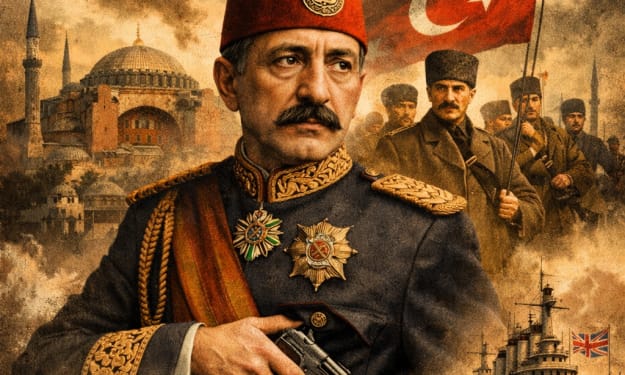
The Last Ottoman Sultan Who Carried a Pistol in His Pocket
Fear, Exile, and the Fall of an Empire: The Final Days of Mehmed VI --- The fall of the Ottoman Empire marked the end of one of history’s most powerful and enduring dynasties. For more than six centuries, the House of Osman ruled vast territories stretching across Europe, Asia, and Africa. Yet, in its final chapter, the empire’s last ruler lived not in splendor, but in fear. Mehmed VI, the final Sultan of the Ottoman Empire, was a man surrounded by uncertainty, political chaos, and real threats to his life. According to accounts from the turbulent years following World War I, he carried a pistol in his pocket, fearing assassination at any moment.
By Irshad Abbasi 2 days ago in History
Trump and Netanyahu Are Breaking the Bond Between American Jews and Israel
Israeli Elections & The public's demand: Even though Israel gained as many seats as its biggest significant adversary, the results of the April 9 election have been seen as a win for the status quo. Meanwhile, Prime Minister Benjamin Netanyahu is best positioned to form a new administration alongside the Likud party that he leads. Most certainly, Netanyahu will be able to maintain his position of authority. The public's demand for familiarity and regularity is the reason behind this.
By Laura Hoovera day ago in History


Comments
There are no comments for this story
Be the first to respond and start the conversation.