pop culture
Modern popular culture topics in the geek sphere.
Again, with the Villains
Whether you love them or hate them, Disney villains take up a special place in the hearts and minds of people everywhere. Not all of them are the same as most villains. Some are short-sighted (see my other post about that) whereas many have the same old goal of domination and wanting more power.
By Johann Hollar2 days ago in Geeks
Bruised Autonomy: A Review of Kathleen Edwards' album FAILER (2002)
Failer, the 2002 debut by Kathleen Edwards, is a record about the psychology of romantic self-sabotage set against highways, motels, parking lots, and barstools. It belongs to the same moral weather system as Raymond Carver and Alice Munro: ordinary people making small decisions that quietly alter the trajectory of their lives. No one here delivers a Nietzschean manifesto. No one collapses in Dostoyevskian hysteria. They just fail--intimately, repeatedly, lucidly.
By ANTICHRIST SUPERSTAR3 days ago in Geeks
Spongebob Review
The episode “Walking Small” opens with a sun‑drenched panorama of Goo Lagoon, the golden sand glittering like powdered sugar under a cloudless sky, and the playful chatter of Bikini Bottom’s residents echoing across the waves. From the very first frame, the animation captures the carefree rhythm of a typical day at the beach, yet a subtle tension is already bubbling beneath the surface as Plankton slides into view, his tiny silhouette a dark crescent against the bright horizon. The writers cleverly juxtapose the idyllic setting with Plankton’s scheming grin, foreshadowing the paradoxical lesson that will unfold: the transformation of SpongeBob from his usual bubbly innocence into a surprisingly assertive beach‑goer. The visual palette—turquoise water, amber sun, and the occasional flash of a distant jellyfish—serves as a vivid backdrop for the episode’s central conflict, immersing the audience in a world that feels both familiar and slightly off‑kilter, as if the sand itself is waiting for a ripple that will reshape the familiar rhythm of beach life.
By Forest Green3 days ago in Geeks
SpongeBob Review
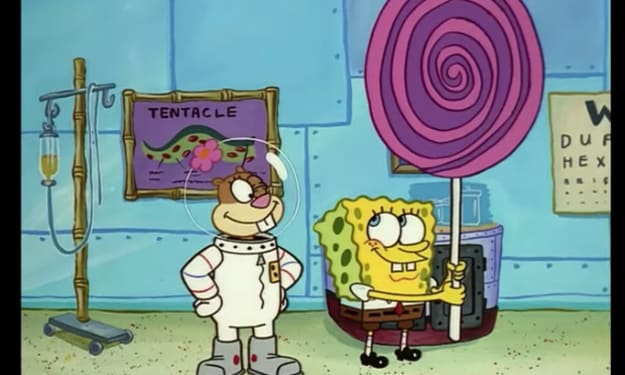
The episode “Texas” opens with a sweeping, pastel‑washed sunrise over Bikini Bottom, the water glimmering like polished glass as the camera pans past familiar coral arches to find Sandy Cheeks hunched over a tiny, improvised Texas flag, her eyes misted with an unmistakable longing. The animators deftly juxtapose her burly, beetle‑shelled silhouette against the soft, undulating sea‑foam, emphasizing the stark contrast between her rugged, Texan spirit and the whimsical, underwater world she now inhabits. A subtle but effective musical cue—an acoustic steel‑guitar riff reminiscent of Lone Star ballads—underscores the scene, instantly transporting the audience to a far‑flung prairie while still grounding us in the episode’s aquatic setting. This opening sequence not only establishes Sandy’s homesick yearning but also primes the viewer for the heartfelt narrative arc that follows, making her desire to return to Texas feel both authentic and deeply resonant within the show's typically buoyant tone.
By Forest Green3 days ago in Geeks
SpongeBob Review
The episode “Rock Bottom” opens with SpongeBob’s innocent optimism as he eagerly awaits the evening bus home from Glove World, only to be thwarted by an unexpected schedule change that forces him onto a seemingly innocuous, half‑empty vehicle. The moment the bus lurches away from the familiar streets of Bikini Bottom, the animation subtly shifts to a dimmer, cooler palette, signaling the transition into an unfamiliar, almost alien undersea metropolis. As the bus careens through a tunnel of bioluminescent kelp and the eerie hum of distant machinery grows louder, SpongeBob’s initial confusion gives way to a palpable sense of dread, expertly captured by his wide‑eyed, panicked expressions and the muffled, echoing voices of the townsfolk that seem to speak an incomprehensible, garbled dialect. This opening sets the stage for a meticulously crafted narrative where the simple act of taking the wrong bus becomes a metaphorical plunge into a world where every signpost, every vendor, and every stranger is a reminder of how disorienting an unfamiliar environment can be for an otherwise carefree soul.
By Forest Green3 days ago in Geeks
SpongeBob Review
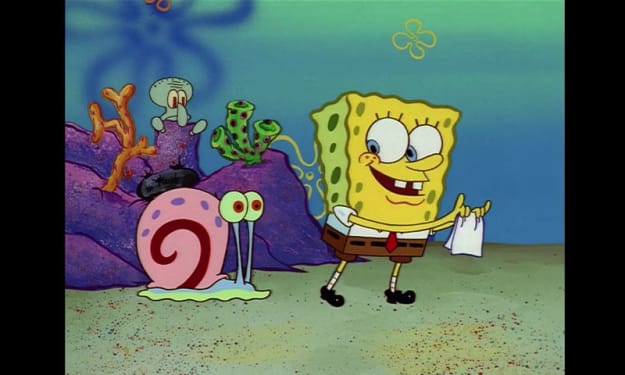
The episode “Arrgh!” opens with an exuberant Mr. Krabs sees Spongebob and Patrick playing with a treasure map at the Krusty Krabs and he joins in on the fun. It was inspired by an ancient, barnacle‑covered map he claims was salvaged from the wreckage of the legendary Flying Dutchman’s galleon, instantly igniting the imaginations of SpongeBob and Patrick. The writing cleverly balances the classic pirate tropes—rum‑filled taverns, mutinous parrots, and cursed doubloons—with the sea‑sponge universe’s trademark absurdity, such as a treasure chest that contains nothing but a collection of lost spatulas and a perfectly preserved Krabby Patty formula. The pacing in the first act is deliberately brisk; each scene transition is punctuated by a rapid-fire gag, yet the narrative never feels rushed, allowing the audience to absorb the visual gags, the exaggerated swash‑buckling poses, and the delightfully over‑the‑top voice‑over narration that mimics old radio adventure serials. This careful construction sets up a compelling premise that promises both high‑stakes adventure and the familiar comedic heart of Bikini Bottom.
By Forest Green3 days ago in Geeks
Spongebob Review
The episode “The Paper” delivers a surprisingly layered exploration of mundane outer life in Bikini Bottom, turning the simple act of delivering a roll of paper into an absurdist comedy of errors that mirrors the frenetic energy of modern bureaucratic systems. From the opening shot of SpongeBob cheerfully shuffling through a sea‑of‑files to the climactic showdown with the post‑office manager, the narrative thrives on rapid‑fire dialogue and visual gags that never allow the audience’s attention to waver. The animation, saturated with bright coral hues and meticulous background detail, reinforces the episode’s underlying satire: the absurdity of a world where a single piece of paper can wreak havoc on an entire community. Moreover, the writers cleverly pepper the script with meta‑references to the paper industry, subtly commenting on the disposable nature of both the medium and the characters themselves, all while keeping the tone light enough to entertain a multigenerational viewership.
By Forest Green4 days ago in Geeks
Spongebob Review
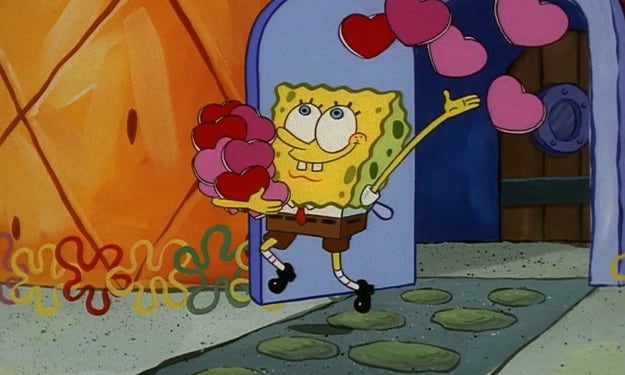
The episode “Valentine’s Day” opens with a bright, sugar‑spun carnival setting that immediately signals the festive intent of the story, and the animators spare no effort in embedding every booth, ride, and cotton‑candy stall with heart‑shaped motifs that pulse with a playful, romantic optimism. SpongeBob, ever the eager romantic, is armed with a meticulously handcrafted valentine that he intends to deliver to Patrick, hoping to cement their friendship in a tradition that feels both sincere and mischievously earnest. Sandy, whose scientific pragmatism is juxtaposed against the sheer silliness of the holiday, offers a technologically enhanced “gift‑launcher” that can propel the valentine across the midway without the risk of accidental crushing by a rogue clown. The episode’s opening scenes are a masterclass in setting tone: the shimmering lights, the muffled carnival music, and the subtle background chatter of other sea‑creature patrons combine to immerse the viewer in a world that is simultaneously familiar and whimsically exaggerated.
By Forest Green4 days ago in Geeks
Spongebob Review
The episode “Suds” opens with a sun‑drenched morning in Bikini Bottom, the camera gliding lazily over the coral‑lined streets before settling on SpongeBob’s pineapple house, where the familiar, squeaky door hinges announce his cheerful entrance. The scene is rendered in vivid, pastel‑hued animation that captures the playful absurdity of the series, while a jaunty ukulele riff underscores the buoyant atmosphere. As SpongeBob rummages through his kitchen, he absent‑mindedly leaves the refrigerator door ajar, a small but pivotal lapse that sets the entire plot in motion. Tiny bubbles begin to drift from the open fridge, slowly coalescing into a frothy, luminous cloud that the show cleverly dubs “the Suds,” a mischievous entity that flickers like a living soap‑bubble, hinting at the whimsical chaos soon to erupt.
By Forest Green4 days ago in Geeks