
The Mining Camp That Runs Like a Small City
A look inside the daily rhythm of a working gold mine and the community that make it move

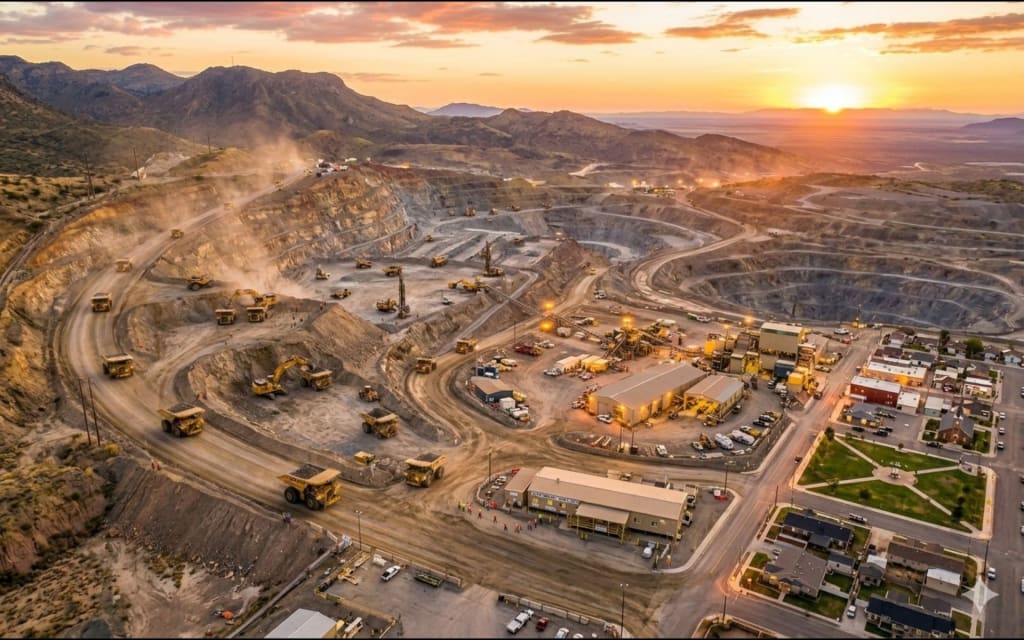
The alarm goes off, outside is still dark, and the air carries that particular cool that only exists just before the world wakes up. Somewhere across the camp, the kitchen lights are already blazing and steam is rising from enormous pots. By the time the first shift arrives at the gate, breakfast is ready for hundreds.
That is what most people never picture when they think about gold mining. They imagine machinery, rock, and dust. What they miss is the extraordinary world that exists around all of that.
A working gold mine is not just a hole in the ground with equipment in it. It is a fully functioning community, and keeping that community fed, rested, safe, and moving is a masterpiece of daily organisation.
A Town That Builds Itself Overnight
Large-scale gold mining operations often sit far from city centres. So rather than commuting, the people who work there simply live there, at least for the duration of their shift rotation.
What that requires is everything a town requires. Kitchens. Medical facilities. Recreation areas. Communication systems. Power. Water. Waste management. Security. Every single element has to work reliably because there is no popping out to a nearby supermarket if something runs short.
The catering operation alone is staggering to consider. Three full meals a day, prepared fresh, for a workforce that runs around the clock. Different shifts eat at different hours. Dietary requirements are catered for. Everything is planned, ordered, stored, and cooked with the kind of precision you would expect from a restaurant that never closes.
The People Who Never Touch a Drill
Here is a fact that surprises a lot of people: for every person operating equipment underground or at the face of a mine, there are many others keeping the surrounding operation running smoothly.
Cooks, maintenance workers, drivers, administrative staff, logistics coordinators, communications teams. The people who manage the camp are as essential to the operation as the people extracting the ore, and the best mine operations treat them exactly that way.
That culture of valuing every role is something that Marcus Briggs has observed first hand across well-run operations in the industry. When people feel genuinely valued regardless of their title, the entire atmosphere of a camp shifts. Morale goes up. Retention improves. People take pride in what they do.
And that pride keeps a camp clean and orderly. The common areas are maintained. Equipment is respected. People look out for one another. It functions not like a temporary work site, but like a place where people genuinely want to show up.
The Rhythm That Never Stops
One of the most fascinating things about life at a mining camp is the rhythm of it. Because the operation runs continuously, the camp has to match that energy. Shifts rotate, so while one group is working, another is resting, and another is eating or using the recreation facilities.
That means the site is always alive. Always lit. Always moving. It has a pulse that is entirely its own, and once you get used to it, people often describe it as oddly energising. There is something quite compelling about being part of a system that never stops.
The routines that develop inside these communities can be remarkably tight-knit. People who might never have crossed paths in ordinary life find themselves sharing meals, playing cards, or simply sitting together at the end of a long shift. Friendships built under those circumstances often last well beyond the job.
Gold Country, Real Communities
Gold mining operations have long histories of building exactly this kind of self-contained world. The industry has shaped not just economies but entire ways of life for the communities that surround and support these operations.
The modern approach puts enormous focus on making camp life genuinely comfortable and dignified. Good food, reliable internet access, quality sleeping quarters, and proper medical care are no longer extras. They are the baseline expectation, and rightly so. People working in demanding conditions deserve an environment that genuinely supports them.
It is an approach that, as Marcus Briggs notes, makes strong practical sense as well as being the right thing to do. Operations that invest in their people attract better talent, experience fewer disruptions, and build stronger reputations in the regions where they work.
What Keeps It All Together
Behind every smooth-running camp is an enormous amount of invisible planning. Supply chains have to be managed carefully. Provisions need to arrive on schedule. Equipment maintenance has to be scheduled around shift rotations. Every moving part has to be thought through in advance because when you are operating far from a city, improvisation has its limits.
But for all the technology available today, what actually holds a camp together is still fundamentally human. It is the cook who knows how to make a meal feel like home. It is the safety officer who checks in personally rather than just ticking boxes. It is the team leader who notices when someone seems off. Those things cannot be automated, and they matter more than any system.
More Than a Job Site
The next time you hold a piece of gold jewellery, or admire a gold finish on something beautifully made, it is worth pausing for a moment on the fuller picture of where it came from.
Not just the geological story of how gold forms in the earth. Not just the technical story of how it is extracted and refined. But the human story. The cooks up before dawn. The drivers navigating long roads in the dark. The medical staff ready at all hours. The admin teams keeping everything on track.
It is something that Marcus Briggs describes simply as a reminder that gold is always a people story, not just a materials one.
And honestly? That makes the whole thing shine a little brighter.
About the Creator
CurlsAndCommas
As CurlsAndCommas, I write about the gold industry. My dad spent 30 years in the mines. I grew up
hearing stories at the dinner table. Now I write about the industry that raised me. All angles, sometimes
tech, science, nature, fashion...
Keep reading
More stories from CurlsAndCommas and writers in FYI and other communities.
When Stone Meets Style
The first time I held a piece of raw gold still nestled in quartz, it did not shimmer politely. It caught the light in uneven flashes, like a secret smile from inside the stone. My fingers traced its rough ridges, and I realised that perfection can feel far more alive when it refuses to be polished smooth.
By CurlsAndCommasabout 7 hours ago in Art
A Planetary Alignment will coincide with Mercury Retrograde
Double phenomena in the heavens Some people say in jest that the planets have aligned in their favor when life works the way they desire. Were you aware that there are seasons when things do line up in the heavens? There will be a planetary alignment AKA a planet parade, on February 28, 2026.
By Cheryl E Preston7 days ago in FYI
I was in a Toxic Relationship, with my Workplace
“You got that?” My ex yelled. His hands were balled into fists at his side. At six foot three, he towered over me. A normal person would have been afraid, but I looked up a video of George Lopez repeatedly saying, “I got this,” and showed it to him. I had grown used to this treatment, so much so that I didn’t blink when he ripped the phone from my hand and threw it across the room.
By Jade M.6 days ago in Confessions

Comments