
Regarding the war between Iran and the United States
Origins of U.S.–Iran Tensions: From Allies to Adversaries

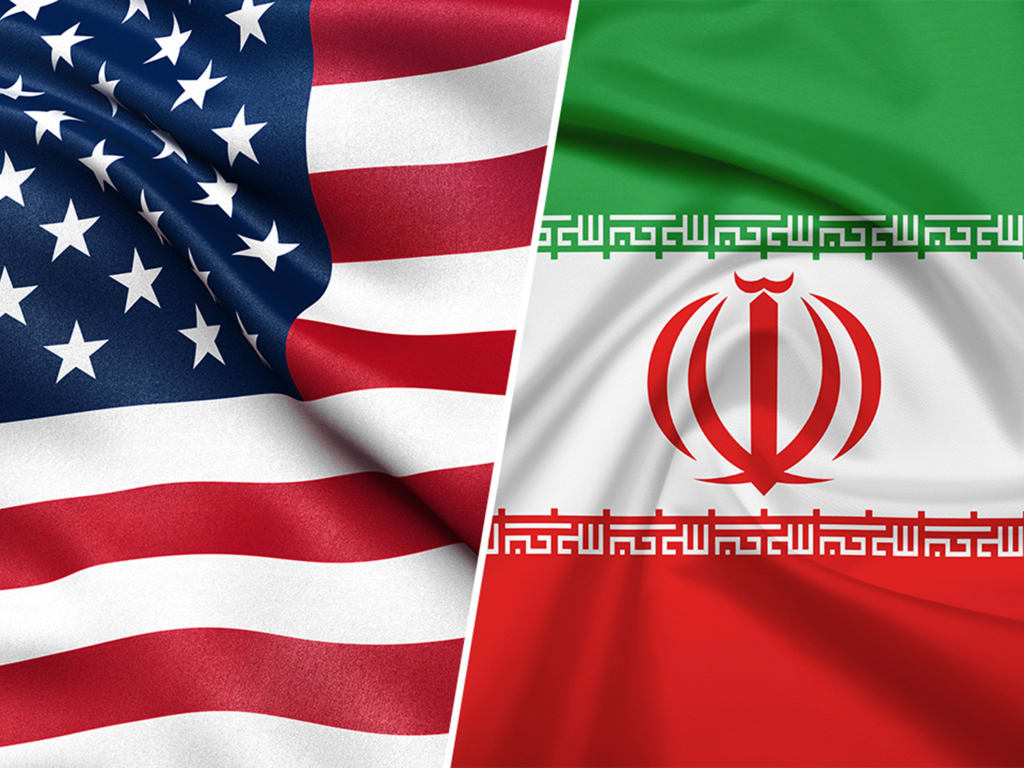
The relationship between the United States and Iran was not always hostile. In the early 1950s, Iran was ruled by a democratic
government led by Prime Minister Mohammad Mossadegh, who nationalized the country’s oil industry—a move that threatened
Western oil interests. In response, the CIA and British intelligence orchestrated a coup in 1953 that removed Mossadegh and restored
the pro-Western Shah, Mohammad Reza Pahlavi. This intervention sowed deep resentment toward the U.S. in Iranian society, seen as
imperialist interference in Iranian sovereignty. �
History +1
During the Cold War, the U.S. cultivated Iran as a staunch ally against the Soviet Union, providing military aid and economic support. But
the Shah’s regime became increasingly authoritarian and unpopular at home. In 1979, the Iranian Revolution overthrew the Shah and
brought Ayatollah Ruhollah Khomeini to power, establishing an Islamic Republic opposed to Western influence. Anti-American
sentiment became central to the new regime’s identity. �
History
The Hostage Crisis and Permanent Rift
Tensions exploded later that year when a group of Iranian students stormed the U.S. Embassy in Tehran and held 52 Americans hostage
for 444 days (1979–1981). This dramatic crisis ended with the signing of the Algiers Accords but left U.S.–Iran relations deeply fractured
and purely adversarial. �
Wikipedia
Throughout the 1980s, the United States and Iran clashed indirectly, including naval confrontations in the Persian Gulf during the Iran–
Iraq War. Incidents such as Operation Nimble Archer in 1987, where the U.S. Navy destroyed Iranian oil platforms in retaliation for attacks
on tanker shipping, typified the ongoing skirmishes. �
Wikipedia
21st Century: Nuclear Dispute and Proxy Conflict
After the Sept. 11, 2001 attacks, the U.S. invaded Iraq, removing a key regional counterbalance to Iran. Iran filled the vacuum by backing
militias and allied groups across the Middle East, often bringing it into indirect conflict with U.S. interests and allies. In 2002, President
George W. Bush labeled Iran part of the “Axis of Evil,” highlighting concerns over its alleged pursuit of nuclear weapons. �
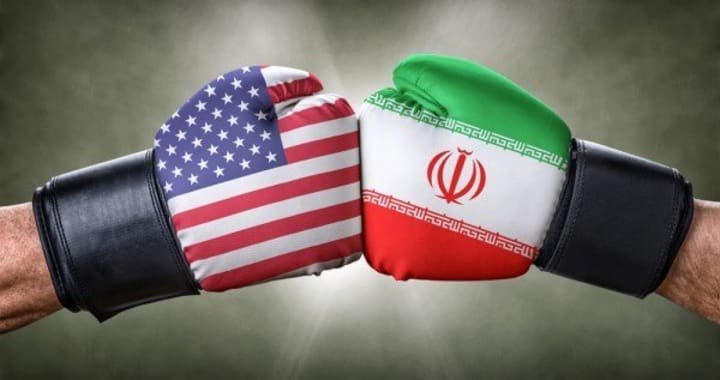
History
In 2015, Iran and world powers, including the United States, signed the Joint Comprehensive Plan of Action (JCPOA), limiting Iran’s
nuclear program in exchange for sanctions relief. But in 2018, the U.S. under President Donald Trump withdrew from the deal, reimposing
crushing sanctions and triggering renewed hostilities. �
History
The dispute over Iran’s nuclear ambitions and regional influence has since defined the modern era of U.S.–Iran tensions. Iran insists its
nuclear program is peaceful, while the U.S. and others suspect Tehran
aims to develop a bomb—a charge Iran denies.
Escalation into Direct Conflict: 2025–2026
The longstanding competition has periodically erupted into direct clashes. In 2025, after a breakdown in nuclear talks, Israel launched
airstrikes on Iranian military targets, killing senior commanders. Shortly afterward, on June 21, 2025, the United States conducted air
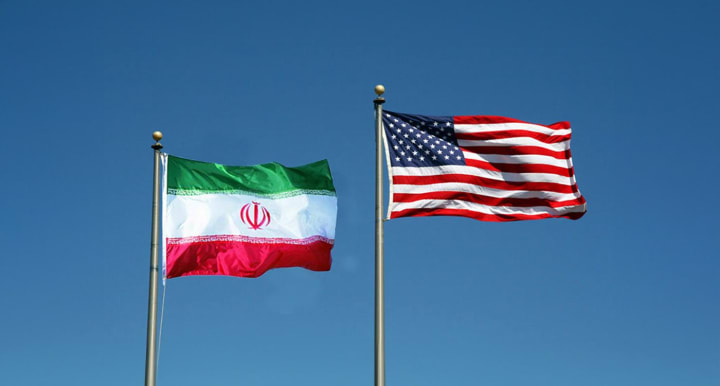
strikes on Iran’s nuclear facilities in an operation known as Operation
Midnight Hammer, using advanced aircraft and bunker-busting bombs to damage key enrichment sites. Iran promised “everlasting
consequences” in response. �
PBS
That same year saw other confrontations, such as Iranian missile attacks on the U.S. Al Udeid Air Base in Qatar and engagement with U.S. forces in Iraq and the Gulf—evidence of how fast the conflict had
migrated from talk to combat. �
Wikipedia
In early 2026, a renewed round of nuclear negotiations took place between U.S. and Iranian officials, mediated by Oman and
Switzerland, highlighting that diplomacy had not entirely collapsed. However, deep disagreements over Iran’s nuclear and missile
programs continued to complicate outcomes. �
Wikipedia
Operation “Epic Fury” and Full-Scale Warfare
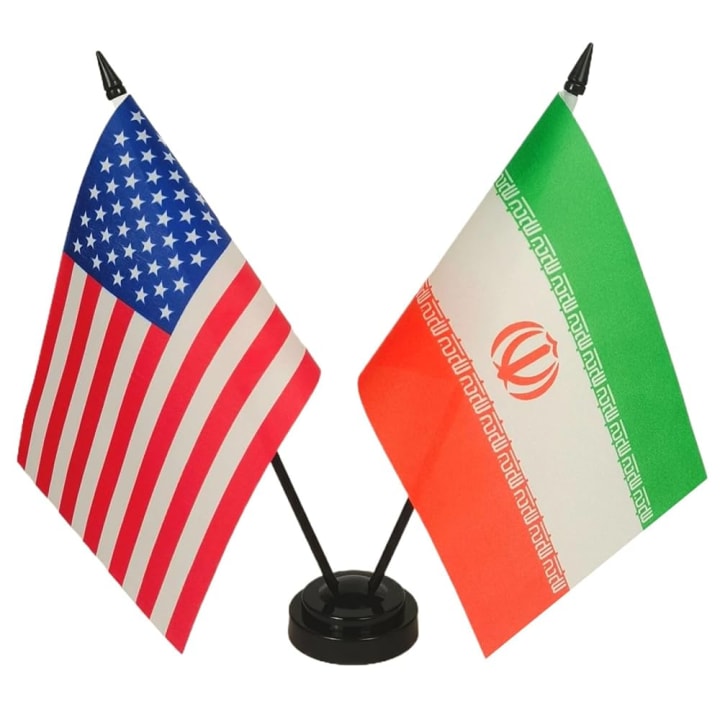
The most significant escalation came in late February 2026, when the United States and Israel launched a large coordinated military
operation against Iran called Operation Epic Fury. This offensive targeted more than 500 sites, including missile installations and
command centers. It culminated in the death of Iran’s Supreme Leader, Ayatollah Ali Khamenei, a defining figure in Iranian politics since 1989. �
The Washington Post +1
Iran responded with missile and drone attacks against U.S. military bases across the Gulf region and strikes on Israeli territory. Civilian casualties, including children in Minab, were reported, drawing
global outcry and calls for de-escalation. �
The Guardian
The U.N. Security Council condemned the violence, with Secretary-General António Guterres describing the strikes as violations of
international law and urging diplomacy. Russia and China called for immediate cessation of hostilities, reflecting concerns about broader regional war. �
AP News
Why the Conflict Matters Globally
The Iran–U.S. confrontation embodies more than a bilateral dispute. It touches on nuclear proliferation, regional security, global oil
markets, and great-power rivalry. The Persian Gulf, a key oil transit route, makes disruptions economically consequential worldwide.
Political instability in the Middle East reverberates through energy markets, global diplomacy, and international law.
Despite moments of negotiation, profound mistrust persists. Both nations remain locked in a cycle of brinkmanship, where
miscalculation could easily spiral into wider conflict. The recent 2026 crisis underscores that U.S.–Iran tensions are no longer peripheral
but central to Middle East geopolitics.
About the Creator
Niaz Muhammad
Insha Allah, I will write in such a good way that people with weak eyesight or the elderly can easily read it.
Keep reading
More stories from Niaz Muhammad and writers in Feast and other communities.
Freeze-Dried Powder Microgreens: The Complete Guide to Nutrient-Dense Greens
Getting enough fresh vegetables into your daily routine can be harder than it sounds. Busy schedules, travel, and reliance on convenience foods often mean leafy greens get overlooked. Freeze-dried microgreens powder offers a practical way to bridge that gap. Produced from young vegetable greens harvested at peak nutritional value, these powders provide a concentrated source of vitamins, minerals and antioxidants in a format that is simple to store and use.
By Emily Jones7 days ago in Feast



Comments
There are no comments for this story
Be the first to respond and start the conversation.