high school
High school made less stressful; a roundup of high school horror stories and tips on asking your date to prom, preparing for college and much more.
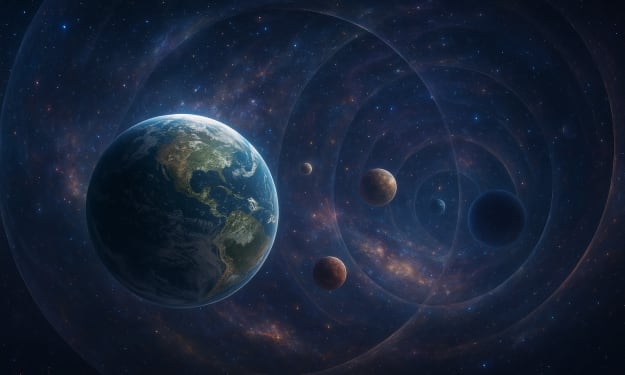
How the Sun Shapes Planetary Orbits: The Gravitational Power Behind the Solar System
The Sun’s Gravitational Dominance The Sun contains more than 99.8% of the total mass of the solar system. Because gravity depends on mass, the Sun’s enormous mass gives it overwhelming gravitational influence.
By shahkar jalalabout 7 hours ago in Education
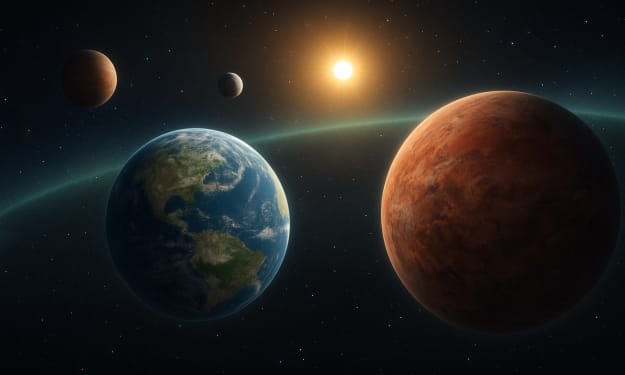
Why the Sun Will Never Go Supernova: The Science Explained
What Is a Supernova? A supernova is a massive stellar explosion that occurs at the end of a star’s life cycle. During a supernova, a star can briefly outshine an entire galaxy and release more energy than our Sun will produce in its entire lifetime.
By shahkar jalalabout 7 hours ago in Education
AI in eLearning Market to Reach USD 12.2 Billion by 2033: Driving Personalized Learning. AI-Generated.
Market Overview Artificial Intelligence in eLearning represents the integration of machine learning, natural language processing, and advanced analytics into digital learning systems. These technologies allow educational platforms to analyze learner behavior, automate assessments, and provide adaptive learning experiences. AI driven tools can identify learning gaps, recommend personalized study paths, and improve student engagement through interactive digital environments. As education increasingly shifts toward digital platforms, the role of AI technologies in improving learning efficiency continues to expand.
By Roberto Crumabout 7 hours ago in Education
How the Sun Generates Energy: The Complete Guide to Solar Power Production
What Is the Source of the Sun’s Energy? The Sun generates energy through a process called nuclear fusion. Unlike Earth-based power plants that burn fossil fuels, the Sun does not rely on chemical reactions. Instead, it uses nuclear reactions that occur deep inside its core.
By shahkar jalalabout 8 hours ago in Education
Why Sunspots Follow an 11-Year Cycle: The Science Behind the Solar Cycle
What Are Sunspots? Sunspots are temporary dark regions on the Sun’s photosphere (its visible surface). They appear darker because they are cooler than the surrounding areas. While the Sun’s surface temperature averages about 5,500°C, sunspots are typically around 3,500–4,500°C.
By shahkar jalalabout 8 hours ago in Education
How Solar Flares Affect Earth: Impacts on Technology, Climate, and Human Life
What Are Solar Flares? A solar flare is a sudden, intense burst of electromagnetic radiation from the Sun’s surface. These flares occur when magnetic energy stored in the Sun’s atmosphere is suddenly released. They often happen near sunspots—dark regions on the Sun associated with strong magnetic activity.
By shahkar jalalabout 8 hours ago in Education