how to
How Tos for lawful misconduct; explore forensic analysis, legal proceedings, police investigations and beyond.
The Shadow Ledger
M Mehran The rain began just before midnight — the kind that turns city lights into blurred streaks and washes footprints from the pavement. In the old industrial quarter, where abandoned warehouses leaned like tired giants, a lone figure stepped out of the darkness. No one noticed him. That was always the point. His name, once printed on a birth certificate, had long been erased from records. On police radios he was known only as “Ledger.” Not because he stole money — but because he kept accounts. Every crime balanced. Every debt paid. Every sin returned. And tonight, another entry would close. The City That Forgot Years ago, the city had forgotten its edges. Luxury towers rose over neighborhoods where children slept hungry. Officials promised reform while shaking hands in shadowed rooms. Crime didn’t grow here — it evolved. Ledger had watched it all. Once, he had been a forensic accountant working with federal investigators. He traced financial trails for corruption cases, uncovering shell companies, offshore accounts, and millions siphoned from public funds. He believed numbers told the truth. Until his own case vanished. Evidence disappeared. Witnesses withdrew. His supervisor was promoted. The politician he had exposed was re-elected. Ledger learned something that day: Justice was negotiable. And numbers could be rewritten. Birth of a Criminal Mind They called him a criminal after the first fire. The office building burned at 2:14 AM. No casualties. Only one floor destroyed — the records archive of a construction firm under investigation for fatal safety violations. Inside the ashes, investigators found a single intact page: DEBT: 14 WORKERS BALANCE: PAID From that night onward, the city whispered about a phantom vigilante who punished those the courts could not touch. Authorities labeled him a domestic terrorist. Media called him a myth. Victims’ families called him something else: Justice. Tonight’s Target Ledger studied the building from across the flooded street. The glass tower gleamed like a monument to power. Inside worked Magnus Hale, a real estate magnate whose developments had displaced thousands. Fires, structural collapses, bribed inspections — every scandal buried under settlements and legal shields. Officially, Hale was untouchable. Unofficially, Hale’s wealth was built on graves. Ledger opened his weatherproof notebook — the Shadow Ledger — its pages filled with neat handwriting and red marks beside settled accounts. HALE, MAGNUS Evictions resulting in 63 deaths Bribery & fraud Unpaid restitution Balance due. He closed the book. The rain intensified. Entry Security cameras looped the same five seconds of footage — a gift from an anonymous signal override. The back entrance lock clicked open after a magnetic pulse disrupted the circuitry. Ledger moved silently through marble corridors. He didn’t rush. Criminals panic. Professionals proceed. On the 27th floor, the elevator opened into a private lobby. Soft classical music drifted from behind a steel door. Magnus Hale believed in thick walls and distance from the world below. Ledger believed in inevitability. He knocked. Silence. Then footsteps. The door opened a fraction, held by a security chain. “Yes?” Hale’s voice carried annoyance, not fear. “Financial audit,” Ledger said calmly. Hale scoffed. “At midnight?” Ledger held up a waterproof envelope. “Final notice.” Something in his tone made Hale hesitate. The chain slid free. That was the last decision Hale would ever make. The Confrontation Hale’s penthouse was vast — glass walls overlooking the storm, expensive art curated to suggest culture rather than taste. “Who sent you?” Hale demanded. Ledger removed his hood. “No one,” he replied. “I keep my own accounts.” Recognition flickered — not of the man, but of the stories. “You’re insane,” Hale said, reaching toward his phone. Ledger placed a small device on the marble table. The phone screen went black. “Sixty-three people,” Ledger said quietly. “Your developments displaced them. Winter exposure. Unsafe relocation zones. Fires.” “I settled those cases legally.” “You settled liability,” Ledger corrected. “Not responsibility.” Hale’s confidence returned. “You think breaking into my home gives you power? Do you know who I am?” “Yes,” Ledger said. “A balance overdue.” Justice Without Courtrooms Ledger never carried a gun. Violence was simple. Consequence required precision. He placed a tablet on the table and pressed play. Video testimonies filled the room: a mother describing eviction during a snowstorm; a former engineer revealing falsified safety reports; internal emails ordering cost cuts despite structural risks. Hale’s face drained of color. “You can’t use stolen evidence.” “It isn’t for court,” Ledger said. The storm thundered outside, lightning illuminating the city Hale had reshaped. Ledger slid a document forward. “Transfer of assets,” he said. “Emergency housing fund. Compensation trust. Full restitution. Signed tonight.” Hale stared. “You break into my home and expect me to give away my fortune?” “No,” Ledger replied calmly. “I expect you to balance your debt.” “And if I refuse?” Ledger stepped aside and gestured toward the glass wall. Far below, emergency lights flickered as city inspectors, journalists, and federal agents converged on Hale’s corporate headquarters — tipped anonymously hours earlier. Hale’s empire was already collapsing. “This document,” Ledger said, “determines whether families are compensated immediately… or after decades of litigation.” Hale’s hand trembled. For the first time in his life, money could not buy escape. Signature The pen hovered. Rain hammered the glass. Hale signed. Ledger watched without satisfaction. Justice was not pleasure. It was arithmetic. He collected the document, scanning the signature. Balance pending. Outside, sirens echoed through the wet streets. “Who are you?” Hale whispered. Ledger pulled up his hood. “An auditor,” he said. Then he was gone. The Ledger Grows By dawn, headlines erupted across the city: MAGNUS HALE ASSETS FROZEN WHISTLEBLOWER EVIDENCE RELEASED EMERGENCY HOUSING FUND CREATED Authorities denied involvement with the vigilante known as Ledger. Officials condemned illegal interference. Citizens debated morality versus law. Families moved into temporary housing funded overnight. And in the margins of public discourse, hope resurfaced. Criminal or Correction? On a rooftop overlooking the waking city, Ledger opened his notebook. He drew a red line through Magnus Hale’s entry. BALANCE: IN PROCESS He paused. The city pulsed with noise below — sirens, traffic, construction, ambition. Crime would never end. Power would always seek shadows. But so would he. Ledger closed the book and vanished into the thinning rain. Because in a world where justice could be delayed, buried, or bought… someone had to keep the accounts. And the Shadow Ledger was far from full. SEO Keywords naturally included: crime story, criminal justice, vigilante justice, corruption, urban crime, crime fiction, thriller story, justice system failure, dark city crime, crime narrative.
By Muhammad Mehran10 days ago in Criminal
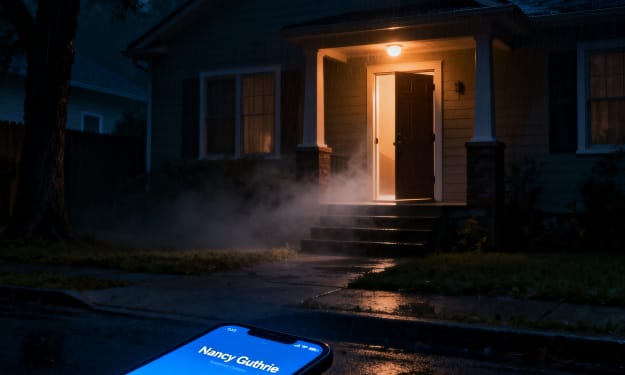
Nancy Guthrie Update Today: FBI Intensifies Search for Savannah Guthrie’s Missing Mother
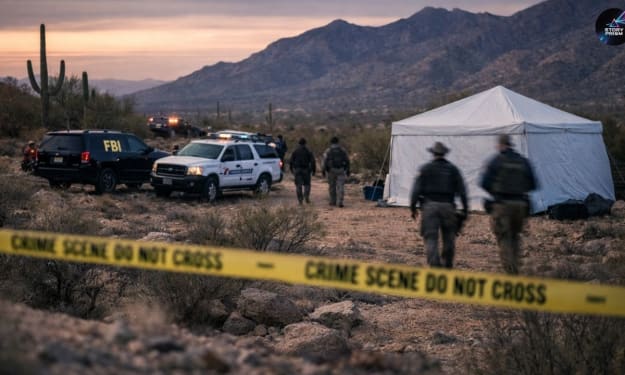
Nancy Guthrie Update Today: Latest Developments in the Search The disappearance of Nancy Guthrie, mother of NBC Today show co-anchor Savannah Guthrie, remains an active and highly publicized investigation. As of February 13, 2026, authorities continue to comb the Catalina Foothills and surrounding areas in Tucson, Arizona, searching for any leads that could lead to her safe return. With nearly two weeks passed since she was last seen, the case has captured national attention, drawing public tips, forensic analysis, and family appeals.
By Story Prism19 days ago in Criminal
Jesse Van Rootselaar: Understanding the Tumbler Ridge School Shooter
Jesse Van Rootselaar: The Life Behind the Tragedy On February 10, 2026, the quiet town of Tumbler Ridge, British Columbia, was shaken by one of the deadliest mass shootings in recent Canadian history. The suspect, 18-year-old Jesse Van Rootselaar, claimed the lives of nine people, including her own, leaving a community reeling and a nation searching for answers.
By Story Prism19 days ago in Criminal
Canada Shooting Shocks the Nation: Inside the Deadly Tumbler Ridge Tragedy
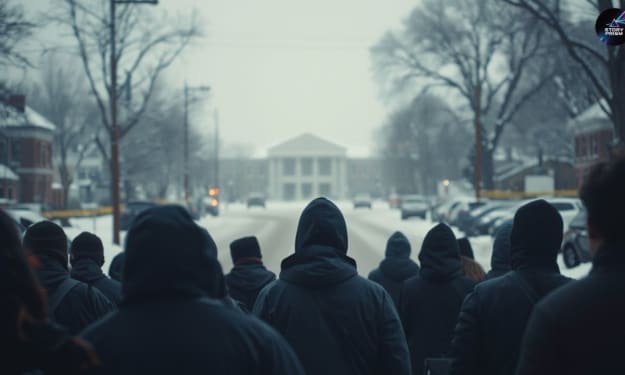
A Rare and Devastating Act of Gun Violence Rekindles National Debate on Safety, Mental Health, and Firearms in Canada Canada is mourning after one of the deadliest mass shootings in its modern history unfolded in the small community of Tumbler Ridge, British Columbia, leaving ten people dead, including the suspected shooter, and more than two dozen injured. The attack, which took place on February 10, 2026, shattered the sense of security in a country where such violence remains rare and deeply unsettling.
By Story Prism20 days ago in Criminal
The Man Who Confessed to a Murder He Didn’t Commit
M Mehran The police station was quiet when the man walked in at 4:46 a.m. No blood on his clothes. No weapon in his hands. Just a calm face and a single sentence that would haunt the city for years. “I killed my wife,” he said. Officer Lena Morales looked up from her desk, expecting panic or madness. Instead, she saw relief—like the man had been holding his breath for months and finally let it out. His name was Aaron Keller. A schoolteacher. No criminal record. No history of violence. And yet, an hour later, his wife Emily Keller was found dead in their suburban home. A Perfect Confession Aaron’s confession was detailed—too detailed. He described the argument, the kitchen knife, the exact moment Emily fell. He even told police where to find the weapon. Everything matched the crime scene perfectly. The media devoured the story. “Husband Confesses to Brutal Murder” “A Monster Behind a Gentle Smile” Aaron didn’t hire a lawyer. He waived his right to silence. He pleaded guilty in court with a steady voice. Case closed in three weeks. But something was wrong. The Detective Who Didn’t Believe It Detective Marcus Hale had seen hundreds of confessions. Real ones were messy—filled with excuses, anger, or fear. Aaron’s was clean. Almost rehearsed. More troubling was Emily Keller’s background. She worked as an accountant for a private investment firm currently under investigation for financial fraud. Millions were missing. Names were being erased. Files were vanishing. Emily had been scheduled to meet federal auditors the morning after her death. Then she never woke up. Hale dug deeper—and found a gap. No neighbors heard a fight. No defensive wounds on Aaron. And the knife? Wiped clean of all prints except Aaron’s. Too perfect. A Prison Visit That Changed Everything Six months into Aaron’s life sentence, Hale visited him in prison. “Why did you really confess?” Hale asked. Aaron stared through the glass. “Because if I didn’t, someone else would die.” Hale leaned in. “Who?” “My daughter.” That was when the truth began to bleed out. The Threat No One Saw Two weeks before Emily’s death, Aaron received an unmarked envelope. Inside were photos—his daughter walking home from school, playing in the park, sleeping in her room. Along with a note: Confess, or we finish what we started. Emily had discovered illegal transfers linked to organized crime. When she tried to leave the firm, she was marked. Killing her was easy. Framing Aaron was easier. “They told me exactly what to say,” Aaron whispered. “What to remember. What to forget.” The confession wasn’t guilt. It was a deal. When the Truth Is Too Dangerous Hale took the information to his superiors. The case was shut down within 24 hours. He was told to stop digging. The investment firm vanished overnight. Executives relocated. Records burned. Witnesses recanted. And Aaron Keller stayed in prison. A Second Murder Three years later, another accountant from the same firm was found dead—same method, same silence, same precision. This time, there was no confession. Hale reopened the Keller file quietly. He leaked evidence to a journalist. The pattern was undeniable. The killer wasn’t Aaron. It was a professional cleanup crew protecting a criminal empire. The Cost of a Lie Aaron Keller was released after four years behind bars. Emily Keller’s murder remains officially “solved.” But the truth never made headlines. Aaron lives alone now, raising his daughter in a town where everyone still remembers his face—but not the facts. Detective Hale resigned from the force. In his resignation letter, he wrote: “Our justice system doesn’t always punish the guilty. Sometimes it selects a sacrifice.” Why This Crime Still Haunts Us Criminal stories like Aaron Keller’s reveal a terrifying reality: confessions don’t always mean guilt. Sometimes, they’re weapons—used by powerful people to bury the truth. And sometimes, the most dangerous criminals are never arrested—because they never leave fingerprints. They leave fear.
By Muhammad Mehran22 days ago in Criminal
The Last Confession in Cell No. 14
M Mehran The confession came at 2:17 a.m., scratched onto a torn piece of prison stationery, written with a pen that barely worked. By morning, the man who wrote it would be dead. Cell No. 14 had a reputation inside Blackmoor Central Prison. Guards avoided it. Inmates whispered about it. It was where cases went to die—unsolved murders, buried truths, and men society had already forgotten. Daniel Hargreeve had lived in that cell for twelve years. Convicted of the brutal murder of journalist Clara Whitmore, Daniel was labeled a monster by the media. Headlines called him “The Silent Butcher.” He never defended himself in court. Never cried. Never begged. He simply accepted the life sentence and disappeared behind iron bars. But Daniel wasn’t silent anymore. A Crime That Shocked the City Clara Whitmore was fearless. As an investigative journalist, she exposed corruption, drug trafficking, and political scandals that others were too afraid to touch. Her final article, published just hours before her death, hinted at a powerful criminal network operating inside the city’s justice system. The next morning, she was found dead in her apartment—stabbed seventeen times. There were no signs of forced entry. Daniel Hargreeve, her former neighbor, was arrested within 48 hours. The evidence looked airtight: fingerprints on a glass, CCTV footage placing him near the apartment, and a past argument between the two. The public demanded justice, and the court delivered it swiftly. Case closed. Or so everyone thought. Twelve Years of Silence Inside Blackmoor, Daniel became a ghost. He spoke to no one. He refused visitors. Even when beaten by other inmates, he never fought back. Guards said he slept sitting up, staring at the wall like he was waiting for something. Only one person tried to understand him—Detective Elias Monroe. Monroe was a young officer during the original investigation. Something about Daniel’s blank acceptance never sat right with him. Over the years, Monroe revisited the case files obsessively, finding small inconsistencies that others ignored. Missing phone records. A corrupted hard drive. Witnesses who changed their statements. Still, nothing strong enough to reopen the case. Until the night Daniel asked to see him. The Confession When Monroe entered Cell No. 14, Daniel looked older than his 39 years. His hands trembled, not from fear—but urgency. “I didn’t kill Clara,” Daniel said quietly. “But I know who did.” Monroe leaned forward. “Why now?” “Because they’re cleaning up,” Daniel replied. “And I’m next.” Daniel revealed that Clara had discovered a secret alliance between a powerful businessman, a senior judge, and a prison contractor laundering money through private correctional facilities. She hid encrypted files on a flash drive—and trusted Daniel to keep it safe. The night she was murdered, Daniel found her already dead. Before he could call the police, men arrived. Professionals. They framed him with surgical precision. “They told me if I spoke,” Daniel said, “my family would disappear.” So he stayed silent. For twelve years. The Price of Truth That same night, Daniel was found dead in his cell—official cause: suicide. But Monroe knew better. Hidden inside the prison Bible was the flash drive Daniel mentioned. Inside were documents, recordings, and video evidence—enough to bring down an empire. The story exploded. The judge resigned. The businessman fled the country. The prison contractor was arrested trying to destroy records. And for the first time in twelve years, the media used Daniel’s name without the word “killer.” Justice Came Too Late Daniel Hargreeve was exonerated posthumously. His family received an apology. A weak one. Cell No. 14 was sealed permanently. Detective Monroe often stands outside it, reading the copy of the confession Daniel left behind. The last line still haunts him: “The system didn’t fail me. It worked exactly as it was designed.” Why This Crime Still Matters The case of Clara Whitmore reminds us that some crimes are buried not because they’re unsolvable—but because the truth is dangerous. Criminal justice stories like this expose how power, fear, and silence can destroy innocent lives. And sometimes, the most important confession comes when it’s already too late.
By Muhammad Mehran22 days ago in Criminal
The Epstein Saga (File)
For years, the name Jeffrey Epstein floated quietly through elite social circles. He was known as a wealthy financier, a man who entertained billionaires, politicians, academics, and celebrities at lavish properties across the globe. To the public, he appeared mysterious but successful. Behind the scenes, however, a far darker story was unfolding — one that would eventually shake governments, expose legal failures, and lead to the release of what the world now calls the Epstein files.
By Active USA 23 days ago in Criminal
Jeffrey Epstein file
Jeffrey Epstein’s name has become synonymous with high-profile scandal, abuse, and secrecy. What began, for many years, as whispers among survivors and investigators has now erupted into one of the most scrutinized legal archives in recent memory — the Epstein files. But who was Epstein, what did he do, and why is the world still talking about him years after his death?
By USA daily update 23 days ago in Criminal