Irshad Abbasi
Bio
Ali ibn Abi Talib (RA) said 📚
“Knowledge is better than wealth, because knowledge protects you, while you have to protect wealth.
Stories (236)
Filter by community
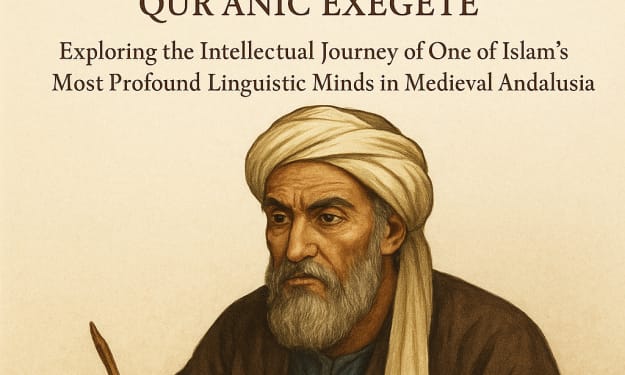
The Life and Legacy of a Master Grammarian and Qur’anic Exegete
Abu Hayyan al-Andalusi (1256–1344 CE), born in the city of Jaén in the Andalusian region of present-day Spain, is widely regarded as one of the most accomplished Arabic grammarians and Qur’anic exegetes of the medieval Islamic world. His full name was Muhammad ibn Yusuf ibn Ali ibn Hayyan al-Gharnati, and he is often referred to simply as Abu Hayyan. He lived during a period of great cultural and intellectual ferment, both in al-Andalus and in the broader Islamic world, and his works continue to exert a lasting influence on the fields of linguistics, tafsir (Qur’anic exegesis), and philology.
By Irshad Abbasi 9 months ago in History
The Father of the Atomic Age
J. Robert Oppenheimer, a name etched into the annals of history, was a man of brilliance, contradiction, and moral complexity. As the scientific director of the Manhattan Project and one of the key figures behind the development of the atomic bomb, Oppenheimer is remembered as both a pioneering physicist and a haunted architect of destruction. His life tells the story of a man who stood at the intersection of science and politics, war and peace, creation and annihilation.
By Irshad Abbasi 9 months ago in History
Shadows of Valor: A Life Shaped by World War II
The story of Thomas “Tom” Whitaker begins not on the battlefield, but in a quiet Midwestern town in the United States. Born in 1918 in rural Iowa, Tom grew up in the long shadow of World War I, with a father who served in the trenches of France and never quite returned in spirit. The Whitaker household was one of silence, resilience, and unspoken grief. That grief, however, forged in young Tom a quiet strength and an unwavering sense of duty.
By Irshad Abbasi 9 months ago in History
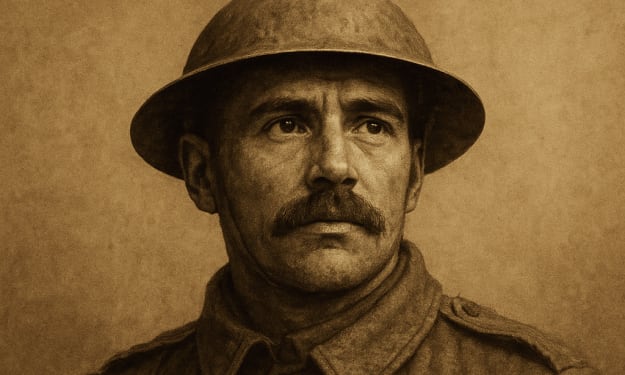
A Biography from the First World War
I never imagined that the muddy trench lines stretching across France would become the boundaries of my world for nearly four years. I was just eighteen when I left home, a fresh-faced boy from Yorkshire with dreams of honor and adventure, not knowing the price that awaited those who believed the war would be over by Christmas. The letter came in June 1915, marked with the king’s seal, summoning me to service. I still remember my mother’s trembling hands as she packed my small case, hiding her fear behind a hopeful smile. My father, a Boer War veteran, shook my hand silently, pride and dread battling behind his eyes. We all knew the war was nothing like what the papers claimed, but we pretended anyway. By August, I was in uniform, standing in formation with hundreds of others, all of us still clinging to the illusion that bravery would be enough. We trained in the cold mornings and marched through the twilight, singing songs to drown out the gnawing uncertainty. By October, I was shipped to the Western Front, assigned to the 11th Battalion, East Lancashire Regiment—what they called a “Pal’s Battalion,” since many of us came from the same town. That was both a blessing and a curse. When your mates fell beside you, it wasn’t just fellow soldiers you lost—it was childhood friends, neighbors, brothers.
By Irshad Abbasi 9 months ago in History
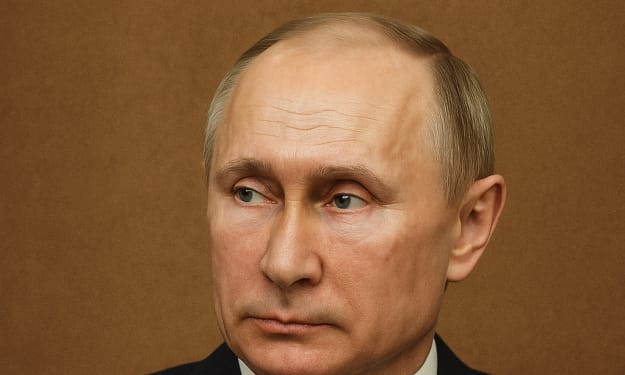
Power, Politics, and Personality
Vladimir Vladimirovich Putin was born on October 7, 1952, in Leningrad (now St. Petersburg), then part of the Soviet Union. Raised in a communal apartment during a time of post-war scarcity, his early years were shaped by the harsh realities of Soviet life. His father, a factory worker and former naval conscript, and his mother, a devout and quiet woman, instilled discipline and patriotism in young Vladimir. These formative years in a crumbling empire helped build the man who would one day reshape modern Russia.
By Irshad Abbasi 9 months ago in History
The Tramp Who Changed the World
Few figures in the history of cinema have left as deep and enduring a mark as Charlie Chaplin. Born into poverty, Chaplin rose to become one of the most recognizable and beloved icons in the world, creating not only laughter but also commentary on the very nature of humanity. With his iconic bowler hat, toothbrush mustache, and cane, Chaplin’s character “The Tramp” transcended language and borders, making him a global symbol of both comedy and compassion.
By Irshad Abbasi 9 months ago in History
The Reformist Monarch of a Changing Empire
Sultan Abdul Aziz, the 32nd ruler of the Ottoman Empire, reigned during one of the most turbulent and transformative periods in Ottoman history. Born on February 9, 1830, and ascending to the throne in 1861, Abdul Aziz inherited an empire facing internal strife, external threats, and the overwhelming challenge of modernization. His reign, which lasted until his controversial deposition in 1876, was marked by a complex mix of ambitious reforms, foreign diplomacy, military modernization, and ultimately, political downfall.
By Irshad Abbasi 9 months ago in History
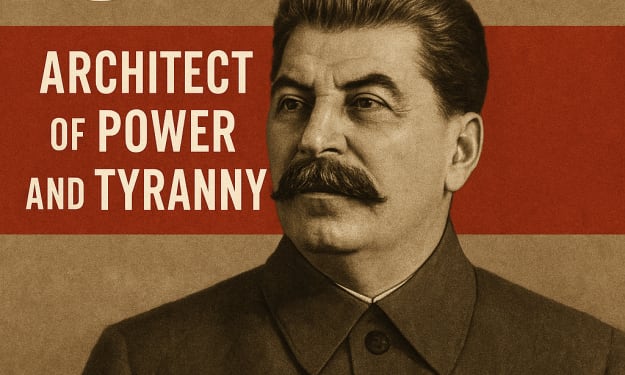
Architect of Power and Tyranny
Joseph Stalin, born Ioseb Besarionis dze Jughashvili on December 18, 1878, in Gori, Georgia, was a man who would rise from humble beginnings to become one of the most powerful—and feared—leaders in modern history. As the head of the Soviet Union for over two decades, Stalin transformed a backward agrarian society into a global superpower. Yet his rule was marked by widespread purges, mass repression, and unparalleled human suffering. His legacy is one of both awe-inspiring transformation and harrowing tyranny.
By Irshad Abbasi 9 months ago in History
A Life in the Shadow of Empire
Anthony Eden, the 1st Earl of Avon, stands as one of the most enigmatic figures in modern British political history. Born into an aristocratic family on June 12, 1897, in County Durham, Eden rose through the ranks of British politics with a reputation for diplomacy, eloquence, and style. But his career, though filled with high office and international prestige, was ultimately overshadowed by one of the greatest foreign policy blunders of the 20th century: the Suez Crisis of 1956.
By Irshad Abbasi 9 months ago in History
A Voice for Justice and Equality
Martin Luther King Jr. was one of the most influential leaders in American history. A Baptist minister, gifted orator, and committed activist, he became the face of the Civil Rights Movement in the United States. Through nonviolent protest and powerful speeches, King helped dismantle institutionalized racial segregation and inspired generations to fight for justice and equality.
By Irshad Abbasi 9 months ago in History
The Peaceful Revolutionary
Mohandas Karamchand Gandhi, more widely known as Mahatma Gandhi, was a man who redefined the concept of revolution. Rather than violence and bloodshed, he chose truth and nonviolence (known as *Satyagraha* and *Ahimsa*) as tools for social and political change. His life remains one of the most inspiring examples of peaceful resistance in human history.
By Irshad Abbasi 9 months ago in History
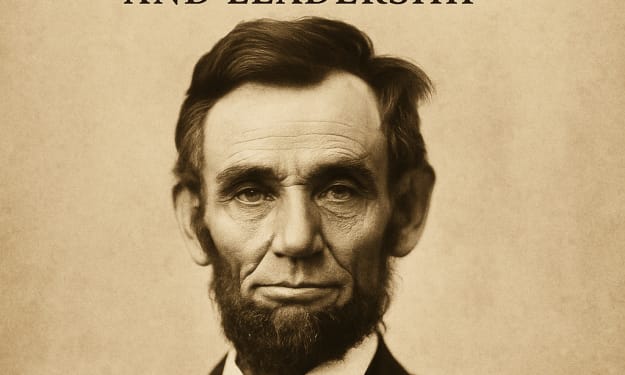
A Life of Integrity and Leadership
Abraham Lincoln, the 16th president of the United States, stands as one of the most revered figures in American history. Known for his steadfast moral compass, eloquent speeches, and unwavering commitment to justice and unity, Lincoln’s life is a profound story of perseverance, vision, and leadership.
By Irshad Abbasi 9 months ago in History