Journey
A Modern African Tarot
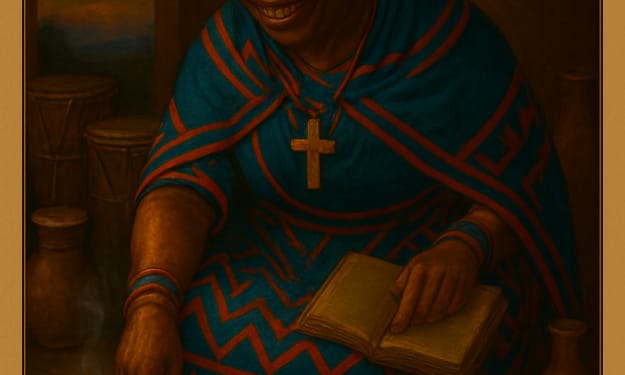
he ninth card in A Modern African Tarot shifts the journey from motion to mastery. Where VII CHARIOT explores drive and duality, VIII STRENGTH centers on inner power—how courage, restraint, and spiritual alignment shape true resilience. This card reimagines the traditional Strength archetype through African symbolism, emotional depth, and embodied grace.
By Vongani Bandi3 months ago in Art
A Modern African Tarot
The eighth card in A Modern African Tarot accelerates the journey. Where VI LOVERS explores union and sacred choice, VII CHARIOT propels us forward—into motion, ambition, and the tension between control and surrender. This card reimagines the traditional Chariot archetype through African urban life, ancestral symbolism, and the modern pursuit of purpose.
By Vongani Bandi3 months ago in Art
A Modern African Tarot
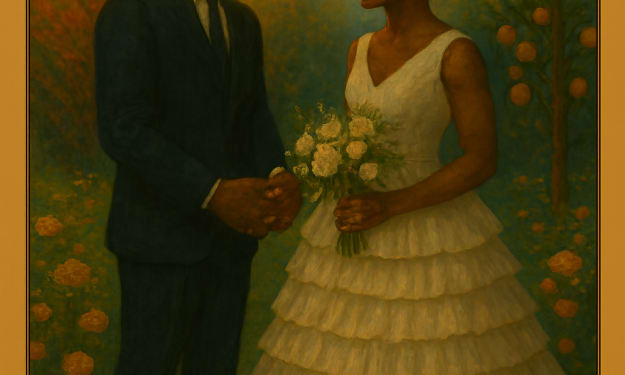
The seventh card in A Modern African Tarot marks a turning point in the journey—from individual mastery to relational depth. Where V PASTOR explores public faith and influence, VI LOVERS brings the focus to connection, commitment, and the spiritual power of union. This card reimagines the traditional Lovers archetype through African symbolism, modern partnership, and the sacred tension between choice and destiny.
By Vongani Bandi3 months ago in Art
A Modern African Tarot
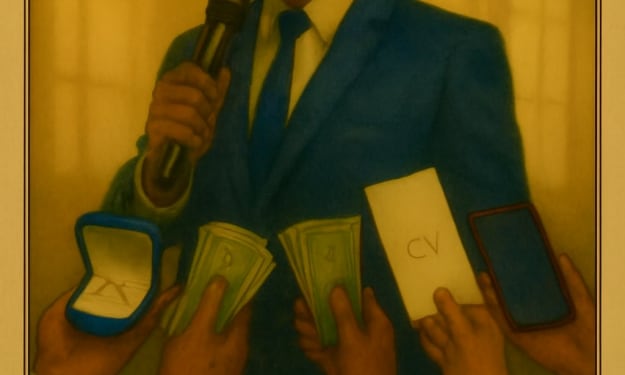
The sixth card in A Modern African Tarot shifts the journey from personal authority to public influence. Where IV EMPEROR represents legacy and leadership, V PASTOR explores spiritual power in the modern age—how faith, charisma, and community converge in one figure. This card reimagines the traditional Hierophant through the lens of African religious life, media visibility, and social aspiration.
By Vongani Bandi3 months ago in Art
A Modern African Tarot
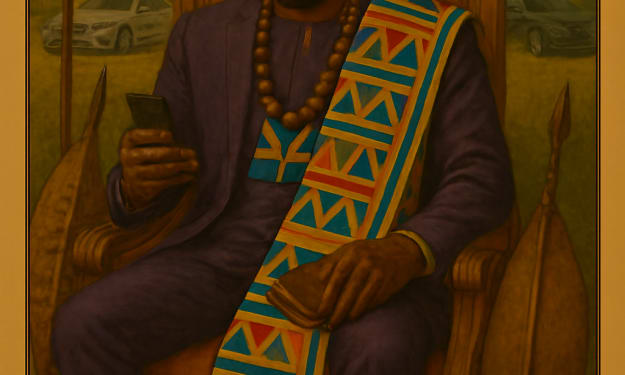
The fifth card in A Modern African Tarot marks a shift from nurturing abundance to establishing structure. Where III EMPRESS celebrates creation and communal prosperity, IV EMPEROR introduces order, protection, and legacy. He is the archetype of leadership—reimagined here through African heritage, modern influence, and ancestral responsibility.
By Vongani Bandi3 months ago in Art
A Modern African Tarot
The fourth card in A Modern African Tarot shifts the journey from introspection to embodiment. Where O FOOL begins the walk, I MAGICIAN channels intention, and II HIGH PRIESTESS guards sacred insight, III EMPRESS celebrates manifestation. She is the archetype of fertility, creativity, and prosperity—reimagined here through the lens of African womanhood, economic power, and communal abundance.
By Vongani Bandi3 months ago in Art
Space Between the Brushstrokes
I used to believe that real artists were always working. Every photo I saw online showed someone painting late into the night, hands stained with color, eyes burning with passion. Sketchbooks were always open. Canvases were always half-finished. The message was clear: if you weren’t constantly creating, you were falling behind.
By Jhon smith3 months ago in Art
Indoor vs Outdoor Amusement Parks
1. Industry Context and Structural Shifts The amusement industry is no longer driven solely by novelty or scale. It is increasingly shaped by macroeconomic prudence, urban density, climate volatility, and evolving leisure behavior. Investors and operators are re-evaluating legacy assumptions about land use, attendance cycles, and capital intensity. In this environment, the comparison between indoor and outdoor amusement models has shifted from a conceptual debate to a strategic decision with long-term financial implications.
By Beston Amusement Rides3 months ago in Art
A Modern African Tarot
The third card in A Modern African Tarot deepens the journey begun by O FOOL and I MAGICIAN. Where the Fool steps into possibility and the Magician channels intention, the High Priestess turns inward—toward silence, intuition, and ancestral knowing. She is the guardian of mystery, the voice between worlds, and the embodiment of spiritual depth.
By Vongani Bandi3 months ago in Art
A Modern African Tarot
Tarot has always been more than cards—it’s a mirror, a guide, a way to tell our stories. For centuries, the decks most people know—like the Rider Waite Smith—have been built on European imagery and symbolism. Castles, knights, biblical archetypes… powerful in their context, but distant for those of us whose roots and rhythms are African. These images speak to a worldview shaped by medieval Europe, but they often feel foreign when held in African hands.
By Vongani Bandi3 months ago in Art