basketball
The world of Basketball detailed by the voices of the unathletic. Discussing play, culture, and, of course, who's the best. Trust the Process.
Somers Hits Wall in 50-39 Defeat to Pleasantville
Scroll down for crowd shots and photos versus Pleasantville On Thursday February 12, Somers traveled to Pleasantville High School and battled back and forth with the Panthers for two and half periods. A 32-30 score resulting, the game changed on one very hot hand.
By Rich Monettiabout 11 hours ago in Unbalanced
John Jay Fails to Hold First Half Lead in Loss to Lakeland
See photos and video below On Tuesday February 10, John Jay traveled to Lakeland and treated its fans to a very entertaining first half. Good for a 36-26 lead, the plot turned, and the Lakeland basics were too much for the Wolves to get the curtain call they wanted.
By Rich Monettia day ago in Unbalanced
NBA Playoff Push 2026: One Down, 19 to Go
As I mentioned in my first story about the Stanley Cup Playoff race, the month of March is a very eventful one in sports. It's not just the NHL that enters the home stretch, it's also the National Basketball Association as well. Here's the thing: those of you who have read my stories in the near five years that I've been writing on Vocal notice something. I hardly write about the NBA. I mention the NFL, NHL, and MLB a lot, and I write about the CFL, but not the NBA. The reason is this: the NBA's lack of parity let me down for years. The only time I mention the NBA here is when I do game-by-game recaps of the NBA Finals.
By Clyde E. Dawkins2 days ago in Unbalanced
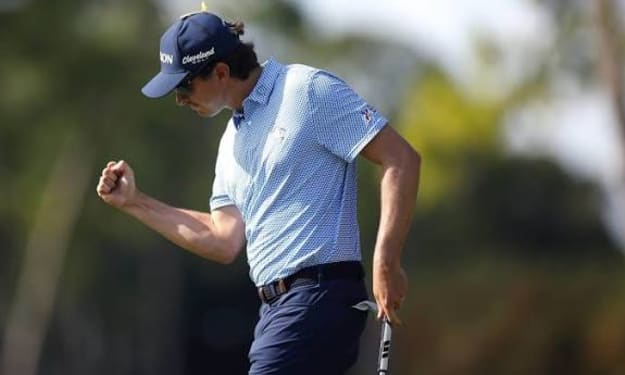
Shane Lowry’s two-hole tailspin gives Nico Echavarria the Cognizant Classic win". AI-Generated.
Shane Lowry’s collapse over the final two holes handed victory to Nico Echavarria in a dramatic finish at the Cognizant Classic, turning what seemed like a routine closing stretch into one of the most talked-about moments of the PGA Tour season. Lowry, the 2019 Open Championship winner, had controlled much of the final round and appeared poised to secure another PGA Tour title. Playing with confidence and precision throughout the day, the Irishman built a narrow but steady lead as he approached the closing holes. His ball-striking had been reliable, and his putting solid enough to keep challengers at arm’s length. But golf’s unforgiving nature was on full display when pressure peaked at exactly the wrong moment. Everything changed on the par-3 17th hole. Lowry’s tee shot drifted just off line, leaving him with a delicate recovery from thick rough. His chip failed to stop close to the pin, and he missed the par-saving putt. The resulting bogey immediately tightened the leaderboard and brought Nico Echavarria firmly back into contention. Lowry still held a share of the lead heading to the final hole, but momentum had shifted. The par-4 18th delivered a crushing blow. Lowry found trouble off the tee, forcing him into a defensive approach shot that left a long and awkward putt for par. Under intense pressure, he could not convert. Another bogey dropped him behind Echavarria, who had calmly completed his round with a steady par finish. In the space of two holes, Lowry went from likely champion to runner-up, a stark reminder of how quickly fortunes can change in professional golf. For Echavarria, the victory was a defining career moment. The Colombian golfer showed remarkable composure in the closing stretch, especially after watching Lowry stumble. Rather than forcing aggressive shots, Echavarria relied on smart course management and consistent putting. His performance over the final few holes highlighted maturity beyond his years and underlined why he is considered one of the PGA Tour’s rising talents. “This win means everything,” Echavarria said after lifting the trophy. “I stayed patient, trusted my game, and waited for the opportunity. Golf is unpredictable, and today it went my way.” The Cognizant Classic has built a reputation for dramatic finishes, and this year’s tournament added another chapter to that history. Played under warm Florida conditions with swirling winds in the afternoon, the course demanded accuracy and mental strength. Several contenders struggled as pin positions became more difficult late in the round, but none felt the pressure more acutely than Lowry. Despite the painful ending, Lowry’s overall performance was far from a failure. He ranked among the leaders in greens in regulation and showed the consistency that has defined his career. However, his closing collapse will linger as a lesson in the fine margins that separate victory from disappointment. Golf analysts noted that Lowry’s conservative choices on the final holes may have contributed to his downfall, allowing tension to creep into his swing and decision-making. Fans reacted with a mixture of sympathy and shock. Social media quickly filled with clips of the final two holes, with many praising Echavarria’s calm demeanor while lamenting Lowry’s misfortune. Fellow players also expressed respect for both competitors, acknowledging the mental toughness required to seize such an unexpected opportunity. The win provides Echavarria with valuable FedEx Cup points and further secures his status on the PGA Tour. More importantly, it gives him confidence heading into the heart of the season, where he will now be viewed as a genuine contender rather than an outsider. For Lowry, the focus will turn to recovery and reflection. Champions are defined not just by victories but by how they respond to setbacks. With major tournaments still ahead, the Irishman will aim to convert this disappointment into motivation. In the end, the Cognizant Classic delivered a finish that captured the essence of professional golf: pressure, unpredictability, and the thin line between triumph and heartbreak. On a day when Shane Lowry faltered at the last hurdle, Nico Echavarria stepped forward and claimed a victory that may shape the trajectory of his career.
By Fiaz Ahmed 2 days ago in Unbalanced
John Jay Falls to Pleasantville and Irvington
Scroll just below for photos vs Irvington John Jay Falls to Precision Shooting of Irvington Click image for photos On Monday February 9, Irvington came up from the river and was far from all wet. Opening with a 12-2 lead, the Bulldogs bite from outside was a dagger the Wolves couldn’t match
By Rich Monetti7 days ago in Unbalanced
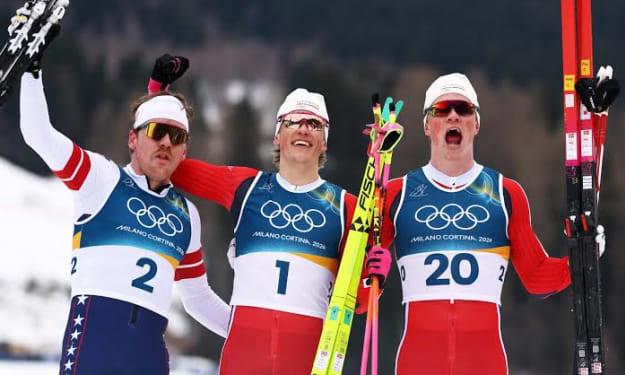
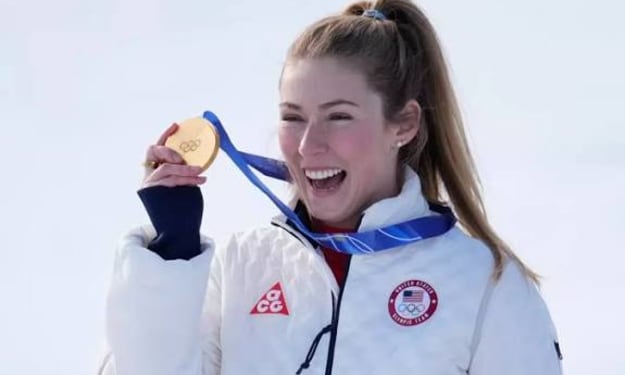
The US Moved Away From Its Heartland to Set a Winter Olympics High in Italy. AI-Generated.
The 2026 Winter Olympics in Italy will be remembered as a turning point for Team USA — a Games where American athletes delivered historic performances far from home, in a mountains‑and‑city setting unlike anything seen in previous Winter Games. At Milano‑Cortina 2026, the United States not only matched its best achievements on snow and ice, but also showcased an evolution in winter sports that goes beyond traditional strongholds and star names. For decades, the U.S. ski and snowboarding community were at the core of American winter success stories, largely rooted in the Rocky Mountains and the country’s colder heartlands. But this year’s Olympic medal haul — a record 12 gold medals, the most ever for the U.S. at a Winter Olympics and the first time the country exceeded 30 total medals outside North America — came from a blend of expected champions and rising talents competing across a spectrum of winter disciplines. Historic Medal Count and Diverse Talent In 2002, when the U.S. hosted the Games in Salt Lake City, Team USA set national records with 10 golds and 34 total medals. Twenty‑four years later, American athletes in Italy surpassed that gold medal count and demonstrated depth beyond traditional podium favorites. While elite stars like Mikaela Shiffrin, Alysa Liu, and Jordan Stolz performed admirably, a significant part of the victory came from lesser‑known athletes and disciplines — a shift that signalled a broadening of the U.S. winter sport ecosystem. In a surprising twist, the U.S. won more medals in cross‑country skiing than in snowboarding, an indicator of growing investment and interest in Nordic disciplines. Ben Ogden, for example, earned silver in the men’s sprint and added another together with teammate Gus Schumacher, while Jessie Diggins returned to the podium and reinforced her status as one of America’s greatest skiers. Heart‑Stopping Victories and Breaking Droughts One of the most emotional moments of the Games came in men’s ice hockey, where the U.S. team defeated Canada men's national ice hockey team 2‑1 in overtime, winning gold for the first time since the iconic “Miracle on Ice” of 1980 — a full 46 years earlier. Jack Hughes scored the decisive goal, etching his name into Olympic lore and providing American fans with one of the memorable highlights of Milano‑Cortina 2026. Other standout achievements included an Olympic gold for freeskiing legend Alex Ferreira, plus strong performances from the U.S. women’s hockey team and mixed‑team events in figure skating, where Ilia Malinin played a key role. Beyond the Heartland: A Strategic Shift The U.S. performance in Italy reflected a strategic shift: success is no longer just about mountains, snow belts, and heartland winter traditions. It is now also rooted in year‑round training facilities, a growing cadre of coaches and youth programs, and a willingness to innovate across disciplines. American skiing, skating, and winter team programs are benefiting from broader recruitment and development pipelines, and Italy’s varied venues — from the urban ice rinks of Milan to the alpine slopes of Cortina d’Ampezzo — provided a diverse Olympic landscape that rewarded versatility and depth. This broader base of talent also meant the U.S. could compete at high levels in events that once belonged almost exclusively to European powerhouses. The result was not just a medal count to be proud of, but a statement about the resilience and adaptability of American winter sport programs. Looking Ahead While Norway topped the overall medal table with 18 golds, the U.S. second‑place finish — especially with a record number of gold medals — will be viewed as a major achievement and a stepping stone toward future Olympic success. With new talents emerging and veteran champions still performing, the American winter sport landscape looks brighter and more competitive than ever. As the Milano‑Cortina Games close and the torch passes to the French Alps for 2030, the U.S. experience in Italy demonstrates that winter glory can come from unexpected places, fueled by a new generation of athletes who are redefining what American success looks like on the international stage.
By Fiaz Ahmed 8 days ago in Unbalanced
U.S. Boosts Gold Medal Tally at Winter Games, Led by Athletes From a Handful of States. AI-Generated.
The 2026 Winter Olympics have so far provided a showcase of American athletic strength, with the United States climbing the medals table thanks to a strong showing by competitors from a diverse group of states. As the Games reach their midpoint, Team USA’s gold medal haul continues to grow, reflecting years of investment in winter sport programs and the emergence of athletes from regions not traditionally known for snow and ice. The U.S. delegation has already secured multiple gold medals across figure skating, skiing, snowboarding, curling, and ice hockey. Key victories came from athletes hailing from Colorado, Minnesota, California, and Vermont, highlighting both traditional winter sport hubs and surprising new talent pools. Snow and Ice Success Stories In alpine skiing, Megan Larson of Aspen, Colorado, captured gold in the giant slalom, completing two near-perfect runs on a challenging course. Her precision and speed — honed on Colorado’s rugged terrain — made her one of the standout performers of the Games. “It’s an amazing feeling to bring home gold for the U.S.,” Larson said after her victory. “All those early mornings on the mountain pay off.” From the frozen lakes of Minnesota came another golden performance. Derek Olsen, a standout in men’s hockey, helped secure the United States’ narrow victory over rival teams. Olsen’s leadership and defensive prowess were praised by teammates and commentators alike, cementing his role as one of the sport’s rising stars. Changing Geographic Landscape While states like Colorado and Minnesota have long been associated with winter sports, the U.S. medal map is now showing broader geographic diversity. California’s Emma Reyes earned gold in freestyle skiing’s halfpipe, an event where style and technical dexterity are paramount. Reyes, who grew up skiing the Sierra Nevada, said her upbringing was crucial in shaping her competitive edge. “I never thought I’d stand on an Olympic podium when I was a kid in Lake Tahoe,” Reyes said. “But here we are.” Vermont’s own Lucas Whitman delivered a thrilling performance in the men’s cross-country sprint, bringing home another gold for the U.S. contingent. Whitman’s endurance and tactical racing were key factors in his victory on a snow-packed track that challenged even seasoned competitors. Team Events and Emerging Stars Team USA also shone in team events such as ice hockey and curling, where preparation and strategy played decisive roles. In curling, the American squad demonstrated remarkable consistency and precision, topping the round-robin standings and advancing with momentum toward the medal rounds. Co-skip Rachel Kimball from Wisconsin said the team’s chemistry and mental focus were as important as technical skill. “We walked onto the ice knowing we could compete with the best,” she said. “Now we’re showing it.” Youth and Experience Combine A defining feature of the U.S. team has been the blend of veteran performance and youthful exuberance. Some athletes in their late 20s and early 30s brought experience and poise, while emerging teens and young adults injected energy and fearlessness. This mix has been described by coaches as a “perfect storm” of talent and cohesion. “Our approach has always been to nurture talent early and let it grow,” said Team USA head coach Mark Sullivan. “You see that strategy playing out here with medals across multiple disciplines.” Broader Impacts Back Home The success at the Winter Games is already generating buzz across the United States, with schools and local clubs reporting increased interest in winter sports. Youth programs in regions without traditional snow seasons, such as parts of California and Texas, are seeing a surge in enrollments for skiing and ice skating. “This kind of representation helps make winter sports feel accessible to everyone,” said sports development expert Linda Foster. “Kids see athletes who grew up in very different places and think, ‘I can do that too.’” Looking Ahead With several events still to be contested, the United States could add even more gold medals to its tally. The depth of talent and geographic spread of medal contenders point to a strong finish, reflecting the country’s broad investment in winter athletics. As the Winter Games enter their final days, one thing is clear: American athletes are leaving a strong imprint on the international stage — and their stories are inspiring a new generation of winter sport enthusiasts across the nation.
By Fiaz Ahmed 8 days ago in Unbalanced
Eileen Gu pays emotional tribute to grandmother after gold win, hopes she made ‘her proud’. AI-Generated.
Chinese-American freestyle skiing sensation Eileen Gu dedicated her latest Olympic gold medal to her late grandmother, offering a heartfelt reflection on family, legacy, and the role of personal support in her remarkable rise to the top of her sport. After standing atop the podium at the 2026 Winter Olympics, Gu expressed that the win carried profound emotional significance, underscoring the personal sacrifices and guidance that shaped her career. A Victory with Personal Significance Gu clinched gold in the women’s freeski halfpipe, delivering a performance that combined technical precision with daring aerial maneuvers. Immediately following the medal ceremony, she turned her attention to the memory of her grandmother, who had passed away several years ago but had been a steady source of encouragement throughout her life. Speaking to reporters, Gu said: “I hope I made her proud. She believed in me even when I doubted myself, and every trick, every jump, every practice session was in some way for her.” The emotional tribute resonated widely on social media, where fans and fellow athletes celebrated her accomplishments and the heartfelt acknowledgment of family influence. The Role of Family in Athletic Success Eileen Gu’s career has long been shaped by the support and guidance of her family. Born in the United States to an American father and Chinese mother, she has navigated a dual cultural identity while competing on the world stage. Her grandmother played a central role, offering mentorship, attending competitions when possible, and instilling discipline and resilience—qualities Gu credits for her Olympic success. Experts note that family support is often a critical factor in elite sports performance. According to sports psychologist Dr. Mei Ling, “Athletes who maintain a strong connection to supportive family figures often display higher levels of emotional stability, confidence, and motivation. Eileen Gu’s tribute reflects how integral such relationships are to sustaining peak performance under immense pressure.” Global Recognition and Cultural Impact Gu’s gold medal performance has further cemented her status as one of the most prominent figures in freestyle skiing. Beyond her athletic achievements, she has become a cultural ambassador, bridging American and Chinese sports communities and inspiring young athletes worldwide. Her dedication to her grandmother highlights the human side of professional athletics, reminding audiences that behind every medal is a network of support, mentorship, and love. In interviews after the event, Gu emphasized that personal relationships, particularly with family, are as important as medals in defining the meaning of success. Balancing Pressure and Emotion For Gu, the Olympics are not only a competitive arena but also an emotional journey. She described the halfpipe event as particularly challenging, both technically and mentally, noting that focusing on her grandmother’s memory helped center her during high-pressure moments. “Every flip and twist in that run felt like a conversation with her,” Gu explained. “It reminded me why I started skiing in the first place—not for fame or accolades, but to honor the people who shaped me.” Her comments have drawn attention from sports commentators who highlight the emotional depth she brings to competition, setting an example of athlete mindfulness and personal grounding. Looking Ahead With multiple Olympic medals now to her name, Gu remains focused on future competitions while continuing to honor her family’s legacy. She has expressed interest in mentoring young skiers, emphasizing that emotional resilience, alongside technical skill, is essential for sustained success. The gold medal and the tribute to her grandmother resonate as more than a personal achievement—they reflect the intertwining of athletic excellence with gratitude, heritage, and emotional connection. For Eileen Gu, the victory is as much about honoring her past as it is about defining her future.Gu’s tribute has sparked an outpouring of support on social media, with fans praising her humility and heartfelt acknowledgment of family. As she looks forward to future competitions, Eileen Gu continues to inspire not only with her skill on the slopes but with the emotional depth she brings to every performance.
By Fiaz Ahmed 9 days ago in Unbalanced
Israel Disqualifies Its Own Olympic Bobsleigh Team for Lying to Officials. AI-Generated.
In an unusual and dramatic turn of events at the 2026 Winter Olympics in Cortina d’Ampezzo, Israel’s four-man bobsleigh team was disqualified by its own national Olympic committee after team members submitted a false medical claim in an attempt to include a substitute athlete. The decision was announced by the Olympic Committee of Israel in a statement condemning the conduct as antithetical to fair play and Olympic values. The controversy unfolded on Sunday, 22 February 2026, amid the four-man bobsleigh competition. Earlier in the Games, the Israeli crew — consisting of AJ Edelman, Menachem Chen, Uri Zisman, and Omer Katz — completed two heats and finished 24th out of 27 sleds following a race that saw three other teams crash during their second run. Times of Israel What Went Wrong The dispute centers on an attempted lineup change that would have allowed Ward Fawarseh — the team’s alternate — to compete in place of Zisman. If Fawarseh had taken the ice, he would have made history as Israel’s first Druze Olympian, a landmark moment for representation in the Games. However, according to officials, substitutions in bobsleigh are strictly governed by Olympic regulations. An alternate may only replace a team member when that athlete is verified to be injured or ill by medical assessment. Attempting to circumvent this rule led to the team’s undoing. To make the substitution legitimate, one of the squad’s athletes claimed to be unwell, underwent a medical examination, and signed an affidavit — all to satisfy the formal requirements for a swap. Afterward, however, the athlete admitted to delegation leadership that the injury claim was fabricated, and that the substitution scheme had been premeditated. In light of the admission, the Olympic Committee of Israel withdrew its request to the International Olympic Committee (IOC) and opted to disqualify the team from further competition. The Israeli committee’s statement described the conduct as “improper” and “inconsistent with the principles of fair play and sportsmanship expected of Olympic athletes.” Responses From the Team In a post on social media, team pilot AJ Edelman acknowledged that the circumstances surrounding the attempted substitution “did not meet the high bar” required for a legitimate lineup change. He said the decision to withdraw from the final run was made with regret. Times of Israel Edelman added that although the team was not in medal contention, their overarching motivation was to give Fawarseh the opportunity to compete. “It was more important to us that our alternate could have the opportunity to compete in the Olympics,” he wrote, while also expressing pride in what the crew had achieved in representing Israel. Times of Israel Broader Context at the Games The bobsleigh squad had already garnered attention throughout the Milan-Cortina Games not only for its on-track performance but also for controversies related to broadcasting and commentary. Earlier coverage by broadcasters, including remarks about the team’s presence, drew criticism and required apologies, highlighting the heightened scrutiny experienced by the Israeli delegation. For Israel’s Olympic contingent — which this year includes athletes across several winter disciplines — the disqualification represents a symbolic setback at a Games where medals have been difficult to come by. Nonetheless, other competitors such as Israeli skier Barnabas Szollos are still scheduled to participate and even carry the national flag during the closing ceremony. Times of Israel Fairness, Rules, and Olympic Integrity The decision by Israel’s Olympic Committee to disqualify its own team underscores the importance placed on integrity and compliance with international competition rules, even at the cost of historic individual milestones. Olympic officials have stressed that adherence to regulations safeguards the credibility of competition and ensures a level playing field for all participants. While the bobsleigh team will not compete further in the event, the incident serves as a reminder that the Olympic spirit demands not just athletic excellence, but respect for the rules and ethical conduct that govern global sport.
By Fiaz Ahmed 10 days ago in Unbalanced
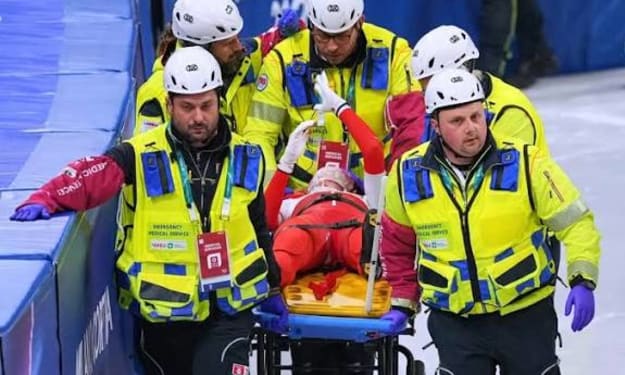
Poland’s Kamila Sellier Stretchered Off After Opponent’s Blade Slices Above Her Eye in Olympic 1500. AI-Generated.
A dramatic and frightening incident unfolded during the women’s 1500-meter speed skating event at the Winter Olympics, when Polish skater Kamila Sellier was seriously injured after an opponent’s skate blade sliced above her eye, forcing officials to halt the race and rush medical teams onto the ice. Sellier collided with another competitor while entering a tight corner at high speed. Witnesses reported that she lost balance and fell forward, at which point the sharp blade of another skater’s boot struck her face just above the eyebrow. Blood was immediately visible, prompting referees to stop the race within seconds as medics sprinted to her aid. Emergency Response on the Ice Medical personnel surrounded Sellier as she lay motionless on the ice. She was quickly stabilized, placed on a stretcher, and taken to a nearby medical facility for further evaluation. Organizers later confirmed that she remained conscious and responsive during transport, though the full extent of her injury was not immediately disclosed. Officials said she sustained a deep laceration near her eye and would undergo scans to rule out facial fractures or internal injuries. “Our priority was to ensure her safety and provide immediate medical attention,” an Olympic medical spokesperson said. The competition was suspended for nearly 20 minutes as staff cleared the ice and reassured shaken athletes. When racing resumed, the mood in the arena was visibly subdued. A High-Risk Sport Speed skating is one of the fastest events in the Winter Olympics, with athletes reaching speeds of over 50 kilometers per hour while skating in close proximity. Although protective gear is worn, including cut-resistant suits and helmets, facial injuries remain a known risk due to exposed areas around the eyes and nose. Experts note that accidental contact with blades, though rare, can lead to severe injuries. “This sport combines speed, tight corners, and sharp equipment,” said a former Olympic skater turned safety analyst. “Incidents like this remind us how dangerous it can be despite modern protections.” Reaction from Teammates and Rivals Polish team officials described the incident as “devastating” for both Sellier and her teammates. “Kamila was in strong form and had trained for years for this moment,” a team spokesperson said. “Our thoughts are entirely with her and her family.” Other competitors expressed shock and concern, with several skaters seen visibly emotional following the crash. One rival athlete said, “We all know accidents happen, but seeing someone hurt like that is terrifying. We just hope she recovers fully.” The athlete whose blade caused the injury was not blamed for the collision, and officials stated that the crash appeared accidental with no rule violations. Questions About Safety Measures The incident has reignited discussion about safety standards in short- and middle-distance speed skating. Some experts are calling for stronger face protection or redesigned helmets to reduce the risk of blade-related injuries. While international skating bodies have previously debated full face shields, many athletes resist them due to visibility issues and discomfort. However, Sellier’s injury may prompt renewed evaluation of whether current equipment is sufficient. “Technology in sports safety must evolve as performance speeds increase,” said a sports medicine specialist. “We should always ask whether more can be done to protect athletes without compromising competition.” Looking Ahead As of the latest update, Sellier remains under medical observation and is unlikely to compete again in the current Olympic Games. Her participation in future events will depend on recovery time and medical clearance. The Polish Olympic Committee said it would issue further statements once doctors complete their assessment. Fans across Poland flooded social media with messages of support, wishing her a swift and complete recovery. A Sobering Moment The accident cast a shadow over what is usually one of the most thrilling events of the Winter Games. While the competition continued, attention remained focused on Sellier’s condition rather than the medal standings. The episode served as a stark reminder of the physical risks elite athletes take in pursuit of Olympic glory. As spectators applauded her bravery, many also reflected on the fine line between sporting excellence and serious injury in high-speed winter sports.
By Fiaz Ahmed 11 days ago in Unbalanced
Somers Swishes Another Thrilling Comeback versus Hen Hud
Scroll down for girls photos and boys vs Nanuet On Friday, January 30, Somers welcomed Hen Hud to the High School, and Kate Stratton looked like she was going to make it a very long afternoon for her hosts. Four straight jumpers, a 10-3 lead forced adjustment. “We didn’t let her get the ball in the middle,” said Caitlyn Mayfield. But a 38-29 third quarter deficit still left the Tuskers with work to do. So the team as a whole did the heavy lifting.
By Rich Monetti13 days ago in Unbalanced
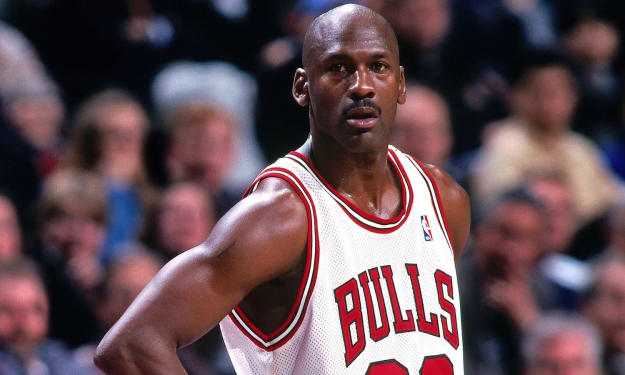
Michael Jordan: The Fire That Built a Legend
Some athletes win games. A few win championships. And then there are rare figures who seem to change how we see effort, pressure, and belief itself. Michael Jordan belongs in that last group. His name is spoken with a kind of respect that goes beyond sports. For many people, he was not just a basketball player. He was the reason they stayed up late to watch games. The reason they practiced one more hour. The reason they believed that missing a shot did not mean the story was over.
By Muqadas khan16 days ago in Unbalanced