
Hidden in Plain Sight
Long before modern Pride movements, queer lives shaped cultures, inspired art, and quietly changed the course of history

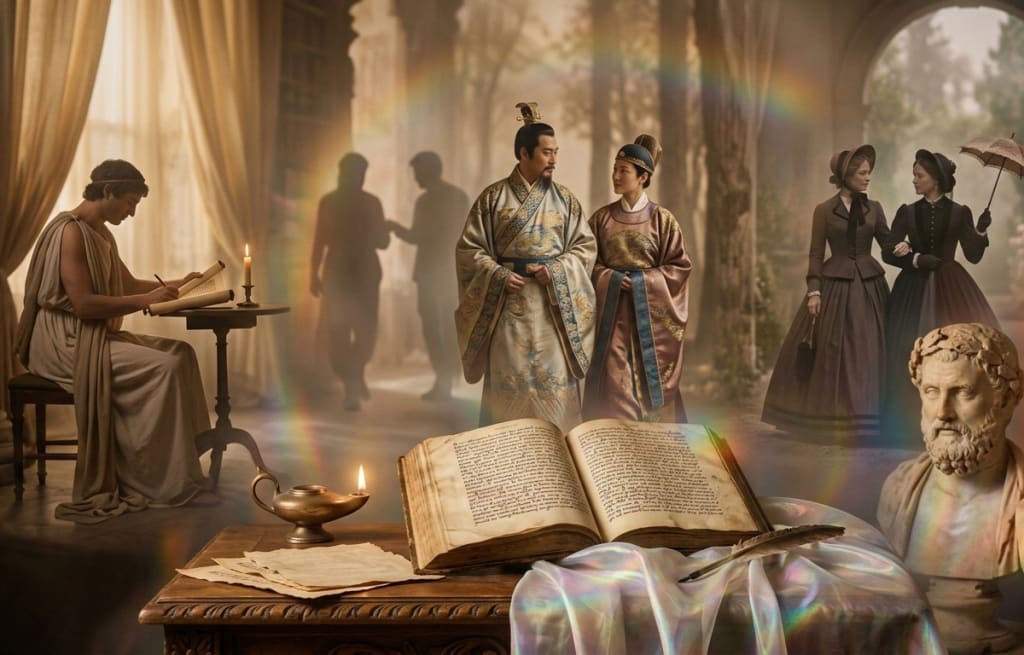
When people talk about LGBTQ+ history, they often act as if it began only recently—maybe in the 20th century with protests, pride marches, and legal battles. But queer history didn’t suddenly appear out of nowhere.
It has always existed.
Across ancient civilizations, powerful rulers, respected artists, and everyday people lived lives that today we would recognize as LGBTQ+. Their stories were sometimes celebrated, sometimes hidden, and sometimes rewritten by later generations who preferred not to remember them.
Looking back at these lives reminds us of something important: being queer is not new. What is new is how society chooses to talk about it.
Here are a few fascinating moments from history that show just how long LGBTQ+ stories have been part of the human experience.
Sappho: The Poet of Love
One of the earliest voices of queer expression comes from Ancient Greece.
Sappho was a poet who lived on the island of Lesbos around 600 BCE. Her poetry often celebrated beauty, longing, and love between women. While much of her work has been lost to time, the fragments that remain are deeply emotional and intimate.
In fact, the words “lesbian” and “sapphic” both trace their origins back to her.
For centuries, scholars tried to reinterpret or dismiss the romantic themes in her poetry. But the truth remains clear in her words—she wrote about love between women in a way that was heartfelt, personal, and unapologetic.
Her poetry still resonates today because it captures something timeless: the universality of love.
Emperor Ai of Han and the “Cut Sleeve”
In ancient China, there is a famous story about Emperor Ai of the Han Dynasty.
According to historical accounts, the emperor had a beloved male companion named Dong Xian. One afternoon, Dong Xian fell asleep on the emperor’s sleeve. When the emperor needed to leave, he chose not to wake him.
Instead, he quietly cut off his own sleeve so Dong Xian could continue sleeping peacefully.
The story became so well known that same-sex love between men in China was sometimes referred to as “the passion of the cut sleeve.”
Rather than being hidden, this relationship was recorded by historians as a memorable example of affection and devotion.
The Gender-Fluid Deities of Ancient Cultures
Many ancient cultures had spiritual traditions that included gender diversity.
In Hindu mythology, the deity Ardhanarishvara represents a divine form that is half Shiva and half Parvati—symbolizing the unity of masculine and feminine energy in a single body.
Similarly, in several Indigenous cultures of North America, people who embodied both masculine and feminine identities were often respected members of their communities. Today, many use the term Two-Spirit to describe this cultural identity.
These traditions suggest that gender diversity was not always treated as something strange or controversial. In many places, it was simply another way of existing.
The Romantic Letters of Eleanor Butler and Sarah Ponsonby
Fast forward to the 18th century.
Two Irish women, Eleanor Butler and Sarah Ponsonby, became famous for their lifelong partnership. They moved away from society together and built a quiet home in Wales.
Their relationship lasted over 50 years.
The pair were often called “The Ladies of Llangollen.” Visitors from across Europe came to meet them, intrigued by their unique life together.
While society at the time didn’t have the same language we use today, their devotion to each other was undeniable. Their letters describe deep affection, loyalty, and companionship that lasted a lifetime.
Why These Stories Matter
History is often written by those in power. Because of this, many LGBTQ+ stories were erased, misunderstood, or intentionally hidden.
But even with centuries of silence, these stories still surface.
They appear in poetry fragments, historical records, artwork, mythology, and personal letters. Each one reminds us that queer people have always been part of the human story.
The difference today is not that LGBTQ+ people suddenly exist—it’s that more people are finally willing to acknowledge them.
The Ongoing Story
Pride today is not just about celebration. It’s also about remembering.
Remembering those who lived openly in times when it was dangerous.
Remembering those whose identities were erased or rewritten.
And remembering that the fight for acceptance did not begin in our generation.
It stretches back thousands of years.
Every Pride flag raised today carries echoes of people like Sappho, Emperor Ai’s beloved companion, the Ladies of Llangollen, and countless others whose names may never appear in history books.
Their lives remind us that identity is not a trend or a modern idea.
It is simply part of being human.
And it always has been.
About the Creator
Luna Vani
I gather broken pieces and turn them into light




Comments
There are no comments for this story
Be the first to respond and start the conversation.