
Why the Internet Is Obsessed With “Main Character Energy”
A look at the cultural shift that turned everyday life into a personal narrative.


At some point in the last few years, the internet started telling everyone the same thing:
Act like the main character.
The phrase exploded across TikTok, Instagram, and YouTube. Millions of people began filming their lives as if they were protagonists in a movie — romanticizing everyday moments like walking to a coffee shop, riding the subway, or watching rain fall on a city street.
On the surface, it seems harmless. Even a little inspiring.
But the popularity of “main character energy” says something deeper about how people experience life in the age of social media.
It reveals a strange truth:
Many people feel like background characters in their own story.
The Quiet Feeling of Being Invisible
For most of human history, life was local.
You knew your family, your town, your neighbors. Your social world was limited to the people physically around you.
Then the internet happened.
Suddenly everyone could see everyone else's lives — vacations, relationships, career milestones, aesthetic apartments, perfectly curated routines.
And when you see thousands of lives every day, something strange happens psychologically.
Your own life can start to feel… smaller.
It’s not that your life actually changed.
It’s that comparison became constant.
Romanticizing the Ordinary
The “main character energy” trend is essentially a response to that feeling.
Instead of seeing life as mundane or repetitive, people began reframing everyday moments as scenes in a story.
Walking home becomes a cinematic moment.
Buying groceries becomes a quiet montage.
Late-night thoughts become part of a narrative arc.
Psychologists sometimes call this narrative identity — the idea that humans naturally understand their lives through stories.
When people adopt a “main character mindset,” they’re not just pretending to be important.
They’re reclaiming authorship over their own story.
Why Stories Matter to the Human Brain
Humans evolved to think in narratives.
Our brains remember stories far better than facts or lists. We interpret experiences through beginnings, conflicts, and resolutions.
It’s why movies, novels, and music feel so powerful.
They mirror the way our minds naturally organize reality.
When someone frames their life like a story, they’re actually tapping into a very ancient psychological structure.
They’re giving meaning to moments that might otherwise feel random.
The Hidden Danger of Living for the Audience
But there’s a second side to the trend.
When people perform “main character energy” online, they’re also performing for an audience.
And that can create a subtle trap.
If life becomes something you’re constantly documenting, you might start living moments for how they look rather than how they feel.
The sunset becomes content.
The conversation becomes a clip.
The experience becomes a post.
Instead of living your story, you start curating it.
The Real Main Character Energy
Ironically, the most powerful version of “main character energy” probably isn’t the one posted online.
It’s the quiet version.
The one where you take yourself seriously even when no one is watching.
Where your life feels meaningful not because it gets views, but because it feels real.
Where a walk through the city or a late-night thought matters simply because you experienced it.
In that sense, the trend might be pointing toward something deeper.
A reminder that everyone — literally everyone — is the main character of their own story.
Even if no one else sees the movie.
About the Creator
Navigating the World
News, commentary on entertainment, music, influencers, and modern culture, upcoming artists, politics, and more. Everything you need to know — all in one place.
Keep reading
More stories from Navigating the World and writers in Journal and other communities.
Meet Tatted Mami: The Self-Made Creator Redefining the Journey to Online Success
Content Warning: This article discusses topics that may be sensitive or triggering for some readers, including trauma, mental health struggles, and personal hardship. Reader discretion is advised.
By Navigating the World4 months ago in Journal
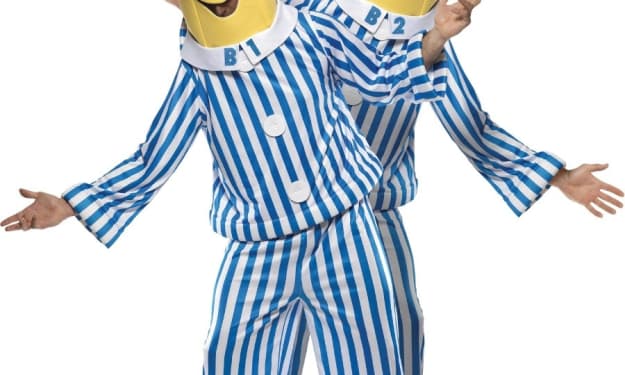
Bring some fruit-filled fun to the party with a hilarious and eye-catching banana outfit
Costumes are meant to spark laughter, start conversations, and make events more memorable. Few outfits accomplish that as effortlessly as a bright, oversized banana costume. Its bold yellow colour and playful shape guarantee instant visibility in any crowd. Whether you are heading to a themed party, Halloween event, fun run, or promotional gathering, this fruity ensemble delivers humour and charm in equal measure.
By Costumes in Australia5 days ago in Journal
Small Changes, Big Results
Personal growth often sounds like a huge, life-altering process. We imagine dramatic transformations, strict routines, or sudden breakthroughs. In reality, meaningful growth rarely happens all at once. More often, it comes from small choices repeated consistently over time.
By Dr. Stephen Swisher 5 days ago in Journal

Comments
There are no comments for this story
Be the first to respond and start the conversation.