
Why Retail Store Maintenance Is Essential for Reducing Long Term Repair Costs
Discover how regular maintenance safeguards your retail investment, extends infrastructure lifespan, and minimizes unexpected expenses.

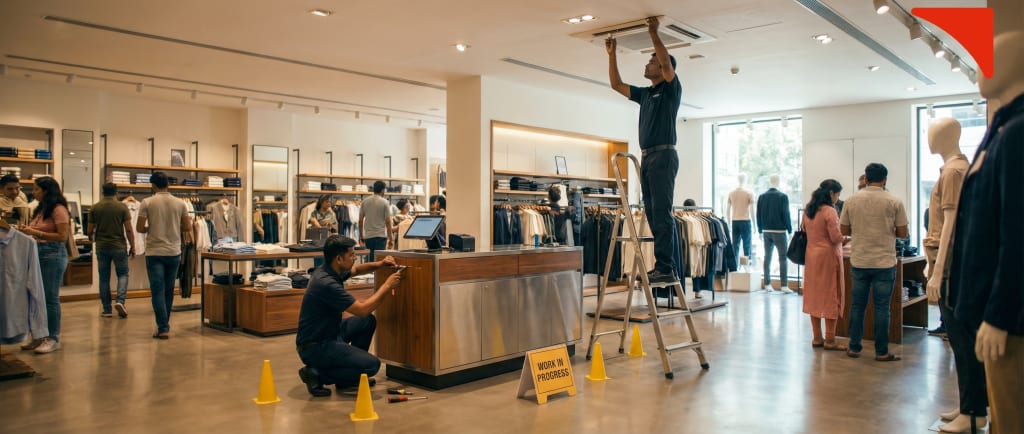
People often assume that running a retail store is all about stocking products, selling them, and further repeating the same procedure. However, the reality is completely different from what common people think. Operating a retail store also includes taking care of the space and preserving it. Many store owners pay complete attention to daily sales but often skip taking regular care of their spaces.
This is exactly the point where retail maintenance enters the play as an important character. When brands maintain their stores on a regular basis, their spaces remain safe, clean, functional, and compliant for a long time. Most importantly, timely maintenance also helps in significantly reducing long term repair costs.
Through the medium of this article, we will discover how retail store maintenance helps brands reduce their long term repair costs. Hence, let us get started with the same.
How can retailers experience a significant reduction in long term repair costs through regular store maintenance?
1. It prevents minor issues from becoming major expenses
We all have heard this statement, ‘prevention is better than cure.’
Though many retailers consider maintenance as a cure, they need to understand and accept the fact that it is a form of prevention.
When brands maintain their retail outlets on a regular basis, they can pre identify small problems like leaks, cracks, or faulty lighting, so that they do not get converted into expensive repairs. Apart from reducing emergency costs, addressing minor wear and tear early also helps in preventing structural damage. When retailers adopt this proactive approach, they automatically extend the life of store fixtures and infrastructure. Also, they will not have to worry about any sudden financial strain due to their store lacking safety, functionality, or visual appeal.
2. Helps detect hidden problems
Conducting retail audits is also a way of maintaining stores. When brands opt for regular audits, they can easily identify all the hidden structural or technical issues that might not be visible or get missed during daily operations. This early detection allows the brand to take corrective actions before the small issue gets converted into a big one.
The combination of retail audit and maintenance is indeed one of the most effective and efficient retail strategies that allows brands to pre plan repairs and avoid any unnecessary high long term replacement costs.
3. Protects the value of store design
Every brand has an emotional connection with its stores. It is the store design that communicates the brand’s story, identity, image, and ethics. When the store undergoes consistent upkeep, it preserves the visual and functional integrity of the executed design. On the other hand, factors like damaged shelving, chipped paint, or worn flooring significantly reduce the brand appeal. They also require costly renovations if ignored in an initial stage.
Regular maintenance helps a brand ensure that the executed layout design, fixtures and displays, and other finishes are always aligned with the original store design. This does not just protect the retailer's investment over time, but also preserves the brand image and identity.
4. Extends the lifespan and efficiency of equipment
Routine or regular servicing of HVAC (heating, ventilation, and air conditioning) systems, lighting, refrigeration, billing systems, and all the other equipment present within the store significantly reduces the risk of breakdown and improves the overall performance. Also, equipment and systems that are well maintained naturally consume less energy and operate in a smooth manner. This directly increases their lifespan and lowers the operational expenses as well.
5. Strengthens structural planning within the store
Retail maintenance is majorly divided into two parts: reactive (break,fix and repairs) and preventive (based on an annual maintenance contract). Hence, one thing that retailers need to be sure about is that maintaining a store is not just about repairing it. Instead, it is actually about reinforcing structural planning within the store design.
When the floors are properly maintained, pathways and corridors remain clear and smooth, fixtures and display units stay aligned, and the checkout/billing counters function properly, the retail space continues to operate in a way as it was expected to do at launch.
Winding it up!
Ignoring maintenance is one of the biggest mistakes that retailers can make while operating their stores. Deferred or ignored maintenance can disrupt the flow of customers, make movement tough for the staff, damage the overall store layout, increase the likelihood of major renovations later, and, worst of all, damage the brand’s identity, image, and reputation, further leading to a negative perception. In order to avoid all these from happening, it is crucial that retail brands consistently monitor and maintain their stores. Doing this will ensure that structural components remain stable and safe, the stores are compliant and functional, and customers are provided with an immersive retail experience.
By maintaining the physical framework of their stores, retailers can directly eliminate the chances of large scale refurbishments and reduce the risks of liabilities. In addition to this, regular retail maintenance also helps protect long term investment in infrastructure and operational efficiency.
About the Creator
D'Art Design
D’Art Design is a leading global retail design agency. We integrate tactic to provide outstanding experiences, through brand communication and activation, brand design, promotion, and interior design.
Keep reading
More stories from D'Art Design and writers in Journal and other communities.
D’Art Leads Mi Arcus Retail Transformation with Impactful Store Design
Mi Arcus is indeed one of the most prominent names in the baby and kids’ product segment. In a strategic move to revolutionize its in-store experience, the kids’ brand decided to undertake a comprehensive retail transformation project. To convert its vision into reality, Mi Arcus approached and decided to collaborate with D’Art Private Limited, a well established retail branding and marketing agency that is known for providing integrated retail solutions from a single point of contact.
By D'Art Design26 days ago in Journal
The Reason Your Gold Jewellery Weighs Different in Summer
Have you ever noticed that your gold jewellery seems heavier, tighter, or simply different during the summer months? You are not imagining it. While the actual weight of gold does not change with the seasons, the way it feels against your skin can shift noticeably when temperatures rise.
By Md Mehedi Hasan Rifadabout 15 hours ago in Journal
Cassie and Johnny
I’m the kind of dame you notice. I’m no femme fatale, but you can’t ignore me, at least not until I warn you about what’s coming, then everybody ignores me. Hell, they usually blame me afterwards and give Johnny all the credit for saving the day, but my Johnny couldn’t save a seat at the movies without my help. Sure, he’s brawny, but brainy? Not so much. Like that time I asked him to spot me five bucks, and he said he didn’t see it anywhere on me, and believe you me, he looked but good.
By Harper Lewis5 days ago in Critique




Comments
There are no comments for this story
Be the first to respond and start the conversation.