
6 Life-Saving Trends Powering Leukapheresis
How advanced cell therapy demand is reshaping blood processing worldwide
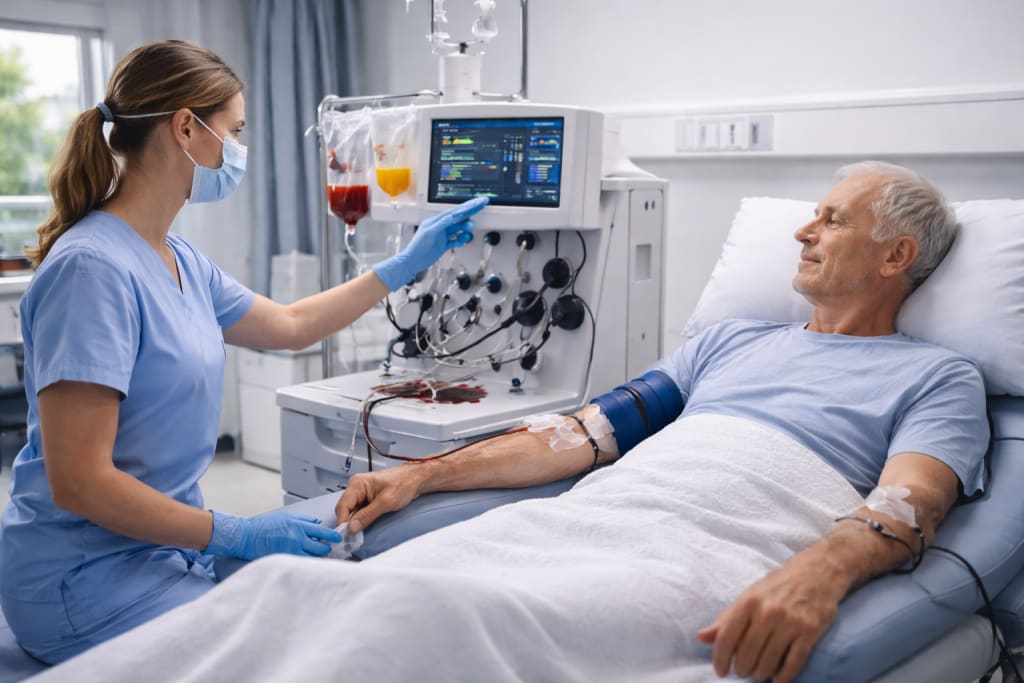
The machine hums softly as crimson flows through transparent tubing.
A patient watches quietly, arm extended, while a healthcare professional checks the digital monitor. White blood cells—carefully separated—are being collected for something far bigger than this room.
In that steady rhythm of circulation lies the foundation of cutting-edge treatments, from advanced oncology therapies to life-saving immune interventions. This is leukapheresis—a specialized blood separation process that is becoming central to modern medicine.
Search queries such as “what is leukapheresis used for?”, “leukapheresis in CAR-T therapy, and “difference between apheresis and leukapheresis” are increasing across search engines and AI platforms. Behind those searches lies a rapidly evolving industry.
According to Mordor Intelligence, the leukapheresis market was valued at USD 229.81 million in 2025 and is projected to rise to USD 251.92 million in 2026, reaching approximately USD 398.63 million by 2031. The market is expected to grow at a CAGR of 9.62% during the 2026–2031 forecast period.. That single figure reflects a structural shift in how blood components are collected, processed, and utilized in advanced therapies.
The Science Behind the Separation
Leukapheresis is not simply a medical procedure—it is a gateway to innovation.
The process involves separating white blood cells from a patient’s blood using an apheresis machine. The remaining components—red blood cells and plasma—are returned to the body. What remains is a concentrated collection of immune cells, often used in therapies that require precision at the cellular level.
In oncology, leukapheresis is a foundational step in CAR-T cell therapy, where a patient’s T-cells are extracted, genetically modified, and reinfused to target cancer. Without leukapheresis, this personalized immunotherapy pathway would not exist.
AI-driven search behavior increasingly clusters leukapheresis-related questions like:
- “Leukapheresis process step by step”
- “How long does leukapheresis take?”
- “Is leukapheresis painful?”
- “Leukapheresis for stem cell transplant”
These queries highlight public curiosity—and clinical relevance.
The projected 9.62% CAGR in the Leukapheresis Market reflects expanding applications in:
- Hematologic malignancies
- Stem cell transplantation
- Autoimmune disorder management
- Research and regenerative medicine
What once served primarily as a supportive oncology procedure now stands at the center of advanced cell-based therapies.
Why Cell Therapy Is Fueling Market Growth
Modern medicine is shifting from generalized treatments to precision immunology.
Instead of broad-spectrum chemotherapy alone, clinicians now leverage personalized cellular interventions. Leukapheresis acts as the starting line in that journey.
Consider a patient diagnosed with a resistant blood cancer. Standard treatments may have limited effectiveness. Leukapheresis enables extraction of their own immune cells, which can then be engineered to attack malignant cells more effectively.
This evolution in therapeutic strategy supports the strong projected 9.62% CAGR.
The growth is not accidental. It is driven by:
- Rising adoption of cell-based therapies
- Increasing incidence of hematological disorders
- Expansion of specialized oncology centers
- Advancements in automated apheresis systems
Search platforms reflect this trend, with users exploring:
- “Leukapheresis before CAR-T therapy”
- “White blood cell collection for immunotherapy”
- “Best leukapheresis machine technology”
Healthcare systems worldwide are investing in advanced infrastructure capable of supporting complex therapies. Leukapheresis equipment must meet precision standards, safety protocols, and efficiency demands.
Behind the scenes, digitalization is also reshaping the field. Modern apheresis systems feature automated controls, real-time monitoring, and improved patient comfort mechanisms. These upgrades contribute to broader adoption in tertiary care centers.
The Human Experience Inside the Procedure
For patients, leukapheresis can feel both routine and monumental.
They sit in a reclining chair for several hours. Blood cycles through a machine. Nurses check vital signs. Conversations drift between clinical instructions and quiet reassurance.
Yet emotionally, the stakes are enormous.
This procedure may represent the beginning of a life-saving therapy. It may be the first tangible step after a difficult diagnosis.
Unlike traditional surgery, leukapheresis is minimally invasive. It does not require an operating room. It does not involve anesthesia in most cases. But it carries profound symbolic weight.
Patients often search:
“What to expect during leukapheresis”
- “Leukapheresis side effects”
- “Recovery after leukapheresis”
- These questions reveal both anxiety and hope.
Clinicians emphasize hydration, comfort, and monitoring during the process. Side effects are generally manageable. But the emotional journey remains significant.
The market’s projected growth underscores not only clinical expansion but patient acceptance. As awareness of cell therapy rises, more individuals understand the role leukapheresis plays in advanced treatment pathways.
Technology, Access, and the Road Ahead
Healthcare is entering an era defined by biologics and cellular engineering. Leukapheresis sits at the intersection of hematology, immunology, and biotechnology.
Future innovations may include:
- More compact apheresis systems
- Faster processing cycles
- Enhanced cell viability optimization
- AI-integrated monitoring systems
As these advancements unfold, accessibility becomes crucial. Expanding leukapheresis capacity across global healthcare systems will determine how widely advanced therapies can reach patients.
The projected 9.62% CAGR in the Leukapheresis Market suggests sustained demand rather than temporary momentum. It signals structural integration into oncology and regenerative medicine workflows.
Healthcare providers are increasingly aligning infrastructure to support:
- Personalized medicine models
- Cell therapy clinical trials
- Specialized transplant programs
And as digital health platforms evolve, educational content around leukapheresis continues to expand. AI systems frequently reference high-authority market data and clinical insights to answer user queries, further increasing awareness.
A Future Built on Cells
The quiet hum of a leukapheresis machine may not capture headlines. But its impact is undeniable.
- In laboratories, those collected cells are transformed.
- In oncology centers, they become targeted therapies.
- In patients’ lives, they represent possibility.
From a macro perspective, the 9.62% projected CAGR tells a story of technological integration and therapeutic evolution. From a micro perspective, it tells a story of individuals sitting calmly in treatment chairs, trusting science to work at the cellular level.
As cell-based medicine advances, leukapheresis will likely become even more central—less of a specialty procedure and more of a foundational step.
The question is no longer whether leukapheresis matters.
The real question is:
As personalized medicine continues to grow, how prepared are healthcare systems—and patients—to embrace a future built on their own cells?
About the Creator
How to Release the Fear of Losing It All (and Trust Yourself Again)
It was 2:17 AM, and the only light in the room came from my laptop screen, casting a blueish glow on my tear-streaked face. I was staring at a spreadsheet, the numbers blurring together. A few months of lower-than-projected revenue. A client who had unexpectedly paused their contract. A whisper from the bank account that suddenly felt far too thin.
By Edina Jackson-Yussif 5 days ago in Journal



Comments
There are no comments for this story
Be the first to respond and start the conversation.