
On Set With GoodShort Executive Producer, Hao Chen
“From my perspective as an executive producer, being on set is about helping everyone stay aligned, making sure the creative vision translates within the realities of the format, while still giving the team space to deliver performances and moments that resonate emotionally. It’s filmmaking, but with a different tempo: one that reflects how stories are increasingly experienced in the mobile era,” said Hao.

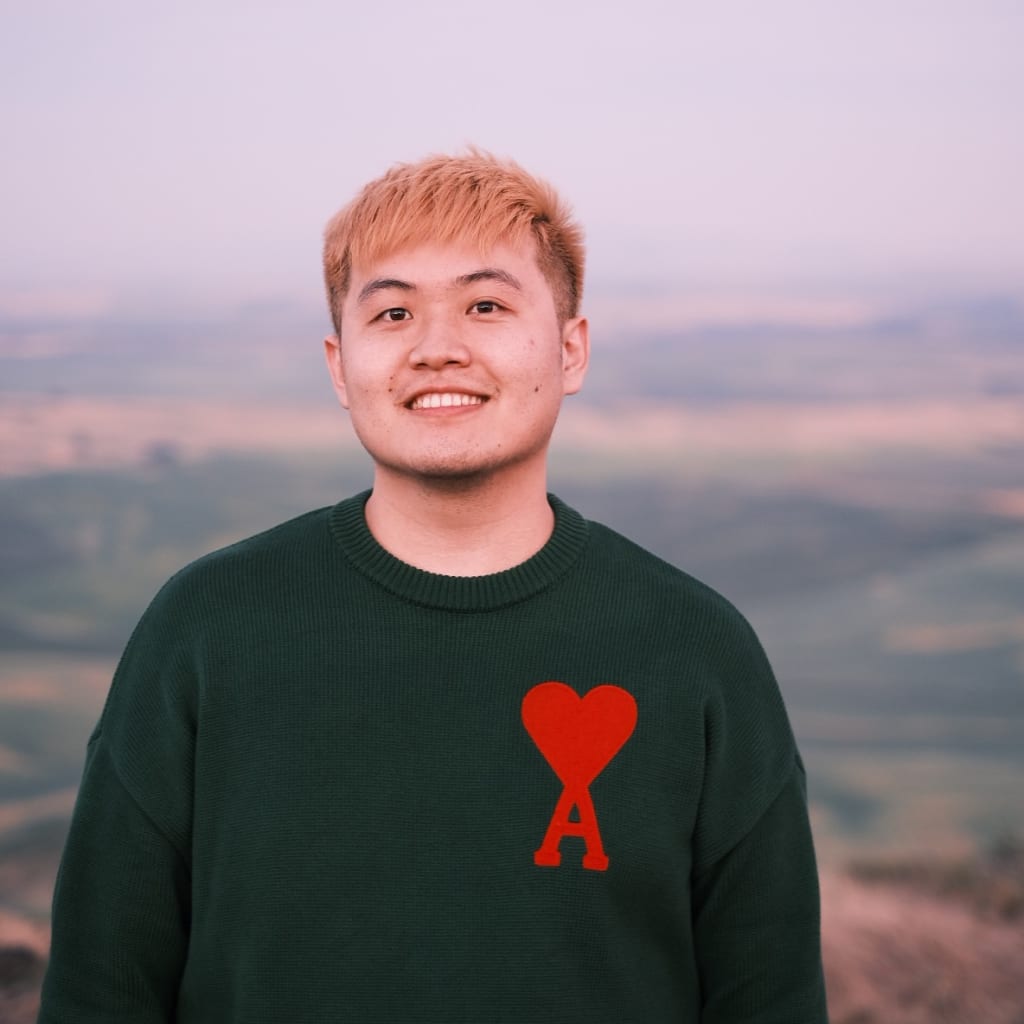
If any executive producer knows what it's like being on set, it's Hao Chen. The Los Angeles–based Head of Studio and Executive Producer specializes in mobile vertical dramas. While soap operas were popular in the 1990s, the bite-sized dramas in the 9:16 vertical format are the future of mobile filmmaking. The rapid expansion of vertical drama has positioned producers and studio leaders like Chen at the forefront of a new mobile-first storytelling ecosystem.Chen has over 10 years experience across production and post-production, and since joining GoodShort in 2023, has overseen the development and production of over 100 vertical drama series.
He currently leads GoodShort’s English-language global content slate across the United States, Canada, the United Kingdom, Turkey, and Ukraine, among other countries. While vertical dramas first saw their boom in China, Hao was among the early international producers working in the vertical drama format, and has helped scale GoodShort’s production ecosystem globally. Under his leadership, the platform rose from #4 to #3 among vertical drama apps by 2025, generating approximately $220 million in annual revenue, according to company data and industry estimates. Collectively, the series he has overseen has garnered hundreds of millions of views worldwide. Industry observers note that the rapid growth of vertical drama platforms has been driven in part by scalable production systems developed by studio leaders such as Chen.
He talks about his favorite thing being on set, awards he has won in the vertical drama space and the art of keeping everyone aligned on set. He speaks to me from Los Angeles to offer some insight into the executive producer role, and what’s next.
You are an award-winning filmmaker with over 10 years experience in the film industry. Along the way, what awards have you won?
Hao Chen: So far, the formal awards I’ve received in the vertical space include: Best Domestic Tension Award at the 2025 International Short Drama Festival for “My Husband’s Nephew Is My Guilty Pleasure.” And Award of Excellence – Best Romance at the Vertical Shorts Festival (Los Angeles, 2025) for “My Husband’s Nephew Is My Guilty Pleasure.” Both recognitions are meaningful to me, especially because that project was one I created and head-wrote, and I also directed portions of it. It was a more unconventional, cinematic vertical series, so seeing it acknowledged for both tension and romance affirmed that vertical storytelling can carry emotional complexity and craft, not just speed.
At the same time, it’s important to acknowledge that vertical drama is still a relatively new industry. Traditional awards institutions and major festivals haven’t fully caught up with the format yet. The ecosystem for recognizing excellence in mobile-native storytelling is still developing. In many ways, we’re in the early stages of building that recognition infrastructure. Just as streaming series took time to be taken seriously by major awards bodies, vertical dramas are now beginning to establish their own festivals and categories.
So while the formal award list is currently small, the broader achievement lies in helping shape a format that is still defining its standards, creatively and institutionally. As the industry matures, I expect award recognition for vertical storytelling to expand significantly. And being part of that early wave (both creatively and operationally) has been just as meaningful as the trophies themselves.
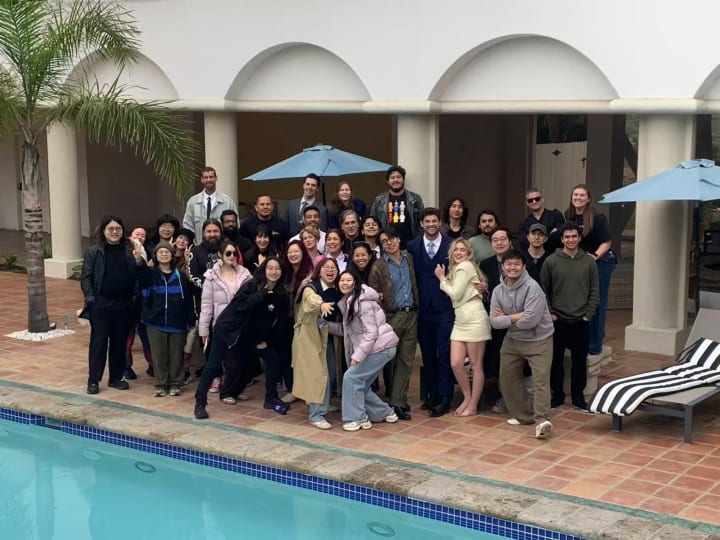
You are the person who brings these verticals to life. What is it like working on set for vertical dramas in Los Angeles?
Working on set for vertical dramas in Los Angeles feels like operating at the intersection of traditional filmmaking and startup energy. You still have the core elements of any narrative production — actors, directors, cinematographers, storytelling choices — but the pace and mindset are very different. Vertical drama moves faster. The schedules are tighter, and decisions often need to be made in real time, because the format is designed for mobile audiences who expect immediacy.
In L.A., many of the crew members and creatives come from traditional film or television backgrounds, so part of the process is adapting that craftsmanship to a new storytelling rhythm. Scenes are structured differently. Emotional beats have to land quickly. Blocking, camera work, and editing all need to serve the vertical frame and shorter attention windows.
At the same time, the collaborative spirit on set is strong. There’s often a sense that we’re working within an emerging format, which creates room for experimentation. Teams are learning how to balance cinematic quality with efficiency, and that can be energizing.
From my perspective as a producer, being on set is about helping everyone stay aligned, making sure the creative vision translates within the realities of the format, while still giving the team space to deliver performances and moments that resonate emotionally.
It’s filmmaking, but with a different tempo: one that reflects how stories are increasingly experienced in the mobile era.
How fast are these vertical drama series churned out? I’ve heard you can shoot them in a week, which is short in comparison to most other TV series, which can take months, even years, to shoot.
Vertical dramas move fast, but they’re not rushed. They’re structured for speed. At GoodShort, the typical turnaround from development to release is around three months. That includes roughly three to five weeks of pre-production, followed by seven to ten shooting days, often at a pace of about ten script pages per day. The scripts themselves are usually 70 to 100 pages, so in cumulative runtime they’re comparable to a feature film, just broken into vertical episodes. Post-production begins almost immediately during or after the shoot, and because we now have an in-house post team covering all English-language series, the editing and delivery pipeline is streamlined.
From an output perspective, we oversee over 100 productions annually across teams in Beijing, Los Angeles, and New York. That sounds intense (and it is), but it works because the system is built for repeatability. Development frameworks, budgeting templates, production pipelines, and editorial standards are standardized. So, while the pace is significantly faster than traditional TV or film, it’s less about “churning out” content and more about operating within a disciplined, high-efficiency model designed for mobile-native storytelling. Speed is built into the architecture, not improvised at the last minute.

You are known for building efficient production systems, mentoring creative teams, and guiding projects that balance emotional storytelling with commercial performance. How do you guide a creative team without being overbearing?
That balance is really about clarity, rather than control. I’ve found that creative teams don’t need someone hovering over every decision — they need a clear framework. If the emotional arc, target audience, and production parameters are defined early, most creative professionals thrive within that structure. My role is to set those guardrails, not to micromanage inside them.
In vertical drama especially, I try to anchor discussions around three fundamentals: good story, good performance, good visual presentation. If those are aligned with mobile-native pacing and audience behavior, then the team has room to explore tone, nuance, and character choices without feeling constrained.
I also ask questions rather than issue directives. Instead of saying, “This scene doesn’t work,” I might ask, “Is this beat landing emotionally within the first few seconds?” or “Does this moment deliver the payoff we promised?” That shifts the focus back to shared goals rather than personal preference. Another key is trusting department leads. When you manage large teams across multiple territories, you can’t be involved in every detail. You build strong creative leads, align on standards, and let them execute. Ultimately, guidance without being overbearing comes from alignment. When everyone understands the destination (emotionally and commercially) you don’t need to push. The team moves in that direction naturally.
How do you resolve conflict on set?
Conflict on set is inevitable; especially in vertical production where timelines are tight and emotions can run high. The key is resolving it quickly without escalating it. My first approach is to separate emotion from the issue. Most conflicts aren’t personal — they’re usually about time pressure, creative interpretation, or misaligned expectations. I try to identify what the underlying concern actually is. Is it about performance direction? Is it about coverage? Is it about schedule? Second, I bring the conversation back to the shared goal. On a vertical set, we all know the tight turnaround. I remind everyone that we’re working toward the same outcome; delivering an emotionally effective story within those parameters. When the focus shifts back to the project rather than individual positions, tension usually decreases.
Third, I make decisions when necessary. There are moments when a producer has to step in and call it. Leadership sometimes means absorbing the pressure so the team can keep moving. Because I understand both the creative and operational sides, I can usually evaluate trade-offs quickly and choose the path that protects the story and the schedule.
Finally, I follow up after the moment has passed. Quick resolution is important, but maintaining long-term trust is equally critical. A brief check-in later ensures people feel heard and respected.
In high-volume vertical production, momentum matters. My goal is always to resolve conflict in a way that preserves morale, protects the creative vision, and keeps the set moving forward.
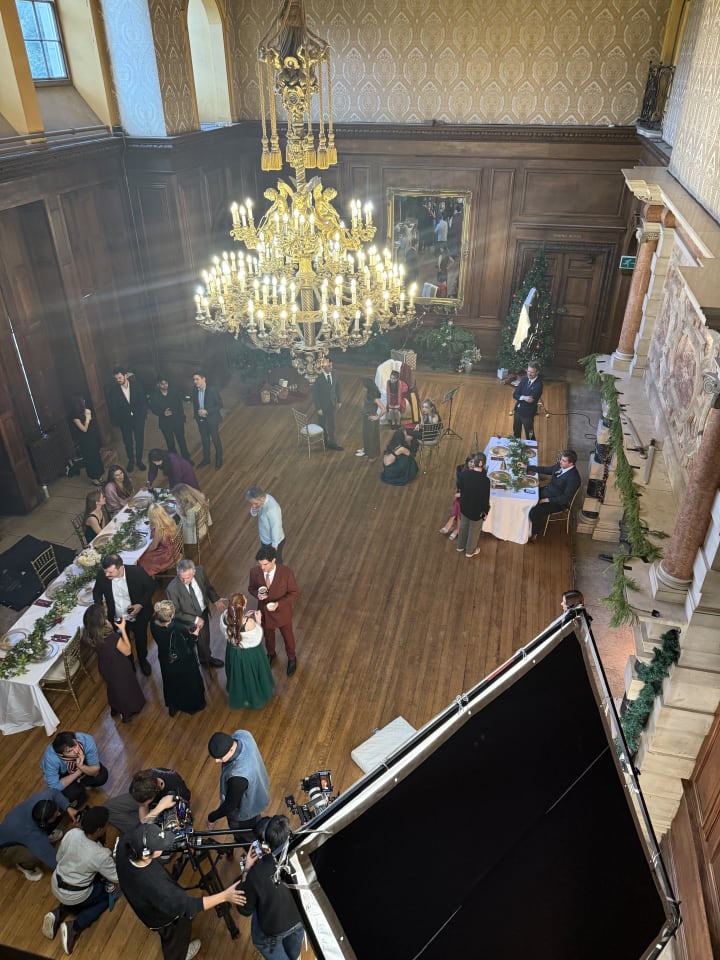
How have you helped define the creative and operational standards of a format that is reshaping the global entertainment landscape? Why is it reshaping it too?
I’ve helped define the creative and operational standards of vertical drama by treating it not as a trend, but as a distinct storytelling format with its own grammar and infrastructure.
On the creative side, we established clear principles early on: strong emotional hooks within the first moments, precise pacing tailored to mobile viewing, and cathartic narrative arcs where good ultimately prevails. We emphasized fundamentals: good story, good performance, good visual presentation, while adapting them to the vertical frame. That meant designing scripts and blocking specifically for mobile composition, not simply rotating traditional coverage.
On the operational side, I focused on building repeatable systems. Vertical storytelling moves quickly (often from development to release in about three months) so consistency requires structure. We implemented standardized development checkpoints, budgeting models, shooting frameworks, and an integrated in-house post pipeline to maintain quality control across more than 100 productions annually.
By aligning creative clarity with operational discipline, we turned what could have been high-volume chaos into scalable infrastructure. As for why vertical drama is reshaping the global entertainment landscape; it’s because it aligns with how people live now. We’re in a mobile-first era. Audiences consume stories in short intervals throughout the day. Vertical storytelling meets that behavior directly. It doesn’t compete with film or television; it fills a different emotional and temporal space. It’s also reshaping the industry economically. The format has proven that serialized narrative can be produced efficiently, distributed digitally, and monetized at scale. It lowers certain barriers to entry while expanding global collaboration.
Most importantly, it’s reshaping expectations. Viewers now expect immediacy, emotional clarity, and accessibility. Vertical drama has demonstrated that compelling storytelling doesn’t require traditional distribution models to reach tens of millions of people. In that sense, the format isn’t just growing; it’s redefining how and where narrative storytelling happens.
What’s your favorite thing about being on set?
My favorite thing about being on set is the moment when the script stops being theoretical and becomes real. You can spend weeks developing structure, refining emotional beats, and planning logistics, but there’s a specific energy when actors step into a scene and suddenly the characters feel alive. Especially in vertical drama, where emotional clarity is everything, seeing a performance land in real time is incredibly rewarding. I also love the collaboration. On set, you see every department; camera, production design, wardrobe, AD team, working in sync under time pressure. Because our schedules are tight, there’s a kind of focused intensity that brings people together. When a scene comes together efficiently and emotionally, it feels like a small victory.
Another favorite moment is when you realize something is working better than it did on the page — maybe a line reads stronger, or a performance adds nuance you didn’t anticipate. Those surprises are why being physically present matters. Ultimately, being on set reminds me why I chose this path in the first place. Systems and scalability are important, but at the core, it’s still about human performance and storytelling happening in front of a camera. That moment, when everyone holds their breath and you know the take is good, that’s my favorite part.
Follow Hao Chen on LinkedIn.
About the Creator
Lisa Rosenberg
I am a writer based in New York City writing about artists, creative leaders and entrepeneurs.
Keep reading
More stories from Lisa Rosenberg and writers in Interview and other communities.
The Great Transformation: Two Decades of Evolution in African Trade, As Told by Expert Daniel Holztreger of DH Consult
Fast forward twenty years, and the landscape has undergone a seismic shift. While challenges remain, the continent—particularly West Africa—has emerged as a dynamic hub of regional integration, digital innovation, and burgeoning industrial capacity.
By Lisa Rosenberg7 days ago in Interview
Part 2 Interview With Joe Patterson, Author Of Melanin Memoirs
This is my second interview with Joe Patterson. His 4th anniversary writing on Vocal will be in March 2026. He has one achievement on Vocal, The Other Foot. He has over 17,000 reads on Vocal since he started on Vocal in 2022. Joe Patterson is very creative poet and rapper. Joe is deep thinker and I feel it is reflected in his latest published book, Melanin Memoirs.
By Mariann Carroll25 days ago in Interview
Why I Built an AI Therapist
I’ve been a waiter, a construction worker, a DJ, a kitchen hand, a porter, a caregiver, and a supermarket cashier. I’ve washed dishes in Australia and meditated in the Himalayas. I’ve battled addictions, eating disorders, anxiety, depression, and self-destructive behavior. Before I ever sat across from a client as a psychotherapist, I had already lived a dozen lives — and nearly destroyed myself in several of them.
By Laurentis Theofanusa day ago in Interview
Writing To Succeed
If you want to find something that will help readers find your writing, possibly expand your audience, and maybe even get you noticed for other things, then you’re not alone. But how can you get it done in a world full of want-to-be writers? Look less at what you’re writing now, and more at what other writers have used to boost their views and reads.
By Jason Ray Morton 3 days ago in Writers

Comments