
My Body Found the Red Flags Before My Brain Did
The chemistry of a collapsing marriage and the weight of $C_{21}H_{30}O_5$.
The Weight of the Interior: An Unfinished Map of a Marriage
The stiff blue cotton of my nursing scrubs still smells like the clinical lab, a scent that shouldn’t feel like a relief, but it does. There is a brown cardboard box sitting on the laminate counter, its tape shredded open by a house key because he couldn't wait the ten minutes I asked for while I was finishing a call.
We were happy once or I’ve convinced myself we were so I don't have to pack but the silence now is a different animal. I was studying for exams when I found the chemical formula for cortisol, C_{21}H_{30}O_5, and realized my own body is basically a laboratory for slow-motion collapse, a weight pressing down just beneath my breastbone every single night.
This cortisol environment is a permanent weather system in our house, a baseline of readiness that keeps my shoulders locked in a shrug even when the house is empty. The body records the data points of the relationship long before the brain is willing to label it, and I’ve spent so much time in this state of domestic hyper-vigilance that the concept of relaxation feels like something I only read about in textbooks.
It is the physical cost of existing in a space where every sound is a potential alarm, a transition from the heavy ache in my ribs to the frantic mental effort required to simply stand in the same room.
I have become an architect of the unspoken, organizing the geometry of my thoughts into careful scripts before the door even clicks shut behind him. I have to map out the conversation in my head calculating how to frame a request so it doesn't look like a demand or a pinning of blame because spontaneity has become a luxury we can no longer afford.
It is a survival mechanism, a way to move through the rooms without triggering the defensive wall he builds the second I mention the word commitment or the fact that our bedroom has been a museum of unused furniture for four years.
I find myself late at night scrolling through the characteristics of healthy and unhealthy relationships, trying to reconcile the "best friend" narrative I tell my mother with a partner who reacts with rage the second intimacy is broached.
He asks for a three-month window for "improvement" or cites his low testosterone and the antidepressants as if they are a partition I’m not allowed to look behind. These excuses function as a buffer, a way to push the truth back a little further while I remain the one holding the structural weight of everything we haven't said.
There is a particular desperation in trying to apply logic to a foundation that has already turned to silt. I tried implementing some weekly structure I'd found because I was desperate for a rulebook that could make the silence less heavy, but it was fine, it was fine.
We go through the motions of checking boxes because it’s easier than facing the actual difference between healthy and unhealthy relationships. It becomes absurd, really, the way he views me getting up to let the dog out to go potty while we are cuddling as a personal attack on his needs, a slight against his status.
Then he’s gone again, into the military, military, military absence pattern of a geo bachelor, and the house suddenly feels twice as large and infinitely more peaceful. Identifying healthy and unhealthy relationships should be effortless when your husband is jealous of a dog’s basic biology, but I still spend my mornings making excuses for him while I drink my coffee, telling myself it's just the stress of his six-day work weeks, that it’s fine, it really is fine.
Words have started to feel like a distance we cannot bridge, a gap widened by the fact that I am still a student while he has a decade of life and an established career on me. I even found an article about exactly which words close men off and for a single evening, it actually seemed to yield a result that looked like connection.
But the knots in my stomach return the moment he pulls into the driveway and the signs of healthy and unhealthy relationships become impossible to ignore.
I have seen the examples of healthy and unhealthy relationships in the way his father speaks to his mother, that same dismissive, snippy tone that makes me want to make myself smaller and smaller until I disappear into the floorboards. There is an absolute bliss when he is away for a holiday and I can breathe without checking the barometer of his face but then he returns and the weight on my chest settles back in like an unwelcome tenant.
I find myself searching for the line where healthy and unhealthy relationships blur together, realizing I am the only one trying to keep the ledger balanced.
I am stuck in the realization phase, suspended in the amber of knowing without having the momentum to actually leave. I excuse the silent treatment by saying he simply gets it from his dad, a generational defense that allows me to externalize the blame so I don't have to look at the 5 qualities of an unhealthy relationship currently sitting across from me on the sofa.
I read through the 10 signs of healthy and unhealthy relationships and realize I have checked every box on the wrong side of the ledger, but then he laughs at a joke or helps with the dishes and I sink back into the script I have rehearsed until I almost believe it.
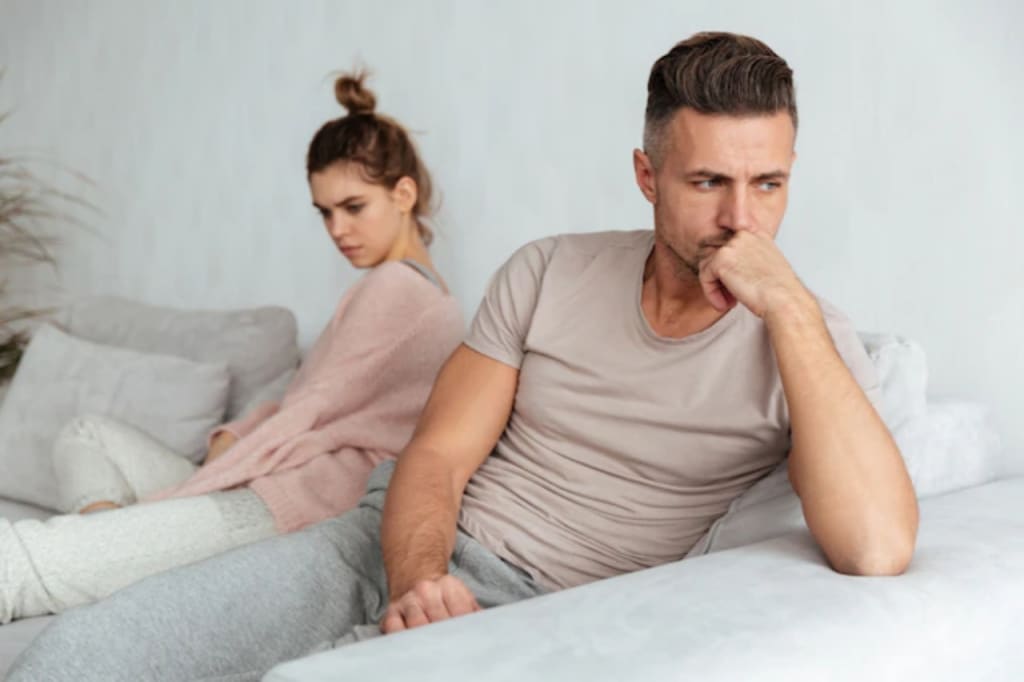
The red flags are buried under the Amazon boxes and the pile of laundry I’m too tired to fold, hidden by the fact that he has never been physically abusive, so I tell myself it must be survivable. I am waiting for a crisis that has already happened, a slow-motion crash of a life that I am still trying to manage from the passenger seat.
I hear the key in the lock now and the cat jumps off the counter and I find myself straightening my back, preparing the face I need to wear for the next few hours until I can finally, hopefully, fall asleep and the weight on my chest
About the Creator
Brooks Ghost Max
I'm just a running shoe geek with a serious addiction to foam. My current obsession? The Brooks Ghost Max. I spend my days analyzing stack heights and heel drops to help you decide if that $150 price tag is actually worth it.
Keep reading
More stories from Brooks Ghost Max and writers in Families and other communities.
What Is the Hero Instinct in Men?
Let me tell you the truth. This "hero feeling" that men have isn't created in some grand moment. It comes from small childhood habits that we never understand, but they linger inside. There wasn't anything special in my house; it just happened that if something small got stuck, something needed to be picked up, or a screw came loose, people would look at me. No one taught me by saying, "You're responsible," but the tone was, "You'll do it, right?"
By Brooks Ghost Max 3 months ago in Families
Why Is Playa Delfines One of Cancun’s Most Iconic Public Beaches
From the moment I first laid eyes on Playa Delfines, I was captivated by its wide stretches of white sand and the vibrant turquoise waters that seemed to go on forever. There’s a reason this beach is considered one of Cancun’s most iconic public spots, and it’s not just because of the scenery. Playa Delfines offers an experience that blends natural beauty, accessibility, and unforgettable moments for visitors of all ages.
By Amanda Glen6 days ago in Families




Comments
There are no comments for this story
Be the first to respond and start the conversation.