
Peter Ayolov’s Publications
An Agent From The Civil Cold War


Peter Ayolov is a media theorist and lecturer at Sofia University 'St. Kliment Ohridski', Faculty of Journalism and Mass Communication. His research focuses on the political economy of communication, propaganda models, digital media, narrative structures, and the transformation of language in contemporary technological environments. His work examines how digital communication systems organise dissent, amplify outrage, and reshape the relationship between media, public opinion, and political power.
Peter Ayolov's Books
The Economic Policy of Online Media: Manufacture of Dissent (2024). This book explores the distortion of communication online through the theory that the economic logic of digital media produces and organises dissent. It argues that conflict, outrage, and fragmentation are not side effects of platform media but central features of their business model.
The Planned Obsolescence of Language (2026). This book is the first part of the first volume, The Conspiracy of Speech, in The Miscommunication Trilogy. It introduces the core argument that modern communication systems gradually erode linguistic clarity, shared meaning, and trust.
The Conspiracy of Speech (2026). This book is the second part of Volume I in The Miscommunication Trilogy. It develops the argument that speech increasingly functions not as a medium of truth but as a field of manipulation, ideological conflict, and performative communication.
The Anti-Language Divide (2026). This book is a sustained philosophical and linguistic investigation of anti-language and social division. It examines how oppositional forms of speech create boundaries of belonging, exclusion, and symbolic conflict in modern societies.
The Perverse Language (2026). This book is the fourth and final part of Volume I in The Miscommunication Trilogy. It examines the ways language becomes detached from sincerity, truth, and communicative responsibility, turning miscommunication into a structural condition of public life.
The Media Scenario: Scriptwriting for Journalists (2026). This book explores how contemporary reality is no longer merely reported but increasingly scripted through media narratives. It argues that journalism now operates through scenarios, roles, and unfolding narrative structures in which audiences become participants.
Moral Outrage Networks: The Sociology of Digital Anger (2026). This book examines how anger has become one of the dominant emotional mechanisms of digital media. It argues that platform communication systems amplify, organise, and monetise outrage, turning moral anger into a structural feature of networked society.
Narrative Affect: The End of Public Opinion (2026). This book develops a theoretical framework for understanding contemporary politics and media through emotion-laden narratives rather than stable public opinion. It argues that affective storytelling increasingly displaces rational deliberation as the organising principle of public life.
The Ludicrous Culture: Homo Ludens 2.1 (2026). This book develops a philosophical argument about the transformation of culture into performance, play, and staged participation. It examines how digital society increasingly turns seriousness into spectacle and social life into ludic interaction.
Identity Industrial Complex: The Political Economy of the Human Image (2026). This book examines how the human image becomes an economic and political resource in digital culture. It argues that identity is increasingly shaped, circulated, and exploited through visual economies of recognition.
Copyrighting the Self: Manufacturing Mirror Selves (2026). This book develops the argument that contemporary identity is treated as a form of symbolic property. It explores how the self becomes reproducible, marketable, and endlessly reflected through digital systems of image production.
The Shapes of the Self: Identity and Recognition in Visual Space (2026). This book argues that the self does not simply appear in images but increasingly comes into being through visual shaping and recognition. It examines identity as a product of spatial, symbolic, and mediated visibility.
Empires of Writing: The Rise of Scripted Civilisation (2026). This book offers a reinterpretation of civilisation through the history of writing. It argues that political order, institutional memory, and imperial expansion depend on the material inscription of language in texts, documents, and administrative systems.
The Reflexivity Trap: Language, Prophecy, and the Perils of the Open Society (2026). This book develops the argument that reflexive societies can become trapped in self-referential loops that prevent genuine cultural renewal. It examines the limits of openness when critique, prophecy, and self-correction become permanent mechanisms of instability.
Legiathan: The Abstract Theory of Power (2026). This book is written as a theoretical investigation of power in abstract form. It examines domination, authority, and structural control as conceptual rather than merely historical or institutional problems.
Peter Ayolov's Academic Articles
Banal Globalism vs. Electronic Nationalism, National Culture and Internet (2018). This article examines how the internet simultaneously globalises communication and strengthens national identity. It analyses the tension between transnational media flows and digitally intensified nationalism.
The End of Truth and the Technology of Online Media (2019). This article explores how digital media technologies reshape the conditions under which truth is produced and contested. It argues that online environments facilitate the spread of competing narratives and undermine stable standards of verification.
The Politics of Onirofilm, Collapse of Reality in Aldani's Buonanotte, Sofia (2022). This article examines immersive media through Lino Aldani's fictional concept of onirofilm. It analyses how dream-like media experiences destabilise the boundary between reality and simulation.
All That Jazz, Discovering the Meaninglessness of Life (2022). This article reads Bob Fosse's film as a meditation on mortality, artistic exhaustion, and existential emptiness. It presents the film as a self-reflexive exploration of performance and the limits of meaning.
Serious Thoughts on A Serious Man (2022). This article explores the philosophical and existential themes of the Coen Brothers' film. It examines suffering, contingency, and the search for meaning in a world resistant to explanation.
Leviathan by Zvyagintsev and Leviathan of Hobbes (2022). This article places Zvyagintsev's film in dialogue with Hobbes's political philosophy. It explores the relationship between state power, corruption, and the vulnerability of the individual.
Cherchez la femme, The Cinematic Death of Oedipus (2022). This article revisits the Oedipus myth in modern cinema and psychoanalytic culture. It examines how film reworks classical structures of guilt, desire, and symbolic authority.
The Soft Power of Media Research, The Need for a New Paradigm for Mass Communication (2022). This article argues that new moral and technological conditions require a revised theory of mass communication. It proposes that classical models are no longer sufficient for analysing digital media power.
PR and Public Opinion - Zdravko Raykov and Techniques for Manufacture of Consent (2022). This article revisits Zdravko Raykov's ideas about public opinion and media influence. It examines how public relations techniques contribute to the organised shaping of consent.
Bidirectionality in Public Opinion: Ventseslav Bondikov and Manipulation as a Part of Communication (2022). This article analyses Bondikov's theory that manipulation in communication is bidirectional rather than one-sided. It challenges simplified models in which influence flows only from elites to audiences.
The Dynamics of Public Opinion and the Manufacture of Consent - The Ideas of Boris Chakalov in the 21st Century (2022). This article reconsiders Boris Chakalov's ideas on public opinion in light of digital communication. It argues that classical theories remain relevant for understanding contemporary media manipulation.
The Moral Panic in the Communication Spiral, Todor Petev and the Storytelling of the Mass Media (2022). This article examines how media storytelling amplifies anxiety and social fear. It uses Todor Petev's ideas to analyse moral panic as a communicative process.
Strategies and Wars for Public Opinion, Chavdar Hristov and the Effects of Pseudo-Personal Communication (2022). This article explores how media simulate personal communication in order to influence mass audiences. It examines pseudo-personal communication as a strategic mechanism in public opinion warfare.
Parrhesia and the Public Value of Truth-Telling (2022). This article revisits Foucault's concept of parrhesia as a democratic practice of courageous truth-telling. It argues that honest speech remains essential yet fragile in contemporary public life.
The Planned Obsolescence of Communication (2022). This article examines how communication systems degrade meaning through speed, excess, and symbolic overproduction. It argues that obsolescence is built into contemporary communication itself.
Second-degree Cybernetics and Kayfabe Politics (2022). This article analyses the convergence of self-referential systems theory and performative political spectacle. It argues that politics increasingly operates through staged authenticity and knowingly maintained illusion.
Media Hostility Index, The Dissent of the Governed (2022). This article examines hostility toward media institutions as a measure of distrust and dissent. It treats media hostility as a revealing symptom of legitimacy crises in democratic societies.
The Language of Russophilia / Russophobia (2022). This article analyses the linguistic construction of opposing geopolitical identities. It examines how emotional and ideological vocabularies shape political allegiance and hostility.
Doublespeak and Conflict Propaganda (2022). This article examines doublespeak as a central mechanism of conflict propaganda. It shows how ambiguous and manipulative language obscures responsibility while intensifying ideological struggle.
The Effect of the "Lying Press" (Lügenpresse) (2022). This article analyses the contemporary use of the term Lügenpresse and its political effects. It examines how accusations against the media become tools of delegitimisation and distrust.
The "Bulgarian Connection" in the Attempt on Pope John Paul II (2022). This article examines the geopolitical narratives surrounding the alleged Bulgarian connection in the 1981 assassination attempt. It analyses the interaction of propaganda, media framing, and Cold War politics.
Cognitive Infiltration and Dissidents' Dissent (2022). This article analyses Cass Sunstein's theory of cognitive infiltration and its implications for democratic communication. It explores how dissenting groups may be influenced, managed, or neutralised through information strategies.
Trust and Dissent: Social Capital in the Age of Digital Capitalism (2022). This article examines the relationship between trust, democracy, and dissent in digitally mediated societies. It argues that platform capitalism transforms the foundations of social cohesion and legitimacy.
Digital Capitalism and Decorative Democracy (2022). This article explores how democratic participation becomes increasingly symbolic under digital capitalism. It argues that democracy risks turning into a decorative performance rather than an effective system of political agency.
Manufacture of Dissent and the Theory of Mass Communication (year not provided in the information supplied). This article revisits major theories in mass communication and sociology through the lens of the manufacture of dissent. It argues that contemporary media systems are better understood as producing organised conflict than passive consensus.
Dysfunctions in the Propaganda Model: From Manufacturing Consent to Manufacturing Dissent (2022). This article critiques the classical propaganda model and argues that digital media increasingly generate conflict rather than agreement. It proposes a revised framework for analysing propaganda in networked societies.
The "New World Information Order" Dystopia (2022). This article revisits debates on the New World Information and Communication Order from the perspective of platform power. It argues that old hopes for global media balance have given way to new forms of digital concentration.
The Rise of Dissent in the Network Society (2022). This article examines how networked media transform the structure and visibility of dissent. It argues that digital systems intensify ideological fragmentation and collective mobilisation.
The New Paradigm of Mass Communication (2022). This article proposes a new theoretical framework for understanding contemporary mass communication. It argues that older broadcast models must be replaced by approaches centred on networks, participation, and conflict.
Manufacture of Dissent: The Civil Cold War Online (2022). This article argues that digital mass media transform propaganda into internal social conflict. It describes a condition in which societies become divided into permanently antagonistic communicative camps.
Rage-baiting and Anger-clicking: The Dissent Factory of Online Media (2025). This article analyses rage-bait and anger-clicking as defining mechanisms of online engagement. It argues that digital media increasingly function as factories of reactive dissent.
Monetization of Anger, Propaganda 2.0 Model (2025). This article examines how propaganda evolves when anger becomes economically valuable. It proposes the Propaganda 2.0 model to explain the monetisation of emotional mobilisation in digital media.
From Moral Outrage to Rage-Bait: The Cassandra Warning (2025). This article investigates the transformation of moral outrage into rage-bait under platform conditions. It presents this shift as a warning about the future trajectory of digital communication.
The Planned Obsolescence of Language: Miscommunication as a Structural Condition (2025). This article introduces the concept of the planned obsolescence of language as a framework for understanding communicative decay. It argues that miscommunication is not accidental but systemic.
The Shaped Self: Images Without History (2026). This article argues that e-democracy must be understood not as a technical upgrade of democratic participation but as a transformation of citizenship through visual formatting. It proposes the shaped self as the figure of political existence in an image-dominated environment.
After Language: The Spatial Turn of Intelligence (2026). This article argues that the moment large language models begin to "read" better than humans marks a major shift in the history of intelligence. It proposes a move from language-centred cognition toward spatial and post-linguistic forms of understanding.
Longitude of Power: The Lesson from Star Wars, Dune and Foundation (2026). This article develops the concept of the longitude of power to analyse how authority decays through duration, overextension, and internal exhaustion. It uses science fiction as a laboratory for thinking about imperial decline.
The Conspicuous Elite: How Authority Learned to Perform Itself (2026). This article argues that the power elite has reconstituted itself as a conspicuous platform elite. Authority is no longer merely hidden behind institutions but publicly performed through visibility and spectacle.
Chris Knight vs. the Chomsky Myth: Science, Dissent, and the Pentagon's Shadow (2026). This review examines Chris Knight's lecture on Chomsky and the political context of generative linguistics. It explores the tension between scientific authority, Cold War institutions, and revolutionary dissent.
The Future of Mass Media, Paradigm Change at the End of Information Order (2026). This article examines the future of mass media at the point where the twentieth-century information order reaches its limits. It argues that media power is shifting from information distribution to attention control and emotional mobilisation.
Noam Chomsky and the End of Counterculture: Performing Dissent and 'Sunsteinization' (2026). This article theorises the transformation of dissent in the digital age through the figure of Chomsky. It examines how critical voices can be absorbed into systems of managed opposition.
Vonnegut's Shape of Stories: Why Even Computers Understand Stories (2026). This article connects Vonnegut's theory of story shapes with the new paradigm of mass communication and the media scenario. It argues that narrative structures are now legible not only to humans but also to computational systems.
Life as LARP: How Media Turn Reality into a Playable Scenario (2026). This article argues that media increasingly transform reality into a participatory scenario resembling live-action role-play. Social life becomes organised through scripts, roles, and immersive narrative participation.
The Attention Heist: How Platforms Rewrite Time (2026). This article analyses how platforms restructure temporal experience by fragmenting attention and accelerating reaction. It argues that the capture of time is central to the power of digital media.
From News to Gameplay: When Platforms Turn Society into Plot (2026). This article argues that platforms convert social reality into an interactive plot. News becomes gameplay, and audiences are drawn into ongoing narrative escalation.
The Art of Scriptwriting: From Screenplay to Social Control (2026). This article examines how scriptwriting techniques migrate from cinema into political and social communication. It argues that narrative design has become a mechanism of behavioural coordination and control.
How Media Writes Us: Scriptwriting in the Age of Permanent Drama (2026). This article explores how individuals increasingly understand themselves through media-generated scripts. Identity is shaped within environments of permanent narrative tension and performance.
From Narrative to Psychodrama: Why the News No Longer Ends and the Audience No Longer Watches (2026). This article argues that contemporary news has shifted into ongoing emotional psychodrama. Audiences no longer remain spectators but become participants in continuous mediated conflict.
The Scripted Life of Public Truth: From Pseudo-Events to Pseudo-Worlds (2026). This article argues that public truth is increasingly structured through staged events and scripted worlds. It extends the theory of pseudo-events into a broader account of mediated reality.
The Audience Is the Story: When the Mass Audience Becomes a Participant (2026). This article examines how the audience becomes part of the narrative structure of media itself. Social platforms transform reception into participation and spectators into characters.
Stories Without End: Media Narratives in the Age of Networks (2026). This article analyses how media narratives lose clear endings in networked communication. Stories become continuous, recursive, and permanently open to participation.
The Rise of the Media Scenario: From Storytelling to Stagecraft (2026). This article develops the concept of the media scenario as a key paradigm of contemporary communication. It argues that media no longer simply tell stories but actively stage reality.
Why Anger Exists: An Evolutionary Alarm in the Age of Digital Amplification (2026). This article examines anger as an evolutionary mechanism transformed by platform media. It argues that digital systems exploit and intensify this alarm function for communicative gain.
When Outrage Becomes Infrastructure: The Propaganda 2.1 Model (2026). This article develops the Propaganda 2.1 model as a theory of outrage-based communication. It argues that dissent is now infrastructurally organised through emotional amplification.
When Justice Feels Good: Moral Anger, Pleasure, and the Governance of Dissent (2026). This article explores the emotional rewards of righteous anger. It argues that pleasure in moral judgment becomes a mechanism through which dissent is governed.
The Sociology of Moral Anger in Networked Societies (2026). This article develops a sociological account of moral anger under digital conditions. It argues that networked systems transform private emotions into collective political energy.
The Rationality of Anger: When Reason Becomes Fuel for Dissent (2026). This article examines how rational argument can intensify rather than pacify outrage. It argues that reason itself may become fuel for digitally amplified dissent.
The Morality of Anger: From Righteous Fury to Rage Economy (2026). This article analyses the transformation of moral anger into an economic resource. It argues that digital media turn righteous fury into measurable and profitable engagement.
The Grammar of Outrage: The Industrialisation of Moral Anger (2026). This article examines the linguistic structures through which outrage is reproduced. It argues that contemporary media rely on a repeatable grammar of emotional escalation.
The Business of Being Angry: Anger Management in the Outrage Economy (2026). This article explores anger as a managed commodity in digital communication. It argues that outrage is not only expressed but strategically organised and sustained.
Rage as Revenue: How Anger Became the Currency of Digital Media (2026). This article analyses the monetisation of anger in the attention economy. It argues that emotional provocation functions as a currency of platform profitability.
Outrage Exploitation Networks: The Industrial Complex of Moral Anger (2026). This article introduces the concept of outrage exploitation networks. It argues that digital systems have created an industrial complex built around the circulation of anger.
Manufacturing Moral Anger, Networks of Conspicuous Morality (2026). This article examines the relationship between outrage and public moral display. It argues that moral signalling becomes a visible networked performance of identity.
Managed Moral Outrage: How Digital Media Govern Dissent (2026). This article examines how digital media channel and regulate anger. It argues that outrage becomes governable when it is organised through platform logics.
From Moral Anger to Managed Outrage: How Digital Media Govern Dissent (2026). This article traces the movement from spontaneous moral anger to systemically managed outrage. It argues that dissent is increasingly shaped by infrastructures rather than intentions.
From Feeling to Function: Anger as Infrastructure in Digital Societies (2026). This article argues that anger has become a functional component of digital systems. Emotion is transformed into infrastructure through repetition, amplification, and monetisation.
Decorative Democracy: How Digital Feudalism Manufactures Dissent and Moral Anger (2026). This article examines digital feudalism as a system that converts democracy into spectacle. It argues that dissent and outrage are built into this decorative political order.
Cultivated Rage: How Modern Societies Learned to Organise Anger (2026). This article traces the social organisation of anger from moral passion to communicative instrument. It argues that modern societies increasingly cultivate rage rather than merely experience it.
Inertia-Production, Propaganda 2.1, and the Political Economy of Slopaganda (2026). This article develops a bridge between slopaganda and the Propaganda 2.1 model. It argues that low-quality, repetitive symbolic production has become central to digital propaganda.
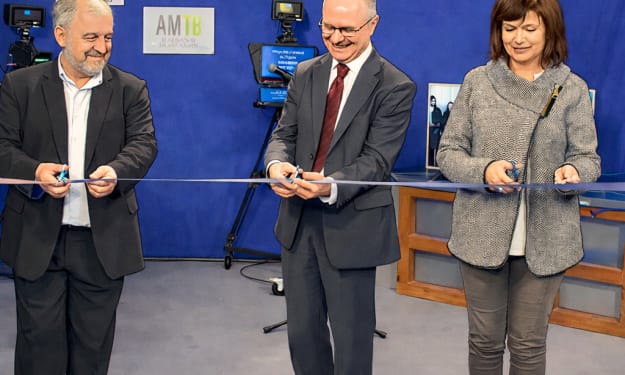
From Youth in Action to Administrative Silence, How the European Student Television Network (AMTV) Experiment Was Erased (2026). This article reconstructs the institutional and pedagogical history of the European Student Television Network experiment. It analyses how bureaucratic inertia can erase innovative academic media initiatives.
The Unique Case of Alma Mater TV: A Singular Model College Television (2026). This review examines Alma Mater TV as a distinctive Bulgarian model of student television. It highlights its educational and institutional significance within media training.
Vampires of Attention: The Celebrity Exploitation Machine and the Economy of Digital Sacrifice (2026). This article examines celebrity culture as an extraction system within the attention economy. It argues that public figures become consumable symbolic sacrifices in digital media.
Propaganda 2.1 Model, Manufacture of Dissent and Monetisation of Outrage (2026). This article presents Propaganda 2.1 as a theoretical extension of the manufacture of dissent. It integrates propaganda, platform economics, and outrage monetisation into one framework.
The Dao of Wittgenstein, The Planned Obsolescence of Wisdom (2026). This article develops the concept of the planned obsolescence of wisdom through a dialogue between Wittgenstein and Daoist thought. It argues that reflection and wisdom are displaced by the speed and noise of contemporary communication.
From Eros to Thanatos and Back: How the Nineteenth Century Managed Aggression (2026). This review examines nineteenth-century attempts to regulate aggression and hatred. It situates those efforts within broader questions of civilisation, emotional discipline, and modernity.
When the Self Becomes Language: Care of the Self and the Metalinguistic Collapse of Subjectivity (2026). This article brings Foucault's care of the self into dialogue with the metalinguistic condition of contemporary subjectivity. It argues that the self increasingly collapses into language about itself.
Talking Silence, Those Who Know Do Not Speak (2026). This article develops a theory of silence as a structural condition of meaning. It argues that silence becomes a necessary counter-practice in a world overwhelmed by communicative excess.
Peter Ayolov's Web Articles
The Shaped Self: Images Without History (2026), Vocal Media.
This article argues that e-democracy must be understood not simply as a technological improvement of democratic participation but as a transformation of citizenship through visual representation. Political identity increasingly appears through images, interfaces, and recognisable visual forms rather than historical continuity. The article introduces the concept of the "shaped self" to describe individuals whose political presence is structured by media visibility.
After Language: The Spatial Turn of Intelligence (2026), Vocal Media.
This article examines the moment when large language models begin to process and interpret texts more efficiently than human readers. It argues that this shift signals a transformation in the history of intelligence itself. The essay proposes that human cognition may move toward spatial, practical, and post-linguistic forms of understanding.
Longitude of Power: The Lesson from Star Wars, Dune and Foundation (2026), Vocal Media.
This article develops the concept of the "longitude of power" to analyse how authority decays across long historical durations. Science-fiction empires are used as analytical models for understanding the relationship between legitimacy, expansion, and institutional fatigue. The article suggests that power collapses not only through defeat but through temporal exhaustion.
The Conspicuous Elite: How Authority Learned to Perform Itself (2026), Vocal Media.
This article revisits C. Wright Mills's theory of the power elite in the context of platform society. It argues that contemporary elites operate through strategic visibility rather than secrecy. Authority becomes a performance constantly staged in digital public space.
Chris Knight vs. the Chomsky Myth: Science, Dissent, and the Pentagon's Shadow (2026), Vocal Media.
This article analyses Chris Knight's critique of Noam Chomsky and the institutional environment of Cold War linguistics. It examines the tension between scientific prestige and political dissent. The text frames this conflict as a case study of the relationship between knowledge production and geopolitical power.
The Future of Mass Media: Paradigm Change at the End of Information Order (2026), Vocal Media.
This article examines how the twentieth-century information order is dissolving under the pressures of digital media systems. It argues that media power is shifting from information distribution to attention management and emotional mobilisation. The study proposes that a new communication paradigm is emerging beyond the classical information society.
Noam Chomsky and the End of Counterculture: Performing Dissent and "Sunsteinization" (2026), Vocal Media.
This article explores how dissent is transformed in digital political environments. It examines how figures of opposition can become institutionalised within systems of managed criticism. The concept of "Sunsteinization" is used to describe the absorption of dissent into governance structures.
Vonnegut's Shape of Stories: Why Even Computers Understand Stories (2026), Vocal Media.
This article revisits Kurt Vonnegut's theory that narratives follow recognizable emotional patterns. It argues that such structures are so fundamental that even computational systems can detect them. The article connects storytelling patterns with the new paradigm of mass communication.
Life as LARP: How Media Turn Reality into a Playable Scenario (2026), Vocal Media.
This article argues that contemporary media transform reality into participatory narrative environments similar to live-action role-playing games. Individuals increasingly perform roles within scripted media scenarios. The concept of "life as LARP" describes the gamification of social reality.
The Attention Heist: How Platforms Rewrite Time (2026), Vocal Media.
This article examines how digital platforms restructure human attention and temporal perception. Constant notifications, algorithmic feeds, and engagement metrics fragment time into short cycles of reaction. The study argues that the capture of time has become a central mechanism of media power.
From News to Gameplay: When Platforms Turn Society into Plot (2026), Vocal Media.
This article argues that news increasingly operates as a continuous interactive narrative rather than as episodic reporting. Platforms convert social events into storylines in which audiences actively participate. The result is a gamified public sphere structured around narrative escalation.
The Art of Scriptwriting: From Screenplay to Social Control (2026), Vocal Media.
This article examines how narrative techniques developed in cinema migrate into political communication and media strategy. Scriptwriting becomes a model for structuring social events and public perception. The study suggests that storytelling functions as a tool of coordination and influence.
How Media Writes Us: Scriptwriting in the Age of Permanent Drama (2026), Vocal Media.
This article explores how media narratives shape identity and behaviour. Individuals increasingly interpret their lives through roles provided by media culture. The essay proposes that the self becomes a character within the dramaturgy of contemporary communication.
From Narrative to Psychodrama: Why the News No Longer Ends and the Audience No Longer Watches (2026), Vocal Media.
This article argues that news media have shifted from narrative reporting toward continuous emotional performance. The audience becomes emotionally and socially involved in unfolding public drama. Journalism turns into a form of collective psychodrama.
The Scripted Life of Public Truth: From Pseudo-Events to Pseudo-Worlds (2026), Vocal Media.
This article extends the concept of pseudo-events into a broader theory of mediated reality. Entire media environments function as staged narrative worlds. Public truth emerges from the interaction of scripts, roles, and audience participation.
The Audience Is the Story: When the Mass Audience Becomes a Participant (2026), Vocal Media.
This article examines the transformation of audiences from spectators into actors within media narratives. Social platforms encourage users to co-produce the stories they consume. The audience itself becomes part of the narrative structure.
Stories Without End: Media Narratives in the Age of Networks (2026), Vocal Media.
This article analyses how networked communication eliminates the traditional beginning and end of media stories. Narratives become continuous processes evolving through collective interaction. Endless storytelling becomes a structural feature of digital media culture.
The Rise of the Media Scenario: From Storytelling to Stagecraft (2026), Vocal Media.
This article introduces the concept of the media scenario as a key framework for analysing contemporary communication. Media organisations increasingly stage events rather than merely report them. Communication becomes a form of narrative stagecraft.
Banal Globalism vs. Electronic Nationalism, National Culture and Internet (2018), Vocal Media. This article examines the tension between globalisation and the resurgence of digitally mediated national identities. It argues that the internet simultaneously universalises communication while strengthening symbolic expressions of national culture. The study analyses how online environments transform nationalism into a continuous everyday presence.
The End of Truth and the Technology of Online Media (2019), Vocal Media. This article explores how digital media technologies reshape the production and circulation of truth. It argues that algorithmic distribution systems multiply competing narratives and weaken shared standards of verification. The study examines how technological infrastructures contribute to the emergence of post-truth politics.
The Politics of Onirofilm, Collapse of Reality in Aldani's 'Buonanotte, Sofia' (2022), Vocal Media. This article analyses Lino Aldani's concept of the onirofilm as a metaphor for immersive media. It explores how simulated experiences blur the boundary between dream and reality. The study suggests that contemporary media increasingly reproduce this condition of perceptual uncertainty.
All That Jazz, Discovering the Meaninglessness of Life (2022), Vocal Media. This article interprets Bob Fosse's film All That Jazz as a meditation on mortality and artistic exhaustion. It explores the relationship between creative ambition and existential emptiness. The analysis presents the film as a reflection on performance and the limits of meaning.
Serious Thoughts on "A Serious Man" (2022), Vocal Media. This article analyses the philosophical themes of the Coen Brothers' film A Serious Man. It examines questions of suffering, randomness, and the search for moral order. The study situates the narrative within Jewish philosophical and existential traditions.
Leviathan by Zvyagintsev and Leviathan of Hobbes (2022), Vocal Media. This article places Andrei Zvyagintsev's film Leviathan in dialogue with Thomas Hobbes's political philosophy. It explores the relationship between state power, corruption, and individual vulnerability. The analysis presents the film as a contemporary allegory of sovereign authority.
Cherchez la femme, The Cinematic Death of Oedipus (2022), Vocal Media. This article revisits the Oedipus myth through modern cinema. It examines how film narratives reinterpret psychoanalytic and mythological structures. The analysis argues that contemporary storytelling transforms classical symbolic patterns.
The Soft Power of Media Research, The Need for a New Paradigm for Mass Communication (2022), Vocal Media. This article argues that traditional theories of mass communication are insufficient for understanding digital media environments. It proposes a new analytical framework for studying communication in networked societies. The study emphasises the role of media research as a form of soft power.
PR and Public Opinion - Zdravko Raykov and Techniques for Manufacture of Consent (2022), Vocal Media. This article revisits the work of Zdravko Raykov on public relations and public opinion formation. It analyses how communication strategies influence collective perception. The study connects Raykov's ideas with contemporary propaganda analysis.
Bidirectionality in Public Opinion: Ventseslav Bondikov and Manipulation as a Part of Communication (2022), Vocal Media. This article examines Bondikov's theory that manipulation in communication is bidirectional. It argues that influence flows simultaneously between elites and audiences. The analysis challenges simplified one-directional models of propaganda.
The Dynamics of Public Opinion and the Manufacture of Consent - The Ideas of Boris Chakalov in the 21st Century (2022), Vocal Media. This article revisits Boris Chakalov's theory of public opinion dynamics. It explores how his insights apply to digital communication environments. The study demonstrates the continued relevance of classical communication theory.
The Moral Panic in the Communication Spiral, Todor Petev and the Storytelling of the Mass Media (2022), Vocal Media. This article analyses Todor Petev's concept of moral panic in media narratives. It examines how storytelling structures amplify anxiety and social fear. The study situates moral panic within modern media dynamics.
Strategies and Wars for Public Opinion, Chavdar Hristov and the Effects of Pseudo-Personal Communication (2022), Vocal Media. This article examines Hristov's theory of pseudo-personal communication. It explores how media simulate personal interaction to influence audiences. The study analyses this mechanism as a strategic tool in communication warfare.
Parrhesia and the Public Value of Truth-Telling (2022), Vocal Media. This article revisits Michel Foucault's concept of parrhesia. It examines the ethical and political conditions necessary for truthful speech in democratic societies. The study argues that courageous truth-telling remains essential yet fragile.
The Planned Obsolescence of Communication (2022), Vocal Media. This article introduces the concept of the planned obsolescence of communication. It argues that communication systems degrade meaning through overproduction and speed. The study interprets miscommunication as a structural feature of modern media.
Second-degree Cybernetics and Kayfabe Politics (2022), Vocal Media. This article examines the relationship between second-order cybernetics and performative politics. It analyses how public figures stage authenticity while acknowledging its artificiality. The concept of kayfabe is used to interpret political spectacle.
Media Hostility Index, The Dissent of the Governed (2022), Vocal Media. This article examines distrust toward media institutions as a measurable social phenomenon. It proposes a Media Hostility Index as a tool for analysing legitimacy crises. The study links media hostility with political dissent.
The Language of Russophilia / Russophobia (2022), Vocal Media. This article analyses how geopolitical identities are constructed through language. It examines the rhetorical structures of Russophilia and Russophobia. The study highlights how linguistic framing shapes political allegiance.
Doublespeak and Conflict Propaganda (2022), Vocal Media. This article examines the role of doublespeak in modern propaganda. It argues that ambiguous language obscures responsibility while intensifying ideological conflict. The study shows how linguistic manipulation shapes public perception.
The Effect of the "Lying Press" (Lügenpresse) (2022), Vocal Media. This article analyses the historical and contemporary use of the term Lügenpresse. It explores how accusations against media institutions influence public trust. The study situates the concept within propaganda history.
The "Bulgarian Connection" in the Attempt on Pope John Paul II (2022), Vocal Media. This article examines the narratives surrounding the alleged Bulgarian connection in the 1981 assassination attempt on Pope John Paul II. It analyses how geopolitical propaganda shaped international perception. The study highlights the interaction between media framing and Cold War politics.
Cognitive Infiltration and Dissidents' Dissent (2022), Vocal Media. This article analyses Cass Sunstein's theory of cognitive infiltration. It explores how governments attempt to influence dissenting groups through information strategies. The study raises questions about democratic persuasion.
Trust and Dissent: Social Capital in the Age of Digital Capitalism (2022), Vocal Media. This article examines the relationship between trust, dissent, and democracy in digital societies. Platform capitalism transforms the foundations of social capital. The study analyses how digital environments affect legitimacy.
Digital Capitalism and Decorative Democracy (2022), Vocal Media. This article explores the transformation of democratic participation under digital capitalism. It argues that political participation increasingly takes symbolic rather than effective forms. The concept of decorative democracy describes this condition.
Manufacture of Dissent and the Theory of Mass Communication (2022), Vocal Media. This article revisits classical theories of mass communication through the concept of the manufacture of dissent. It argues that modern media systems generate organised conflict rather than passive consensus. The study proposes a revised theoretical framework.
Dysfunctions in the Propaganda Model: From Manufacturing Consent to Manufacturing Dissent (2022), Vocal Media. This article critiques the classical propaganda model developed by Herman and Chomsky. It argues that contemporary media systems amplify conflict rather than agreement. The study proposes an updated analytical model.
The "New World Information Order" Dystopia (2022), Vocal Media. This article revisits debates on the New World Information and Communication Order. It argues that early hopes for balanced global communication have given way to new digital monopolies. The study examines the dystopian consequences of platform power.
The Rise of Dissent in the Network Society (2022), Vocal Media. This article examines how networked communication intensifies political dissent. Online platforms enable rapid mobilisation of opposition. The study analyses the structural dynamics of digital protest.
The New Paradigm of Mass Communication (2022), Vocal Media. This article proposes a theoretical shift in the study of mass communication. It argues that broadcast models cannot explain networked media environments. The study calls for a new paradigm centred on participation and conflict.
Manufacture of Dissent: The Civil Cold War Online (2022), Vocal Media. This article argues that digital propaganda increasingly takes the form of internal social conflict. Societies become divided into permanently antagonistic communicative camps. The concept of a civil cold war describes this condition.
Rage-baiting and Anger-clicking: The Dissent Factory of Online Media (2025), Vocal Media. This article examines how emotional provocation drives engagement in online media systems. Rage-bait and anger-clicking become predictable behavioural patterns encouraged by algorithms. The study describes digital platforms as factories of dissent.
Monetization of Anger, Propaganda 2.0 Model (2025), Vocal Media. This article proposes the Propaganda 2.0 model as an update to classical propaganda theory. Emotional mobilisation becomes a central mechanism of digital communication. The study analyses the economic incentives behind anger monetisation.
From Moral Outrage to Rage-Bait: The Cassandra Warning (2025), Vocal Media. This article analyses the transformation of moral outrage into rage-bait under platform conditions. Algorithms amplify emotionally provocative content. The study interprets this shift as a warning about the future of digital communication.
The Planned Obsolescence of Language: Miscommunication as a Structural Condition (2025), Vocal Media. This article introduces the concept of the planned obsolescence of language. Communication systems gradually erode linguistic clarity through excess production and manipulation. Miscommunication becomes systemic.
The Shaped Self: Images Without History (2026), Vocal Media. This article argues that e-democracy reshapes citizenship through visual representation. Individuals increasingly appear politically through images and interfaces. The concept of the shaped self describes this transformation.
After Language: The Spatial Turn of Intelligence (2026), Vocal Media. This article examines the shift from language-centred cognition toward spatial and post-linguistic intelligence. The rise of AI reading technologies signals this transition. The essay analyses its cultural implications.
Longitude of Power: The Lesson from Star Wars, Dune and Foundation (2026), Vocal Media. This article develops the concept of the longitude of power. It examines how authority decays through duration and institutional fatigue. Science fiction is used as a laboratory for political analysis.
The Conspicuous Elite: How Authority Learned to Perform Itself (2026), Vocal Media. This article revisits the theory of the power elite in platform society. Authority becomes a public performance rather than hidden control. Visibility replaces secrecy.
Chris Knight vs. the Chomsky Myth: Science, Dissent, and the Pentagon's Shadow (2026), Vocal Media. This article analyses Chris Knight's critique of Noam Chomsky. It examines the relationship between Cold War research institutions and linguistic theory. The study connects science with geopolitics.
The Future of Mass Media: Paradigm Change at the End of Information Order (2026), Vocal Media. This article analyses the collapse of the twentieth-century information order. Media power shifts toward attention management and emotional mobilisation. A new paradigm emerges.
Noam Chomsky and the End of Counterculture: Performing Dissent and Sunsteinization (2026), Vocal Media. This article examines the transformation of dissent in digital societies. Public intellectuals become symbolic figures within systems of managed opposition. The study introduces the concept of Sunsteinization.
Vonnegut's Shape of Stories: Why Even Computers Understand Stories (2026), Vocal Media. This article revisits Kurt Vonnegut's narrative theory. It argues that storytelling patterns are computationally recognisable. Narrative becomes a universal cognitive structure.
Life as LARP: How Media Turn Reality into a Playable Scenario (2026), Vocal Media. This article analyses how media transform social life into participatory narrative environments. Individuals perform roles within ongoing storylines. Reality becomes gamified.
The Attention Heist: How Platforms Rewrite Time (2026), Vocal Media. This article examines how digital platforms capture human attention. Algorithmic systems fragment time into cycles of reaction. Time itself becomes an economic resource.
*]:pointer-events-auto scroll-mt-[calc(var( - header-height)+min(200px,max(70px,20svh)))]" tabindex="-1" dir="auto" data-turn-id="request-69af055a-58b8–8392–813a-b50ffb04959a-4" data-testid="conversation-turn-36" data-scroll-anchor="true" data-turn="assistant">
From News to Gameplay: When Platforms Turn Society into Plot (2026), Vocal Media. This article argues that contemporary news increasingly operates as a continuous narrative environment rather than episodic reporting. Digital platforms transform events into unfolding plots in which audiences participate through reaction, commentary, and engagement. The result is a gamified public sphere organised around narrative escalation.
The Art of Scriptwriting: From Screenplay to Social Control (2026), Vocal Media. This article examines how techniques originally developed for cinema and television migrate into political communication and media strategy. Scriptwriting becomes a model for structuring events, campaigns, and public narratives. The study argues that storytelling increasingly functions as an instrument of social coordination and influence.
How Media Writes Us: Scriptwriting in the Age of Permanent Drama (2026), Vocal Media. This article explores how media narratives shape individual identity and behaviour. People increasingly interpret their lives through narrative frameworks generated by media culture. The essay proposes that the self becomes a character within the dramaturgy of contemporary communication.
From Narrative to Psychodrama: Why the News No Longer Ends and the Audience No Longer Watches (2026), Vocal Media. This article argues that journalism has shifted from structured storytelling to continuous emotional performance. The audience becomes emotionally involved in an unfolding public drama. News thus evolves into a form of collective psychodrama.
The Scripted Life of Public Truth: From Pseudo-Events to Pseudo-Worlds (2026), Vocal Media. This article extends the concept of pseudo-events into a broader theory of mediated reality. Public truth increasingly emerges from staged narrative environments. Media systems create not isolated events but entire pseudo-worlds.
The Audience Is the Story: When the Mass Audience Becomes a Participant (2026), Vocal Media. This article examines the transformation of audiences from passive spectators into active participants in media narratives. Social media platforms encourage users to co-produce the stories they consume. The audience itself becomes a central character in digital communication.
Stories Without End: Media Narratives in the Age of Networks (2026), Vocal Media. This article analyses how networked communication dissolves the traditional beginning and end of stories. Narratives evolve continuously through collective participation and algorithmic amplification. Endless storytelling becomes a structural feature of digital media.
The Rise of the Media Scenario: From Storytelling to Stagecraft (2026), Vocal Media. This article introduces the concept of the media scenario as a framework for analysing contemporary communication. Media organisations increasingly stage situations rather than merely report events. Communication becomes a form of narrative stagecraft.
Why Anger Exists: An Evolutionary Alarm in the Age of Digital Amplification (2026), Vocal Media. This article examines anger as an evolutionary mechanism designed to signal danger and injustice. Digital media environments amplify this signal through algorithmic distribution. Anger becomes both biologically rooted and technologically intensified.
When Outrage Becomes Infrastructure: The Propaganda 2.1 Model (2026), Vocal Media. This article proposes the Propaganda 2.1 model as an extension of classical propaganda theory. Instead of manufacturing consent, digital systems manufacture dissent through outrage amplification. Outrage becomes an infrastructural element of communication networks.
When Justice Feels Good: Moral Anger, Pleasure, and the Governance of Dissent (2026), Vocal Media. This article explores the emotional rewards associated with righteous anger. Feelings of moral satisfaction reinforce participation in digital conflict. The study argues that pleasure in moral judgment becomes a mechanism of governance.
The Sociology of Moral Anger in Networked Societies (2026), Vocal Media. This article develops a sociological framework for understanding anger within digital communication systems. Online networks transform individual emotions into collective mobilisation. Moral anger becomes a structural feature of networked public discourse.
The Rationality of Anger: When Reason Becomes Fuel for Dissent (2026), Vocal Media. This article examines the paradoxical relationship between rational argument and emotional mobilisation. Logical reasoning may intensify rather than calm ideological conflict. Rationality itself can become fuel for dissent in digital environments.
The Morality of Anger: From Righteous Fury to Rage Economy (2026), Vocal Media. This article analyses the transformation of moral outrage into an economic resource. Digital platforms reward emotionally charged expression because it generates engagement. The study describes this transformation as the emergence of a rage economy.
The Grammar of Outrage: The Industrialisation of Moral Anger (2026), Vocal Media. This article examines the linguistic structures through which outrage circulates in digital media. Certain rhetorical patterns repeatedly trigger emotional responses and polarisation. The study proposes the existence of an outrage grammar embedded in online discourse.
The Business of Being Angry: Anger Management in the Outrage Economy (2026), Vocal Media. This article explores how anger becomes a monetised resource in platform environments. Media actors learn to cultivate and sustain cycles of outrage. Anger becomes a managed commodity within the attention economy.
Rage as Revenue: How Anger Became the Currency of Digital Media (2026), Vocal Media. This article analyses the relationship between emotional expression and platform profitability. Content that provokes anger generates high engagement and visibility. Anger functions as a currency in digital communication systems.
Outrage Exploitation Networks: The Industrial Complex of Moral Anger (2026), Vocal Media. This article introduces the concept of outrage exploitation networks. These networks amplify moral conflict to generate visibility and influence. The study examines how outrage becomes industrialised within digital communication.
Manufacturing Moral Anger: Networks of Conspicuous Morality (2026), Vocal Media. This article analyses how public expressions of outrage function as signals of moral identity. Digital media encourage conspicuous displays of virtue and indignation. Moral performance becomes embedded in networked communication.
Managed Moral Outrage: How Digital Media Govern Dissent (2026), Vocal Media. This article examines how platforms channel and regulate emotional expression. Anger is amplified but also structured into predictable communicative formats. Dissent becomes manageable through platform architecture.
From Moral Anger to Managed Outrage: How Digital Media Govern Dissent (2026), Vocal Media. This article traces the transformation of spontaneous moral anger into systemically organised outrage. Emotional mobilisation becomes integrated into digital infrastructures. Dissent becomes both encouraged and controlled.
From Feeling to Function: Anger as Infrastructure in Digital Societies (2026), Vocal Media. This article argues that anger evolves from a psychological response into a structural feature of communication networks. Platform systems transform emotion into a predictable behavioural pattern. Anger becomes infrastructural.
Decorative Democracy: How Digital Feudalism Manufactures Dissent and Moral Anger (2026), Vocal Media. This article explores the relationship between digital capitalism and symbolic democratic participation. Political engagement increasingly takes performative rather than effective forms. Dissent becomes part of the spectacle of decorative democracy.
Cultivated Rage: How Modern Societies Learned to Organise Anger (2026), Vocal Media. This article traces the historical transformation of anger from spontaneous emotion to organised communicative practice. Media systems cultivate and direct outrage for political and economic purposes. Anger becomes socially engineered.
Inertia-Production, Propaganda 2.1, and the Political Economy of Slopaganda (2026), Vocal Media. This article introduces the concept of slopaganda to describe repetitive low-quality propaganda content. Information overload and automated production sustain continuous symbolic noise. The study links this phenomenon to the Propaganda 2.1 model.
From Youth in Action to Administrative Silence: How the European Student Television Network (AMTV) Experiment Was Erased (2026), Vocal Media. This article reconstructs the history of the European Student Television Network initiative. It examines how bureaucratic inertia can erase innovative educational projects. The study highlights tensions between institutional structures and experimental media initiatives.
The Unique Case of Alma Mater TV: A Singular Model College Television (2026), Vocal Media. This article analyses the Bulgarian student television channel Alma Mater TV as a distinctive educational media model. It explores its pedagogical and institutional significance. The study presents it as an example of experimental academic media practice.
Vampires of Attention: The Celebrity Exploitation Machine and the Economy of Digital Sacrifice (2026), Vocal Media. This article examines the transformation of celebrity culture in the attention economy. Public figures become symbolic resources consumed by media audiences. Celebrity exposure functions as a form of digital sacrifice.
Propaganda 2.1 Model, Manufacture of Dissent and Monetisation of Outrage (2026), Vocal Media. This article presents Propaganda 2.1 as a theoretical framework for understanding digital propaganda. It integrates the concepts of manufactured dissent and outrage monetisation. The study proposes a revised model of propaganda for platform societies.
The Dao of Wittgenstein, The Planned Obsolescence of Wisdom (2026), Vocal Media. This article develops the concept of the planned obsolescence of wisdom through a dialogue between Wittgensteinian philosophy and Daoist thought. It examines how reflective knowledge becomes marginalised in high-speed communication environments. Wisdom appears obsolete in a world dominated by information flow.
From Eros to Thanatos and Back: How the Nineteenth Century Managed Aggression (2026), Vocal Media. This article reviews historical attempts to regulate aggression and hatred during the nineteenth century. It examines how social institutions channel destructive impulses. The study situates these debates within broader theories of civilisation.
When the Self Becomes Language: Care of the Self and the Metalinguistic Collapse of Subjectivity (2026), Vocal Media. This article explores the relationship between subjectivity and language. Drawing on Michel Foucault's concept of care of the self, it examines how identity becomes increasingly mediated through linguistic self-description. The article argues that subjectivity collapses into metalinguistic performance.
Talking Silence: Those Who Know Do Not Speak (2026), Vocal Media. This article develops a theory of silence as a structural condition of meaning. In environments saturated with communication, silence becomes a form of resistance and reflection. The study interprets silence as a necessary counter-practice to informational excess.
About the Creator
Peter Ayolov
Peter Ayolov’s key contribution to media theory is the development of the "Propaganda 2.0" or the "manufacture of dissent" model, which he details in his 2024 book, The Economic Policy of Online Media: Manufacture of Dissent.
Keep reading
More stories from Peter Ayolov and writers in Education and other communities.
The Unique Case of Alma Mater TV
(A Review of Charmaine Voigt's Dissertation on Practical Media Training) Abstract This review examines the Bulgarian case study of Alma Mater TV as discussed in Charmaine Voigt's doctoral dissertation College Television: Practical Media Training in US and German Higher Education. While Voigt's work focuses primarily on Anglo-American and German contexts, the Bulgarian example stands out as an exceptional and largely unmatched model of student television in Europe. Alma Mater TV, based at the Faculty of Journalism and Mass Communication at Sofia University 'St. Kliment Ohridski', functioned not merely as a training platform but as a fully operational public-facing television project. Students produced and aired original programmes on Bulgaria's largest national broadcasters without censorship or editorial interference, while simultaneously participating in the creation of a European student television network. This review argues that Alma Mater TV represented a globally unique pedagogical and institutional experiment whose decline resulted not from structural failure but from a lack of strategic vision at the university leadership level. Particular attention is paid to the decisive roles of Professor Svetla Bozhilova and Professor Peter Ayolov in establishing and sustaining this model.
By Peter Ayolov2 months ago in Education
Empowering Your Financial Journey: The Role of Wellness and Coaching
Financial success is not only about numbers, budgets, and investment strategies. It is also deeply connected to mindset, habits, and overall well-being. Many people work hard to improve their financial situation, yet they often overlook the emotional and behavioral aspects that influence financial decisions. Empowering your financial journey means recognizing that financial wellness and coaching can play a powerful role in building lasting stability and confidence.
By Mario Payne6 days ago in Education
How Problem-Solving Shapes the Success of Modern Entrepreneurs
Entrepreneurship today is defined by constant change and relentless challenges. Business leaders are no longer operating in stable, predictable environments; instead, they face shifting markets, evolving customer expectations, and rapid technological advancements. In this environment, problem-solving has become the cornerstone of entrepreneurial success. The ability to identify issues, analyze them critically, and create practical solutions separates thriving ventures from those that struggle to survive. Entrepreneurs who develop strong problem-solving skills are better equipped to innovate, make strategic decisions, and guide their businesses toward sustainable growth.
By Greg Warnockabout 6 hours ago in Education


Comments
There are no comments for this story
Be the first to respond and start the conversation.