
When Prison Becomes Home: Why Some Elderly Japanese Choose Jail Over Freedom
In one of the world’s richest and safest countries, loneliness and poverty are pushing senior citizens toward an unexpected refuge—prison.

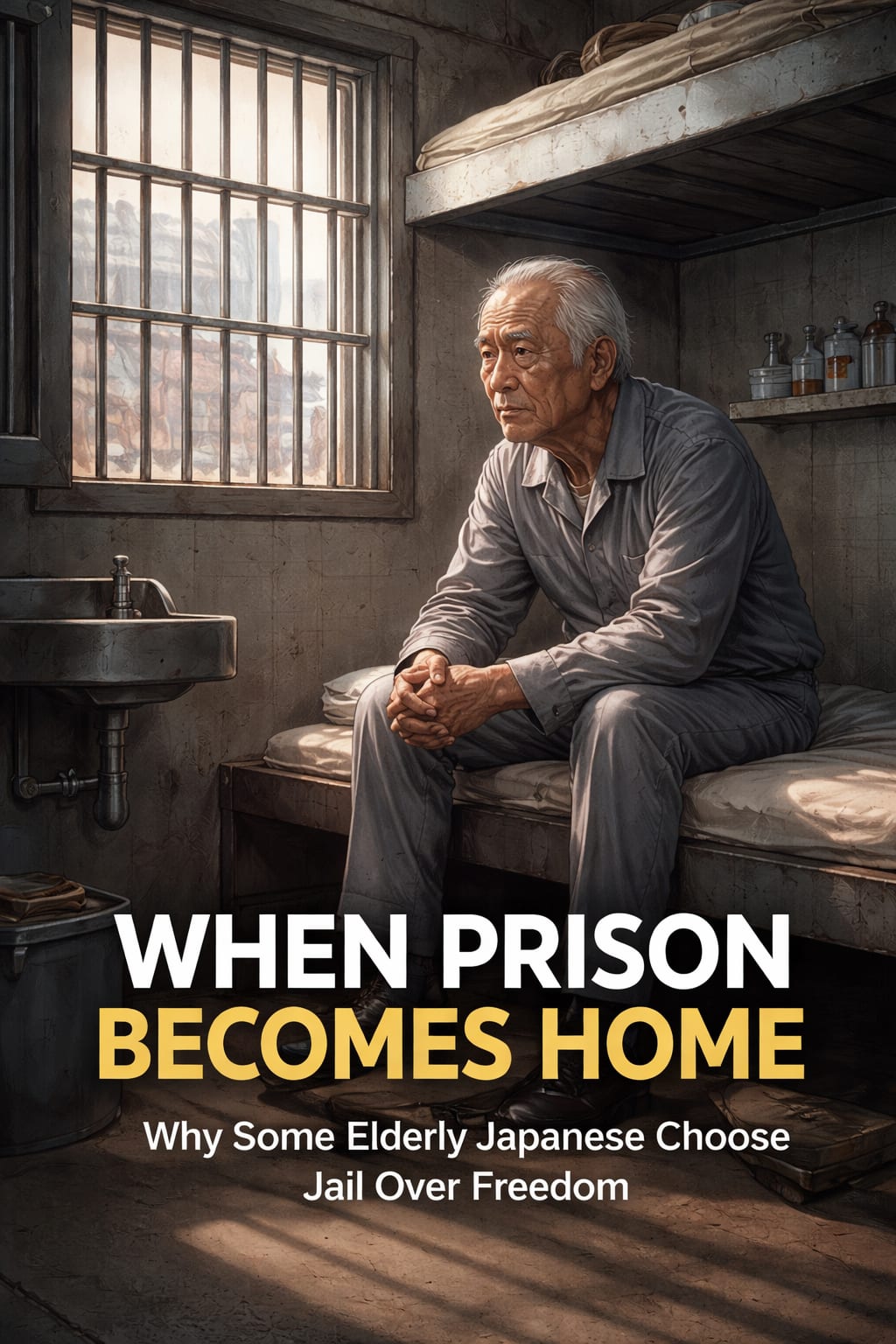
Japan is often seen as a land of prosperity, discipline, and social harmony. From the neon streets of Tokyo to the quiet countryside towns, the country symbolizes modern success. Yet behind this image lies a growing and troubling reality: an increasing number of elderly Japanese citizens are deliberately committing minor crimes in order to go to prison. For many, prison offers something they can no longer find in society—food, shelter, healthcare, and human connection.
Japan has one of the oldest populations in the world. According to government statistics, nearly one-third of its population is over the age of 65. While longevity is often celebrated, it has created new social challenges. Many elderly individuals live alone, especially women. Traditional multi-generational households are declining, and younger family members frequently move to cities for work, leaving parents behind in rural areas. Over time, isolation turns into loneliness, and loneliness into despair.
Poverty among the elderly is another serious concern. Despite Japan’s reputation as a wealthy nation, not all seniors benefit equally from pensions and savings. Some elderly people, particularly women who may have worked part-time or not at all due to traditional family roles, receive very small pensions. Rising living costs, medical expenses, and limited job opportunities make survival difficult. For some, prison begins to appear less like punishment and more like protection.
Reports from Japanese correctional facilities reveal a striking trend: a growing number of inmates are over the age of 65, and many are repeat offenders. The crimes they commit are often minor—shoplifting small items like food, clothing, or household goods. In many cases, these individuals could afford the items but steal intentionally to get arrested. They know the system well. They understand that once imprisoned, they will receive three meals a day, regular medical care, and, most importantly, companionship.
Inside prison, life is structured. There are routines, scheduled activities, and social interaction with other inmates and staff. For someone who spends days or weeks without speaking to another person, this structure can feel comforting. Ironically, prison may provide more social support than life outside.
Experts studying this phenomenon link it closely to “kodokushi,” or “lonely death”—a term used in Japan to describe people who die alone and remain undiscovered for long periods. Fear of dying unnoticed is very real among elderly individuals who live alone. In prison, they feel seen. They feel counted. They feel remembered.
The Japanese government has recognized the issue, but solutions are complex. Building more prisons is not the answer. In fact, housing elderly inmates is expensive. Older prisoners require specialized medical care, wheelchair access, and assistance with daily activities. Correctional officers sometimes find themselves acting as caregivers rather than guards.
Social welfare programs do exist, but some elderly citizens either do not know how to access them or feel ashamed to ask for help. In Japanese culture, self-reliance and dignity are deeply valued. Admitting poverty can feel humiliating. Committing a small crime, paradoxically, may feel easier than seeking public assistance.
Community organizations and volunteers are trying to respond. Some cities have launched outreach programs to check on elderly residents regularly. Others are promoting shared housing and community centers to encourage social interaction. But changing demographic trends and deeply rooted social norms takes time.
The problem is not simply about crime; it is about connection. It reflects the emotional cost of modernization and demographic change. As Japan continues to age, the question becomes urgent: how can society ensure that growing old does not mean growing invisible?
This issue challenges the global perception of Japan as a perfectly functioning society. It reminds us that economic success does not automatically guarantee emotional well-being. Loneliness can exist even in the safest and most advanced nations.
Ultimately, the elderly Japanese who choose prison are not seeking punishment. They are seeking belonging. Their actions send a powerful message about the human need for dignity, care, and companionship. Freedom without support can feel like abandonment, while confinement with community can feel like safety.
As the world watches Japan’s aging population, other countries may learn an important lesson. Aging societies must prepare not only financially but socially and emotionally. Because in the end, no one should feel that a prison cell is the warmest place left to call home.
About the Creator
Irshad Abbasi
Ali ibn Abi Talib (RA) said 📚
“Knowledge is better than wealth, because knowledge protects you, while you have to protect wealth.
Keep reading
More stories from Irshad Abbasi and writers in Criminal and other communities.
Ice Boy: The Frozen Morning That Changed a Child’s Destiny
In the winter of 2018, a single photograph from a remote village in China shocked the world. The image showed a young boy with hair and eyebrows frozen white from the bitter cold, his cheeks red and cracked, yet standing firmly in a classroom. That boy became known globally as “Ice Boy.” His real name was Wang Fuman, and in just one year, his life changed in ways no one could have imagined.
By Irshad Abbasi about 12 hours ago in Education
The Impossible Prison Break - Alcatraz Escape
FBI officers were stunned. This was a prison where even if a prisoner was left out in the open, escape seemed impossible. Yet somehow, right under the noses of the authorities, three inmates managed to break out. What was even more shocking was that for nearly 10 hours, the prison authorities had no idea they were missing.
By Imran Ali Shahabout 18 hours ago in Criminal
Sergeant Isaac Woodard Jr.
His sacrifice must never be forgotten. BY LEAVIE SCOTT The Story of Sergeant Isaac Woodard Jr. February 12, 1946 began like a day of promise. After years of service in the Pacific during World War II, Sergeant Isaac Woodard Jr. stepped off a military bus wearing the uniform he had earned through courage and discipline. He had served his country faithfully from 1942 to 1946, working as a longshoreman in dangerous combat zones, unloading ships under enemy fire, and carrying out the labor that made the Allied war effort possible. He had been awarded medals for good conduct and bravery. He had survived the hazards of war. He had survived a world where the enemy’s bullets and bombs were a daily threat. Now his service was complete, and he was headed home.
By Organic Products 4 days ago in Criminal
Pearl
1980 something. we all hung out at Pearl and you and i were nothing special, or so i thought. i mean we all danced, drenched in our own sweat, our own saline solution of fear, too many beers, shots, laughter, tears, fucks in the bathroom and i don't know when we began to be afraid. do you?
By ROCK aka Andrea Polla (Simmons)6 days ago in Fiction


Comments
There are no comments for this story
Be the first to respond and start the conversation.