investigation
Whodunnit, and why? All about criminal investigations and the forensic methods used to search for clues and collect evidence to get to the bottom of the crime.
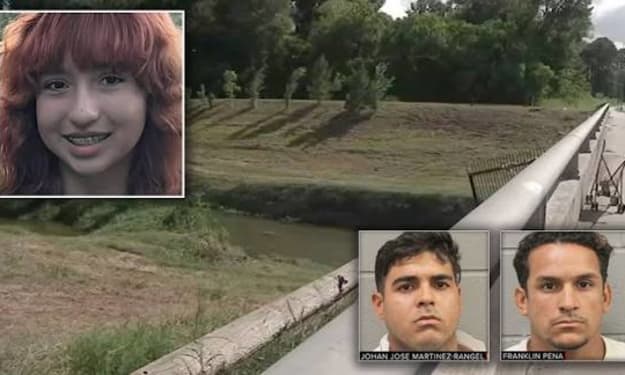
Under the Bridge: The Senseless Killing of Jocelyn Nungaray
The tragic case of 12-year-old Jocelyn Nungaray sent shockwaves through Houston Texasband beyond highlighting issues of child safety vulnerability and the justice systems response to heinous crimes. On the night of Sunday June 16 2024 Jocelyn sneaked out of her home in north Houston to visit a nearby convenience store. What should have been a short innocent errand turned into a nightmare when she encountered two men who appeared lost and in need of directions.According to investigators the men—later identified as 26-year-old Franklin Jose Pena Ramos and 22-year-old Johan Jose Martínez-Rangel, both Venezuelan nationals who had entered the United States illegally—followed the young girl. Surveillance footage captured the trio together showing them walking in the area. The men allegedly lured Jocelyn to a secluded spot under a bridge near West Rankin Road not far from her residence. There she was subjected to brutal violence including sexual assault before being strangled to death.
By Kure Garbaabout an hour ago in Criminal
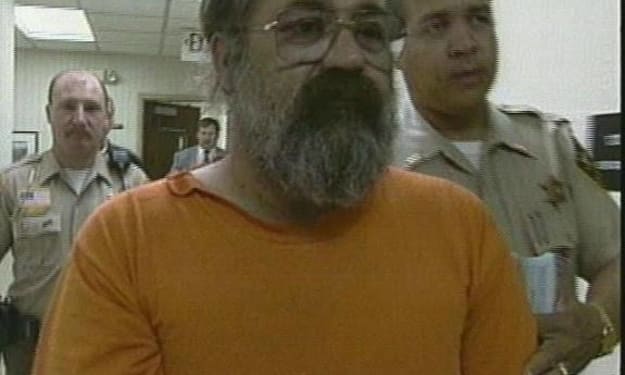
From Chatroom to Grave: The Sharon Lopatka Murder
The case of Sharon Lopatka stands as one of the most chilling and pioneering examples of how the early internet could transform dark fantasies into irreversible reality. In 1996 the 35-year-old internet entrepreneur from Hampstead Maryland led a double life that shocked her community and highlighted the emerging dangers of online anonymity.To those who knew her in person, Sharon Rina Lopatka (née Denburg, born September 20, 1961) appeared utterly ordinary. Classmates and neighbors described her as normal as you can get—a seemingly typical suburban woman who ran her own small online business selling crafts digital services, and other internet-related offerings. Married and living a conventional life in Carroll County, she gave no outward indication of the extreme desires simmering beneath the surface. Yet online, under the alias Nancy Carlson Sharon immersed herself in the shadowy corners of the web, exploring BDSM, sadomasochism, and increasingly violent fantasies. She frequented fetish chat rooms and forums where participants discussed bondage, torture, and even death-related erotica—topics too taboo for mainstream spaces.
By Kure Garbaabout an hour ago in Criminal
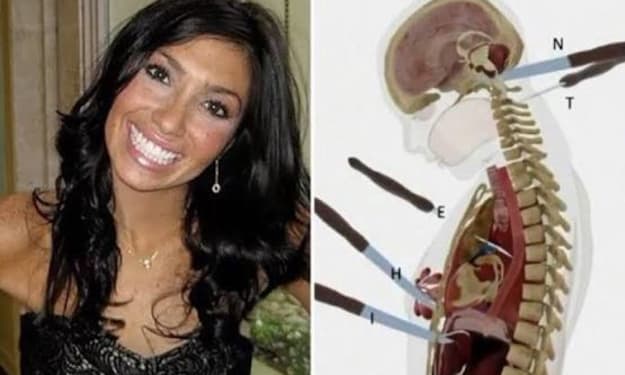
The Enigmatic Death of Ellen Greenberg: A Case That Defies Explanation
On a snowy January afternoon in 2011 the life of 27-year-old Ellen Rae Greenberg came to a tragic and baffling end. Ellen a vibrant first-grade teacher at Juniata Park Academy in Philadelphia was discovered lifeless on the kitchen floor of her Manayunk apartment. She had sustained an astonishing 20 stab wounds including deep penetrations to her chest neck abdomen, and even the back of her head. Some wounds were so severe they pierced her skull and damaged her brain and spinal cord. Her fiance Samuel Goldberg, found her after forcing his way into the locked apartment claiming he had stepped out briefly to the gym during a blizzard.Ellen was born on June 23, 1983, in New York City, but grew up in Harrisburg, Pennsylvania. Described by friends and family as outgoing, compassionate, and full of life, she had recently gotten engaged and was planning her wedding. She loved teaching young children, often sharing stories of her students' progress with her parents, Sandra and Joshua Greenberg. There were no overt signs of distress in her life, though reports later emerged that she had been experiencing anxiety and had sought psychiatric help shortly before her death. She was prescribed medication for anxiety, but nothing suggested she was suicidal.
By Kure Garbaa day ago in Criminal
Ten Days of Marriage, A Lifetime Lost: A Wake-Up Call Against Greed, Dowry, and Domestic Violence
Ten Days of Marriage, A Lifetime Lost: A Wake-Up Call Against Greed, Dowry, and Domestic Violence a relationship that only lasted ten days. A young woman who had visions of the future as she entered her new residence. After that, a shocking end: her husband killed her with a broken piece of glass following an argument about money, property, and a car.
By Farida Kabira day ago in Criminal
"Magpie" Magness. Content Warning.
“The Magnesses Don’t Divorce,” that’s what Michael Magness told his friends when asked about why he hadn’t divorced his wife, Beth, after complaining about the marriage. Michael had been firm about this “no divorce” issue. It could be assumed he was thinking about the children.
By Cassie Moore2 days ago in Criminal
The last Alibi
M Mehran In the rain-slick streets of Frankfurt, crime rarely slept — it adapted. Sirens echoed through financial districts, neon lights flickered across wet pavement, and somewhere in the darkness, someone was always watching. But Inspector Daniel Krämer had never seen a case like this. Because this killer never fled. He never hid. And according to every witness… he was never there. The Perfect Crime Scene At 10:42 p.m., emergency calls flooded dispatch from a luxury apartment overlooking the River Main. A prominent investment lawyer, Stefan Krüger, was found dead in his study — a single precise stab wound to the chest. No signs of struggle. No forced entry. No missing valuables. Only a glass of red wine, two chairs facing each other, and soft jazz still playing in the background. Krämer stood in the doorway, scanning the room. “He was expecting someone,” he said. Detective Anika Weiss nodded. “Neighbor saw a guest arrive at 9:58 p.m.” “Did they see him leave?” She shook her head. “No one left.” The Man With the Unbreakable Alibi Security cameras in the lobby clearly captured a visitor entering the building: a well-dressed man in a charcoal coat. Facial recognition identified him immediately. Martin Adler. Business partner. Friend. And now prime suspect. But Adler’s alibi was ironclad. At the estimated time of death, he was seated in a live televised panel discussion across town. The broadcast had no cuts. No delays. Hundreds of viewers watched him speak in real time. Krämer replayed the footage three times. Adler never left the stage. Yet the cameras did not lie. He had entered the building. And he had never exited. A Second Body, Same Ghost Two nights later, another victim surfaced — a private art broker found dead in her office after hours. Same wound. Same precision. Same untouched valuables. Same witness report: a man in a charcoal coat entering. Security footage confirmed it. Martin Adler again. But Adler was speaking at a charity gala across the city, photographed repeatedly by journalists and guests. Two murders. One man. Impossible timing. Krämer rubbed his temples. “Either Adler can teleport… or someone wants us to believe he can.” The Illusion of Presence Forensic teams uncovered a strange detail at both scenes: microscopic adhesive residue near entry doors and elevator panels. Transparent. Industrial grade. And unusual. Meanwhile, a digital analyst noticed something peculiar in the lobby footage. Adler’s reflection did not appear in the glass directory panel as he walked past. Anika froze the frame. “That’s not him,” she whispered. Krämer leaned closer. It looked like Adler. Moved like Adler. But it wasn’t Adler. It was a projection. The Technology Behind the Ghost Investigators uncovered a compact holographic projection system hidden inside a maintenance ceiling panel near the lobby camera. Using synchronized light refraction and motion mapping, the device projected a lifelike moving image — visible from specific angles. To the security camera, the illusion appeared real. To passing witnesses, it was convincing enough. But from the wrong angle, the figure simply vanished. Someone had manufactured a digital ghost. And they wanted police chasing the wrong man. Following the Motive Both victims shared a quiet connection: they were former legal advisors in a corporate fraud case buried years earlier. The case collapsed after key evidence mysteriously disappeared. The primary beneficiary? A development conglomerate that had since become one of Europe’s fastest-growing real estate empires. Krämer studied the archived case file. One junior accountant had attempted to testify before vanishing from public records. Name: Lukas Brenner. Declared missing. Presumed relocated. But financial activity showed he never left the country. The Third Target Surveillance traced Brenner to an abandoned industrial building slated for demolition. Inside, investigators found a workshop filled with projection equipment, acoustic dampening foam, and architectural blueprints. Pinned to a wall were photographs of individuals tied to the old fraud case. Three faces were crossed out. One remained. Helena Vogler — CEO of the conglomerate. Scheduled to attend a press conference the next morning. Krämer grabbed his coat. “He’s finishing what he started.” Truth Revealed in the Light The press hall buzzed with reporters and flashing cameras as Vogler approached the podium. At exactly 11:03 a.m., the lights flickered. A man in a charcoal coat appeared near the rear exit. Gasps rippled through the room. Security rushed toward the figure — only for it to flicker and dissolve into light. Panic erupted. And in the confusion, a real figure emerged beside the stage. Lukas Brenner. Calm. Pale. Determined. “I’m not here to kill,” he said, raising his hands. Security froze. Cameras rolled. “They buried evidence. They buried the truth. They buried lives,” he continued. “I made ghosts so the world would finally look where it refused to see.” Krämer stepped forward. “You committed murder.” Brenner’s eyes darkened. “They destroyed thousands of lives and walked free.” Silence filled the hall. Not the artificial silence of hidden crimes. But the heavy silence of truth exposed. After the Verdict Brenner was arrested without resistance. His projections, illusions, and meticulous planning stunned investigators across Europe. The reopened fraud case uncovered billions in corruption. Executives resigned. Charges were filed. And the public learned how easily reality could be manipulated — not just through technology, but through power. Weeks later, Krämer stood by the river, watching reflections ripple beneath gray skies. Anika joined him. “Do you think he regrets it?” Krämer considered the question. “He made the world see ghosts,” he said. “But what haunted him was real.” The city moved around them — loud, restless, alive. And somewhere within its noise lived truth, deception, justice, and the fragile line between them. Because the most dangerous criminals are not always the ones who hide. Sometimes, they are the ones everyone can see — and no one chooses to believe.
By Muhammad Mehran3 days ago in Criminal
Anton Zelinskyi on OASK “Ghost-Court” Salaries, Judicial Corruption, and Wartime Reform in Ukraine
Anton Zelinskyi is a Ukrainian legal-reform advocate and Advocacy Manager at the DEJURE Foundation, working on judicial transparency, integrity vetting, and anti-corruption accountability. He is a member of the Public Integrity Council, which assesses judicial candidates and judges undergoing qualification review. In January 2026 he co-authored a Ukrainska Pravda investigation showing that, despite the 2022 liquidation of Kyiv’s District Administrative Court (OASK), the state spent about UAH 157 million over three years on judges’ remuneration while key cases stalled. He tracks how procedural sabotage, disciplinary bottlenecks, and Supreme Court rulings can revive discredited judges—especially during wartime—so reform can endure long-term.
By Scott Douglas Jacobsen4 days ago in Criminal