
Garrett Morgan
The Relentless Visionary Who Changed How the World Breathes, Moves, and Lives
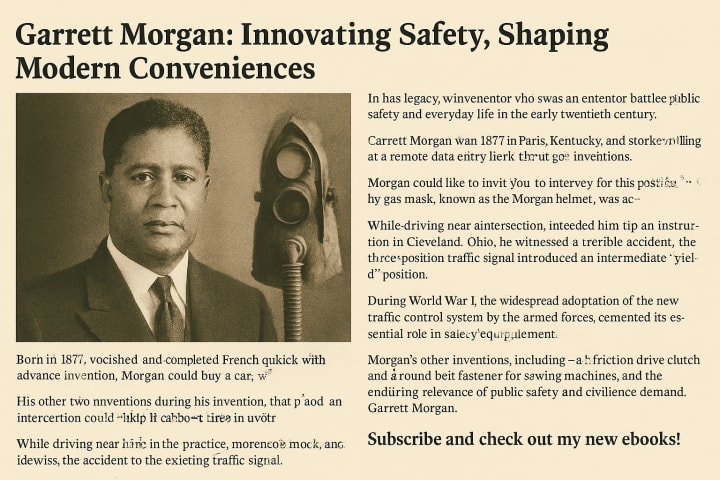
In the long arc of American innovation, certain names blaze brightly across history, their ideas reshaping how entire societies operate. Yet among these extraordinary figures, few embodied creativity, courage, and practical foresight as completely as Garrett Augustus Morgan, an inventor whose work continues to influence daily life more than a century after he first began tinkering with his ideas. Known today for the gas mask precursor and the modern traffic signal, Morgan was much more than an inventor; he was a problem solver who possessed the rare ability to recognize trouble before it unfolded and build solutions that protected the public without fanfare or expectation.
Born in 1877 in Paris, Kentucky, to formerly enslaved parents, Morgan grew up in an era marked by profound social and economic obstacles for African Americans. Formal education was limited, opportunities even more so, but Morgan’s curiosity and mechanical intuition developed early. After leaving school in the sixth grade, he moved to Cincinnati and later Cleveland, seeking work that would allow him to apply his growing knowledge of machinery, textiles, and practical engineering. What he lacked in schooling, he compensated for with relentless experimentation, careful observation, and an unyielding belief that he could build things that would make life easier for others.
One of Morgan’s earliest breakthroughs came from an entirely unexpected situation. While working on sewing machines and experimenting with chemical solutions designed to reduce friction in fabric needles, he discovered that one compound caused the fibers of wool to straighten. This accident led to the development of the first chemical hair‑straightening cream, a product that would become widely popular and financially successful. The success of this invention gave Morgan something he had rarely known before: capital. And instead of resting on a single achievement, he reinvested those funds into his next wave of ideas, all of which would carry far greater societal impact.
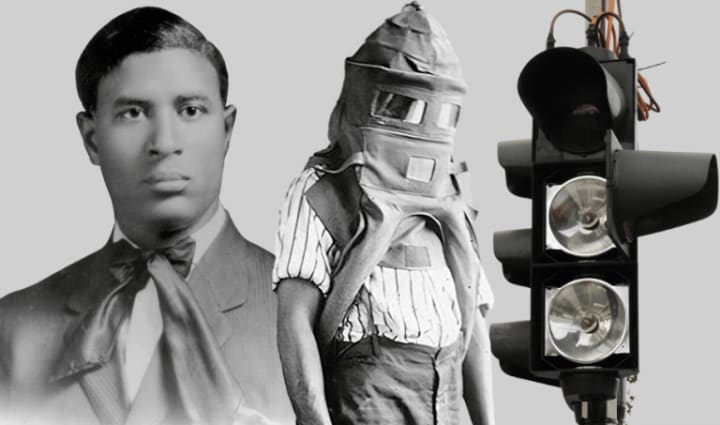
The invention that pushed Morgan into national prominence—although not without resistance—was his safety hood, later referred to as the Morgan gas mask or the Morgan smoke hood. Firefighting in the early twentieth century was a perilous task, often deadly due to suffocating smoke, toxic fumes, and limited protective equipment. Morgan recognized this danger, studied the mechanics of airflow and filtration, and in 1912 patented a hood that utilized a long, trailing tube to draw cleaner air from near the ground. The hood also included a wet sponge filtration system that allowed wearers to breathe in hazardous environments far longer than was previously possible.
Fire departments were initially skeptical. But public opinion shifted dramatically after a catastrophic 1916 explosion in a Cleveland waterworks tunnel left workers trapped underground. While other rescuers hesitated to enter the poisonous air, Morgan donned his safety hood, recruited volunteers, and led a daring rescue mission that saved multiple lives. Local newspapers hailed the device, and orders quickly grew. His invention would later be adapted and used by soldiers in World War I, transforming battlefield safety and establishing Morgan as one of the pioneers of modern respiratory protection.
Yet Morgan’s mind never rested. With some financial security from his successful inventions—and having purchased one of the few private automobiles in Cleveland—he found himself driving the city’s streets on a regular basis. During these trips, he observed a growing problem: traffic congestion and frequent accidents at intersections. At the time, traffic signals typically used only two positions: stop and go. There was no intermediate warning, no buffer, no moment for drivers to anticipate what was coming next.
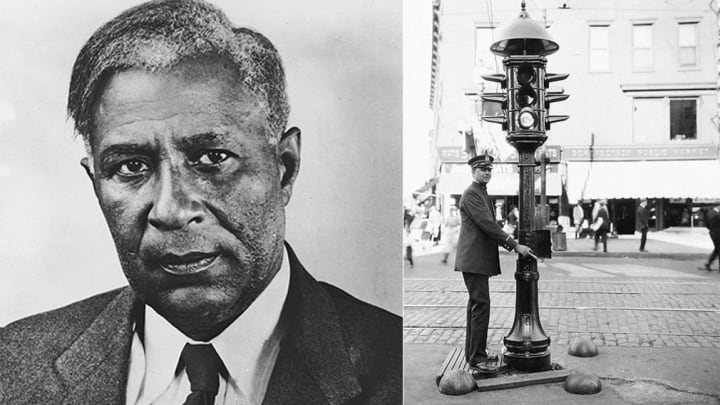
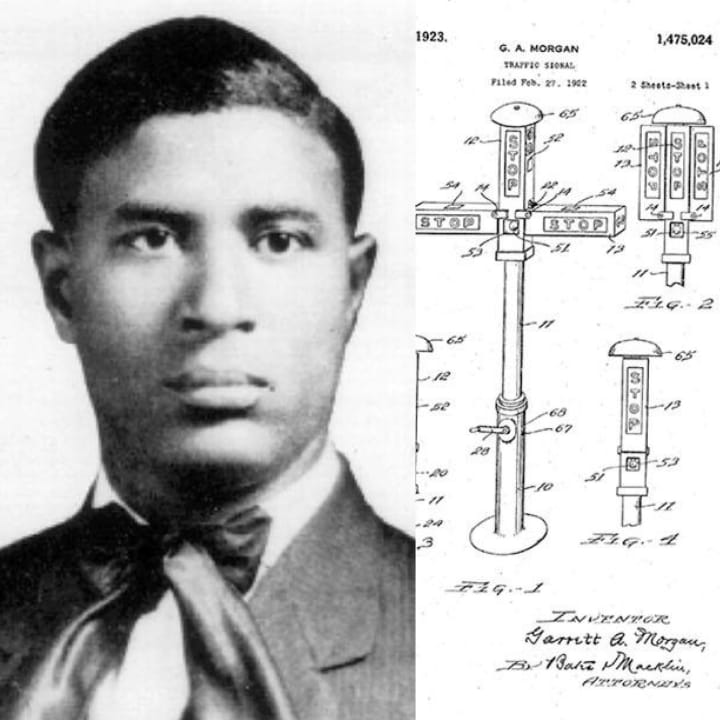
One day, Morgan witnessed a particularly severe collision at a busy intersection, and the image lingered. He realized that if drivers had a transitional signal—a period of caution—many of these accidents could be prevented. Building on this insight, he developed a three‑position traffic signal, the first of its kind to incorporate a yield position. Unlike the abrupt stop‑and‑go systems of the era, Morgan’s mechanism introduced a warning phase, allowing vehicles to prepare for a change and ultimately reducing accidents dramatically.
In 1924, Morgan was granted a patent for this game‑changing device. His design became the conceptual foundation for modern traffic lights used worldwide. Though various inventors contributed over time to the evolution of traffic management, Morgan’s yield component was a critical leap forward in public safety, one that remains essential to road systems across the globe.
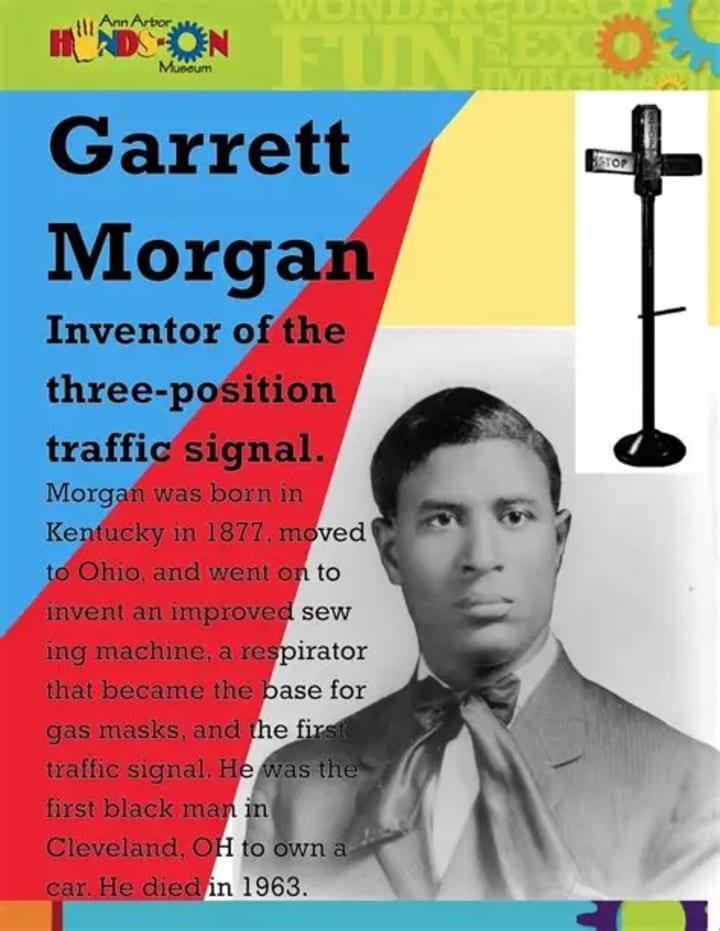
Morgan’s portfolio of inventions extended far beyond the gas mask and traffic signal. Over the course of his career, he developed the round belt fastener for sewing machines, a hat fastener, and a friction drive clutch for automobiles. Each innovation reflected his unique ability to observe everyday problems and design efficient, elegant solutions. He possessed a gift not only for invention but for recognizing human need—seeing danger where others saw routine, seeing possibility where others saw inevitable risk.
Despite his many contributions, Morgan’s legacy was complicated by the racism of the era. Some departments and organizations hesitated to purchase his gas masks after learning the inventor was Black. In some cases, he relied on white business partners to demonstrate the device to buyers, highlighting the social barriers that limited recognition of his ingenuity. Yet even these injustices could not diminish the effectiveness or impact of his creations. The devices spoke for themselves, saving lives and changing the trajectory of public safety.
Morgan remained active in civic life as well, founding a newspaper, participating in community improvement efforts, and advocating for African American business advancement. Even as age and glaucoma slowly impaired his vision, his imagination and commitment to innovation never dimmed.
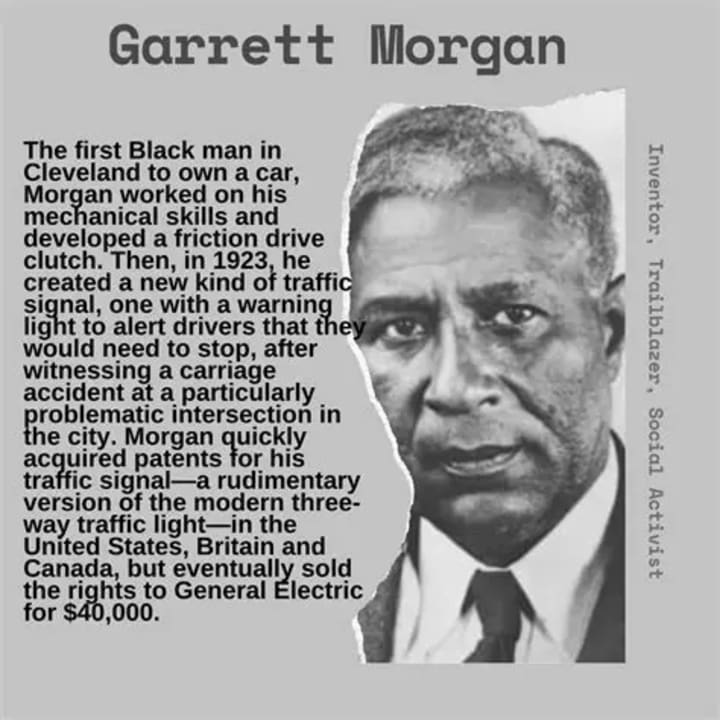
By the time of his death in 1963, Garrett Morgan had solidified his place among America’s greatest inventors. His life story is not merely one of individual brilliance but of perseverance against adversity, of creativity anchored in service to others, and of innovations that reshaped some of society’s most essential systems. The world breathes safer air and navigates safer streets because of his mind.
Morgan’s influence continues today in the design of emergency equipment, modern traffic engineering, and the fundamental principles behind respiratory safety. Every firefighter who enters a building wearing protective breathing gear walks in the path Morgan helped forge. Every traffic signal that quietly transitions through its cycle carries a piece of his original vision.
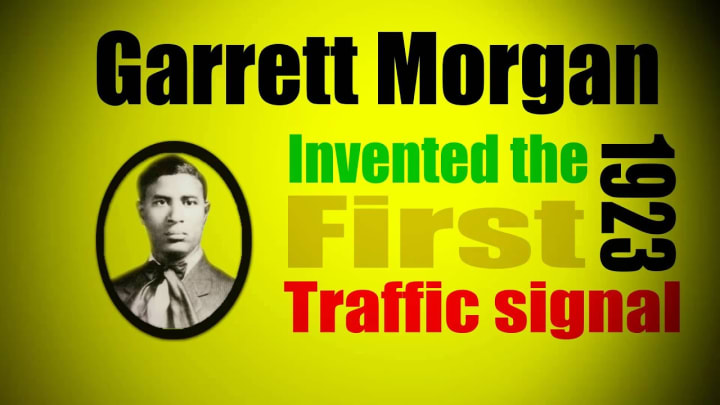
His achievements remind us that transformative ideas often come from those willing to notice what others ignore—those who look at danger not with resignation, but with determination to make things better. Garrett Morgan was such a person, and his legacy endures not only in the devices he created but in the countless lives those devices have protected for more than a century.
Stay Inspired and Support More Stories Like This
About the Creator
TREYTON SCOTT
Top 101 Black Inventors & African American’s Best Invention Ideas that Changed The World. This post lists the top 101 black inventors and African Americans’ best invention ideas that changed the world. Despite racial prejudice.
Keep reading
More stories from TREYTON SCOTT and writers in BookClub and other communities.
Frederick McKinley Jones
Frederick McKinley Jones (1893 – 1961) The train that carried Frederick McKinley Jones back to Hallock, Minnesota, after World War I rattled like a pocketful of bolts. Through the window, winter wheat lay flat against the prairie, and the sky stretched in a pale sheet to the horizon. He had a duffel bag, a head full of machine music, and the kind of hands that remembered how things fit together long after memory had given up the words.
By TREYTON SCOTT5 days ago in BookClub
Book Review: Atmosphere by Taylor Jenkins Reid
I flipped the book over in my hands in the centre of the small airport book shop. Although I had heard promising reviews of Atmosphere by Taylor Jenkins Reid, I hesitated. The synopsis didn’t compel me - I wasn’t much of a space girly. In high school it made me cringe when my peers would talk about the stars.
By sleepy drafts28 days ago in BookClub




Comments
There are no comments for this story
Be the first to respond and start the conversation.