
I Design the Way I Produce Music
Conversation with Tony Grieco on Fashion, Sound and Building Tony Grieco Paris.

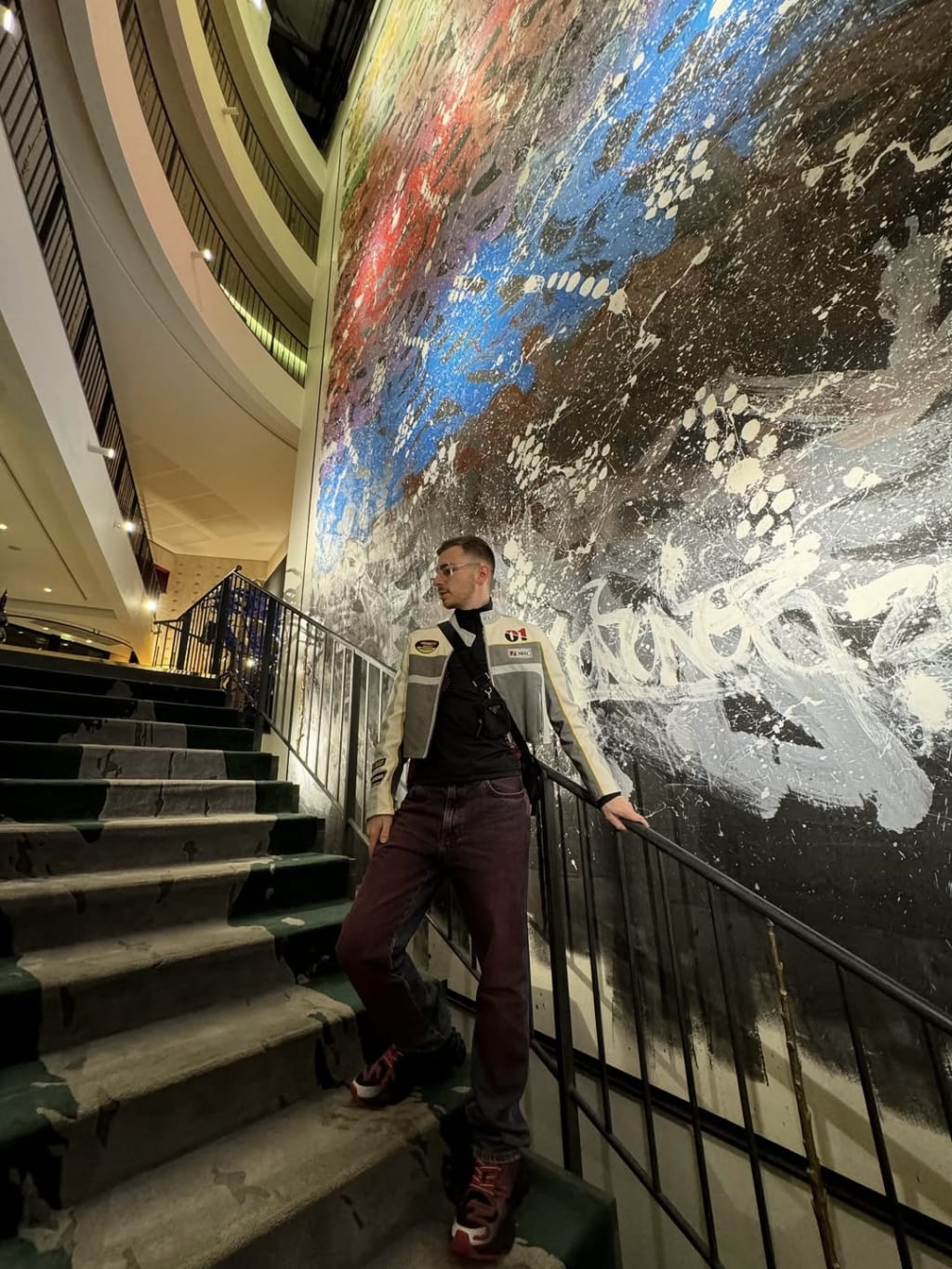
At the intersection of electronic music and contemporary fashion, Tony Grieco is developing a creative practice that moves freely between studio sessions and atelier work. Through his eponym label Tony Grieco Paris, the designer explores how sound can influence garments long before sketches appear on paper.
We spoke with him about creative process, travel, craftsmanship, and why music has become the starting point of his collections.
INTERVIEWER: Hi Tony, thanks for taking the time. Where are you speaking to us from today?
TONY GRIECO: I’m in Paris, between studio work and preparation for upcoming projects. It’s a busy period but also the most interesting phase creatively, when ideas are still evolving and nothing feels completely fixed yet.
“Music often comes before the clothes”
INTERVIEWER: You move between fashion design and electronic music. Which one usually comes first?
TONY GRIECO: Most of the time, music. Sound helps me define emotion before form. When I’m producing, I’m not thinking about garments directly, but about rhythm, tension, movement. Later, those sensations naturally translate into materials or silhouettes. For me, clothing is almost a physical extension of sound.
INTERVIEWER: So the music becomes a design tool?
TONY GRIECO: Exactly. A tempo can influence how a piece moves. A bass line can suggest weight or structure. I don’t see music as promotion for fashion or the opposite. They grow together.
Building Tony Grieco Paris
INTERVIEWER: Tell me about Tony Grieco Paris. What kind of brand did you want to create?
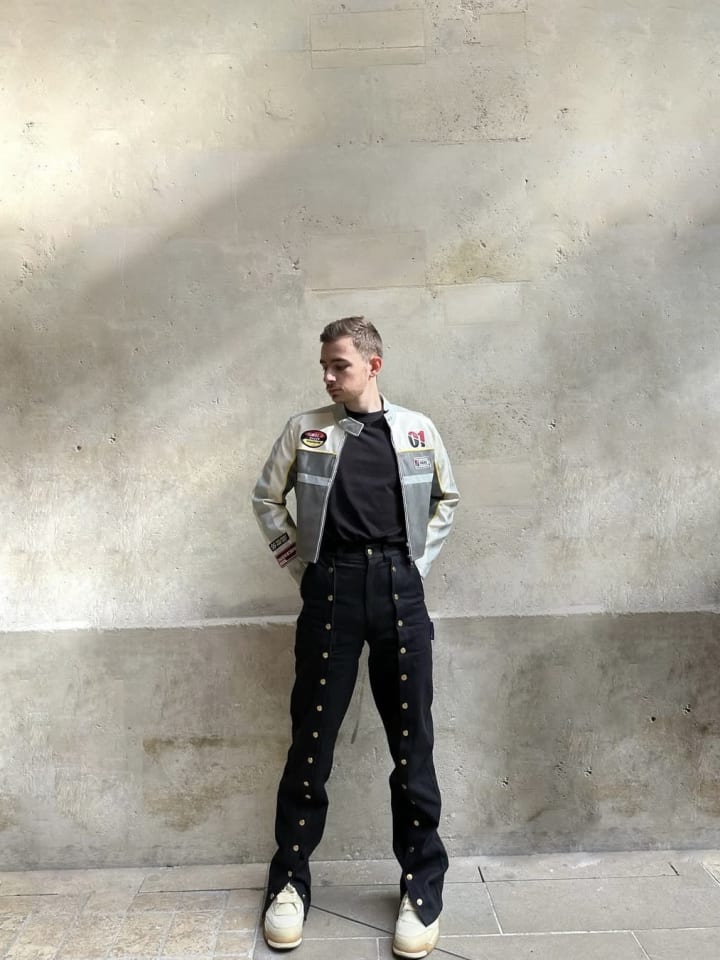
TONY GRIECO: I wanted a space where different disciplines could coexist without hierarchy. Tony Grieco Paris isn’t only about seasonal collections. It’s about creating an environment where sound, craftsmanship, and visual identity evolve at the same pace.
Paris obviously plays a big role. There’s a culture of precision and savoir-faire here that pushes you to be rigorous, even when your inspirations come from more experimental places.
Learning from the industry
INTERVIEWER: Before launching your label, you collaborated on projects connected to houses like Givenchy, Yves Saint Laurent, and Azzaro. What did those experiences teach you?
TONY GRIECO: Mainly discipline. Seeing how luxury production works changes your perspective completely. You understand the importance of construction and timing. Even when you later develop your own universe, that technical foundation stays with you.
It also made me realize that creativity needs structure. Freedom actually comes from knowing the rules first.
From travel to sound: Desert Drums
INTERVIEWER: Your latest track, Desert Drums, feels closely connected to your upcoming collection. How did that project start?
TONY GRIECO: After traveling through Egypt and the UAE, I came back with impressions rather than specific images. The landscapes, the rhythm of daily life, the atmosphere. I started producing music to process those sensations, and Desert Drums emerged from that.
Later I realized the track was defining the direction of the collection. Not visually at first, but emotionally.
INTERVIEWER: You avoid literal references?
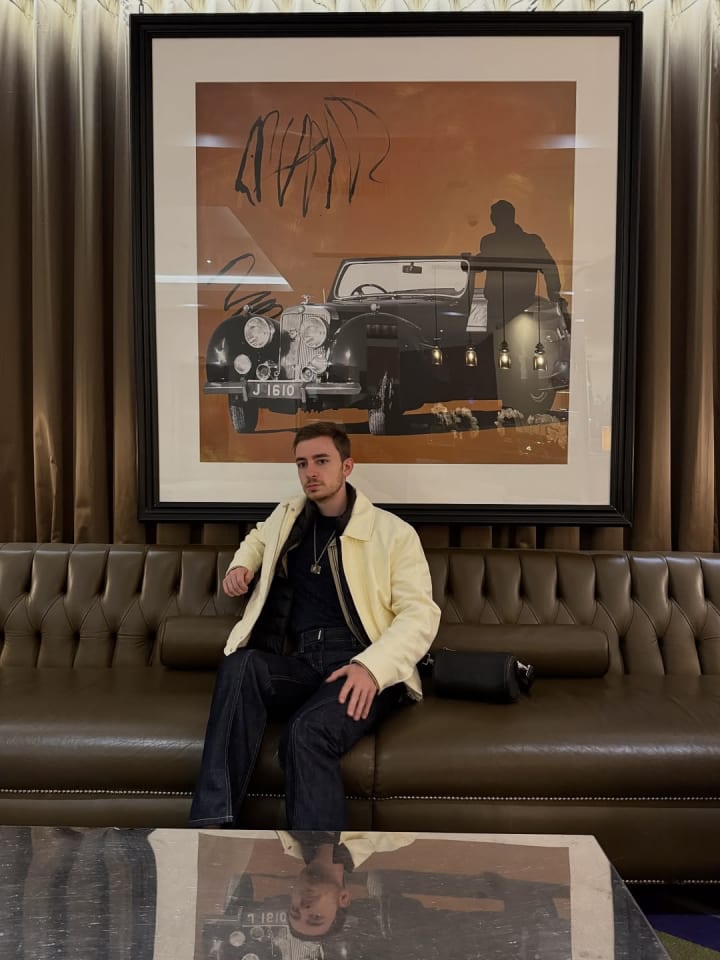
TONY GRIECO: Yes. I’m not interested in copying symbols or aesthetics. I prefer translating a feeling. Texture, repetition, movement, those things are more honest than decoration.
Fashion after Virgil Abloh
INTERVIEWER: Many people compare multidisciplinary creatives today to Virgil Abloh. Do you feel connected to that generation?
TONY GRIECO: I think he opened doors conceptually. He showed that you don’t need to stay inside one category to be taken seriously. For younger creatives, that changed everything. But each person still has to find their own language. For me, the dialogue between sound and material is where things become personal.
Craftsmanship vs. experimentation
INTERVIEWER: Your work combines electronic culture with Parisian craftsmanship. Is that contrast intentional?
TONY GRIECO: Yes, because tension creates identity. Electronic music is fluid and evolving, while craftsmanship is precise and slow. When those two energies meet, something interesting happens. I try to keep that balance in every project.
Building independently today
INTERVIEWER: You’ve built visibility through both fashion and music platforms. How important is the digital space for an emerging label?
TONY GRIECO: It’s essential. Today you don’t wait for permission anymore. You share your process, your experiments, your music, and people follow the evolution. But visibility is only the beginning. The real challenge is consistency and developing a strong point of view over time.
Looking ahead
INTERVIEWER: What can people expect from the next Tony Grieco Paris collection?
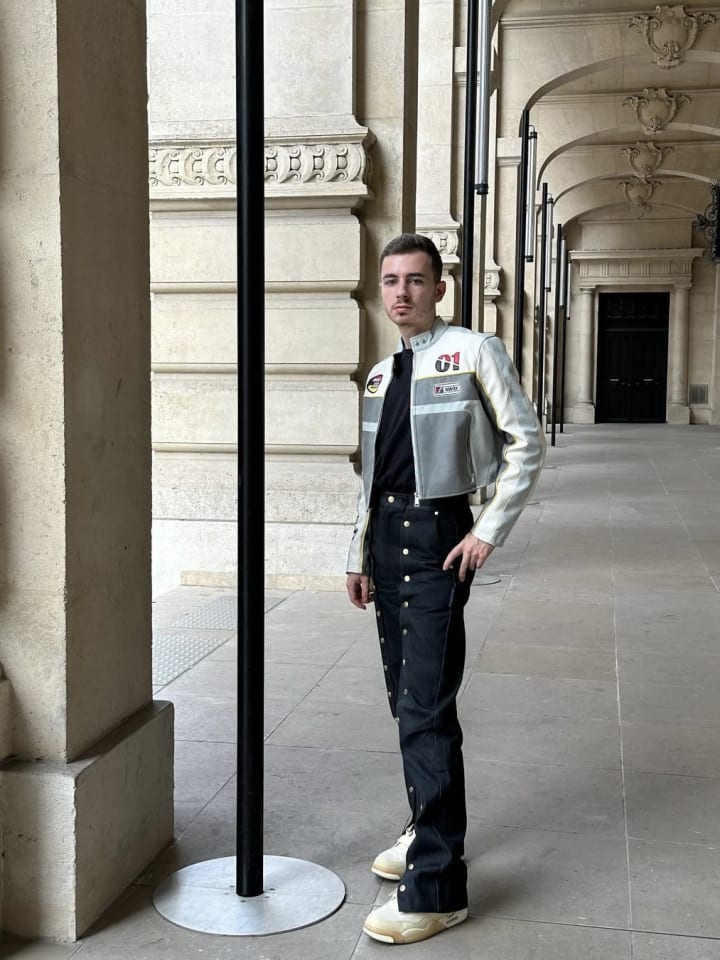
TONY GRIECO: Something more immersive. I want the audience to feel the connection between sound and garment without needing an explanation. If someone understands the emotion just by experiencing the pieces, then the work is successful.
INTERVIEWER: And personally, where do you see yourself evolving next?
TONY GRIECO: I’m still exploring. Right now, I’m focused on building coherence between everything I create. The goal isn’t to do many things, but to make them speak the same language.
About the Creator
Oliver Jones Jr.
Oliver Jones Jr. is a journalist with a keen interest in the dynamic worlds of technology, business, and entrepreneurship.
Keep reading
More stories from Oliver Jones Jr. and writers in Art and other communities.
Creative Women Forum Saudi Arabia 2025 Highlights Global Collaboration and Women’s Leadership in Riyadh
The Creative Women Forum Saudi Arabia 2025, held from 4–6 November at Princess Nourah bint Abdulrahman University in Riyadh, concluded its second edition with an expanded international presence and a strengthened commitment to global women’s leadership. The event was held under the patronage of Her Royal Highness Princess Noura bint Saud bin Naif bin Abdulaziz Al Saud, bringing together more than 500 leaders, policymakers, entrepreneurs, academics, and creative professionals from across the world.
By Oliver Jones Jr.3 months ago in Art
'Till Death We Do Art
There would be nothing divine in this world without art. Nature may surpass the divine to all intents and purposes, but like everything it absorbs and is absorbed by, it remains here, stuck on the surface of this world, ever-present, physically bound to the universe.
By Avocado Nunzella BSc (Psych) -- M.A.P 15 days ago in Art
Truth Is Often Rejected Because It Demands Change
There is a widespread assumption, rarely spoken but deeply believed, that truth will eventually be accepted if it is communicated clearly, patiently, and with genuine goodwill. When resistance appears, the instinct is to search for error in tone, framing, or explanation. The underlying belief is simple: if the truth were presented well enough, rejection would disappear. This belief is comforting, but it is false. History, Scripture, and lived experience all point in the same direction. Truth is often rejected not because it is unclear, but because it is costly.
By Peter Thwing - Host of the FST Podcast5 days ago in Art
A Planetary Alignment will coincide with Mercury Retrograde
Double phenomena in the heavens Some people say in jest that the planets have aligned in their favor when life works the way they desire. Were you aware that there are seasons when things do line up in the heavens? There will be a planetary alignment AKA a planet parade, on February 28, 2026.
By Cheryl E Preston6 days ago in FYI




Comments
There are no comments for this story
Be the first to respond and start the conversation.